



Image credit: Qiddiya/Website
The GCC is at the forefront of a transformation unlike anything seen before, where futuristic visions are becoming tangible realities. Across the UAE, Saudi Arabia, and Qatar, governments are pouring billions of dollars into ambitious megaprojects that promise to redefine economic growth, urban living, and environmental stewardship in the Middle East.
These projects are not mere infrastructural enhancements; they are the beating heart of a broader strategy to diversify economies away from oil dependency, promote sustainability, and create vibrant communities that attract global talent and tourists alike. From hyper-connected transport systems to regenerative tourism and entertainment hubs, the GCC’s evolving skyline tells a story of ambition, innovation, and resilience.
Read more-Asian Paints Global CEO on CureAssure’s role in redefining sustainable construction in GCC
In this article, we explore ten pioneering developments driving the GCC’s next chapter, initiatives that showcase the power of visionary planning and cutting-edge technology in building the cities and industries of tomorrow.
1. Etihad Rail: The UAE’s new lifeline for connectivity and growth
Imagine a gleaming steel artery stretching across the entire United Arab Emirates, connecting bustling ports, industrial zones, and urban centers with unparalleled efficiency. This is the promise of the Etihad Rail project—an infrastructure marvel set to revolutionize the way people and goods move across the nation.
Spanning all seven emirates, the rail network is poised to become the backbone of the UAE’s logistics ecosystem, cutting transport times, lowering costs, and reducing environmental impact. “Etihad Rail is a vital economic artery that supports the UAE’s journey to the future,” said a senior official overseeing the project. “It embodies the spirit of the Union, fostering sustainability and seamless connectivity.”
Beyond its economic role, Etihad Rail symbolizes national unity, tying together diverse emirates into one integrated transport system. As the trains glide across deserts and cities alike, the project reflects a bold vision of progress and sustainability, helping to ease road congestion and curb carbon emissions for generations to come.
2. THE LOOP: Dubai’s climate-controlled cycling revolution
Picture a 93-kilometer ribbon of urban paradise where pedestrians and cyclists glide in comfort, shielded from the desert heat by state-of-the-art climate control. This is THE LOOP, Dubai’s ambitious answer to urban mobility and healthy living.
Designed to connect more than 3 million residents, THE LOOP will transform the city into a “20-minute city” where key services, parks, and neighborhoods are reachable by foot or bike. Its vision is bold: to make walking and cycling the primary mode of daily transport for over 80% of Dubai’s residents by 2040.
In a region famous for its car culture and extreme climate, THE LOOP’s temperature-regulated pathways and smart infrastructure represent a paradigm shift. This project is more than just a bike path; it’s a new lifestyle, championing wellness, sustainability, and cutting-edge urban design.
3. Dubai Metro Gold Line: Connecting the old with the new
As Dubai’s population balloons, so too does the demand for efficient public transit. Enter the Dubai Metro Gold Line, a new artery threading through some of the city’s most historic and rapidly developing areas.
Stretching from Al Ghubaiba in Bur Dubai to the sprawling communities of Business Bay, Meydan, and Dubailand, the Gold Line will relieve pressure on the busy Red Line while enhancing accessibility. For residents and visitors alike, it will be a sleek, modern corridor bridging the city’s past and future.
This expansion underscores Dubai’s commitment to tackling congestion and enhancing urban livability, while supporting the growth of new economic zones and tourism hotspots.
4. Urban Tech District: Dubai’s green innovation powerhouse
In the Al Jaddaf district, a new beacon for sustainable innovation is rising—the Urban Tech District. This carbon-neutral development will serve as a crucible for cutting-edge urban technologies aimed at addressing the complex challenges posed by rapid urbanization.
The district is designed to be a dynamic ecosystem, hosting startups, research centers, and venture capital firms dedicated to breakthroughs in zero-mile food production, renewable energy, water harvesting, and waste-to-energy solutions.
More than a tech park, it’s a living laboratory where the future of urban living will be tested and perfected. With plans to create 4,000 green jobs, the Urban Tech District is central to Dubai’s vision of becoming a global hub for sustainable innovation.
5. The Red Sea Project: A model for regenerative luxury tourism
Off Saudi Arabia’s western coast, a new kind of luxury resort is taking shape—one that celebrates nature while safeguarding it. The Red Sea Project is a pioneering effort to create a sustainable, regenerative tourism destination unlike any other.
Phase One has already introduced five exquisite resorts alongside an international airport, setting the stage for 16 luxury hotels spread across islands and inland sites. By 2030, the project aims to house 50 hotels with 8,000 rooms, carefully calibrated to welcome no more than 1 million visitors annually—preserving the fragile coral reefs, mangroves, and desert landscapes.
A spokesperson for Red Sea Global summed it up: “The Red Sea will redefine sustainable travel, merging luxury with environmental stewardship.” It’s a bold blueprint for how tourism can coexist with conservation on a grand scale.
6. Dubai World Central: Building the world’s largest airport hub
Dubai’s ambition to dominate global air travel is embodied in Dubai World Central (DWC), also known as Al Maktoum International Airport. Originally opened in 2013, DWC has grown from a cargo and charter hub into a colossal aviation gateway.
With a future expansion plan unveiled in 2024, the airport will soon boast five runways and the staggering capacity to handle 150 million passengers annually—triple that of Dubai’s main airport today. Its long-term goal is an unprecedented 260 million passengers per year, supported by cargo capabilities exceeding 12 million tonnes.
This mega-airport will not only serve as a transit hub but also stimulate surrounding economic zones, creating a new ecosystem of commerce, logistics, and tourism. Dubai’s vision is clear: to remain an indispensable global aviation crossroads well into the 21st century.
7. Qiddiya City: Saudi Arabia’s playground for the future
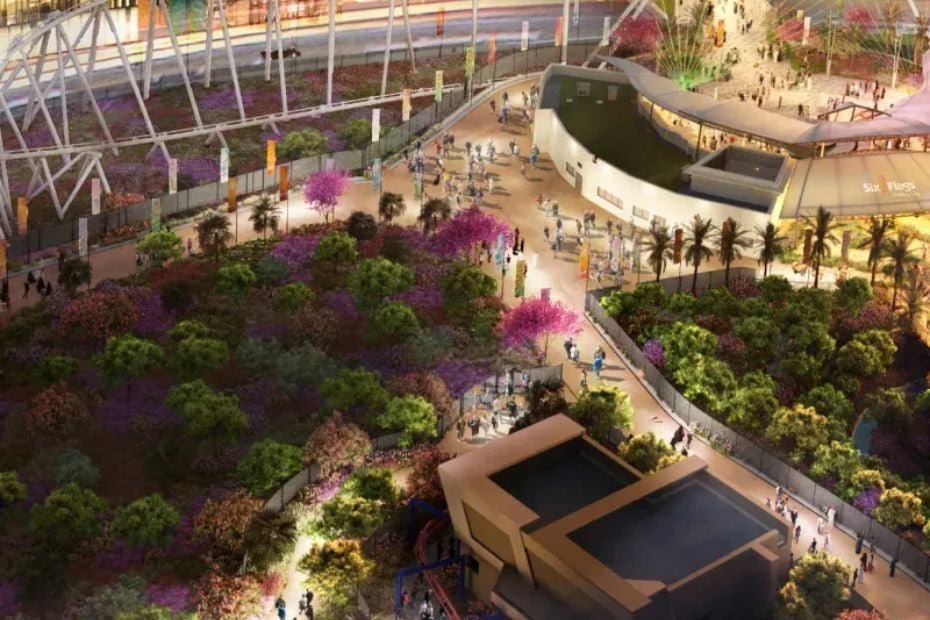
Imagine a city where adrenaline-pumping theme parks, world-class sports arenas, and vibrant cultural venues collide. This is Qiddiya City, Saudi Arabia’s bold investment in entertainment and lifestyle as part of its Vision 2030 agenda.
Set against a backdrop of rolling desert and rocky landscapes near Riyadh, Qiddiya aims to become the region’s entertainment capital, attracting millions of visitors and creating thousands of jobs.
More than fun and games, Qiddiya represents economic diversification and social transformation—bringing arts, sports, and leisure together to enhance quality of life and global tourism appeal. “Qiddiya isn’t just a city of attractions—it’s a city of dreams,” a project leader remarked.
8. Palm Jebel Ali: Dubai’s grand island of luxury and nature
Following a significant redesign, Palm Jebel Ali is Dubai’s most audacious island development yet. Nearly twice the size of the famed Palm Jumeirah, this man-made marvel stretches nearly four miles long, with 17 fronds and a protective crescent shoreline that doubles as a vibrant promenade.
Residents will enjoy panoramic beach views, luxury villas with expansive windows, and a lifestyle built around health and wellness—walkable streets shaded by lush greenery, parks for recreation, and direct beach access.
Located near the ecological haven of the Jebel Ali Marine Sanctuary, Palm Jebel Ali embodies a delicate balance between luxury living and environmental mindfulness—a testament to Dubai’s evolving vision of sustainable urban growth.
9. Qatar’s North Field expansion: Powering the global energy transition
In the energy-rich Gulf, Qatar is doubling down on its gas production with the monumental North Field East expansion project. Set to ramp up liquefied natural gas (LNG) output from 77 million to 126 million metric tons per year by 2027, this initiative is critical to meeting rising global energy demands.
The project, with phased production starting mid-2026, has already secured contracts with major energy consumers in Europe and Asia, positioning Qatar as a cornerstone of energy security in a volatile world.
“Qatar’s expansion is a game-changer for global LNG supply,” said CEO Saad al-Kaabi, highlighting the country’s commitment to energy innovation and economic resilience.
10. Disney Magic on Yas Island: A New Era of Entertainment
The Middle East is about to welcome its first-ever Disney theme park resort on Abu Dhabi’s famed Yas Island—a landmark that signals the region’s rising clout in global entertainment.
Joining an already impressive roster of attractions including Ferrari World, Warner Bros. World, and SeaWorld, the Disney resort promises world-class experiences that will attract families and tourists from across the globe.
Though the opening date remains under wraps, the project symbolizes more than fun; it heralds a cultural and economic milestone, further cementing Abu Dhabi as a premier destination for leisure and tourism.
Forging a future of innovation, sustainability, and growth
The GCC’s mega projects are rewriting the rulebook on what’s possible in urban development, tourism, transport, and energy. Each project, from the subterranean rails of Etihad Rail to the shimmering shores of Palm Jebel Ali, weaves a thread into the grand tapestry of a region eager to lead in the 21st century.
Together, they signal a decisive break from an oil-dependent past, embracing innovation, sustainability, and global interconnectedness. As these visionary projects take shape, the Gulf is not just building cities and resorts, it’s crafting a new identity, one where economic resilience, environmental responsibility, and cultural vibrancy coexist in harmony.
The future is here, and it’s breathtaking.
