



Image: Supplied
Like so much of the major tech-based movements around the world, crypto’s start can be traced back to the West. Equally, like so much acceleration in capability and regulation of technology, the exciting next chapter is unfurling here in the Middle East.
Over the years, the Gulf has consistently shown its ability to act responsibly with innovation, blending government regulation, real-world integration, with speed and scale.
While other markets wrestle with uncertainty, MENA’s approach is pragmatic: create the frameworks first, then invite innovation to flourish inside them. And what’s more, they remain open-armed, which bodes well for disruptive entrepreneurs and outliers driving and scaling technologies at the forefront of culture, society, and economies.
Bahrain was among the earliest movers in Crypto
Bahrain was among the earliest movers, with the Central Bank of Bahrain establishing one of the world’s most comprehensive digital-asset frameworks. Binance became the first exchange to secure a Category 4 license there, a pin-worthy compliance milestone for the rest of the world.
The UAE, meanwhile, has evolved into one of the world’s most dynamic Web3 ecosystems. Through the Virtual Assets Regulatory Authority (VARA) in Dubai and ADGM in Abu Dhabi, the Emirates are not only attracting exchanges and fintechs, but also incubating the next generation of blockchain start-ups, tokenised-asset platforms, and AI-driven financial solutions.
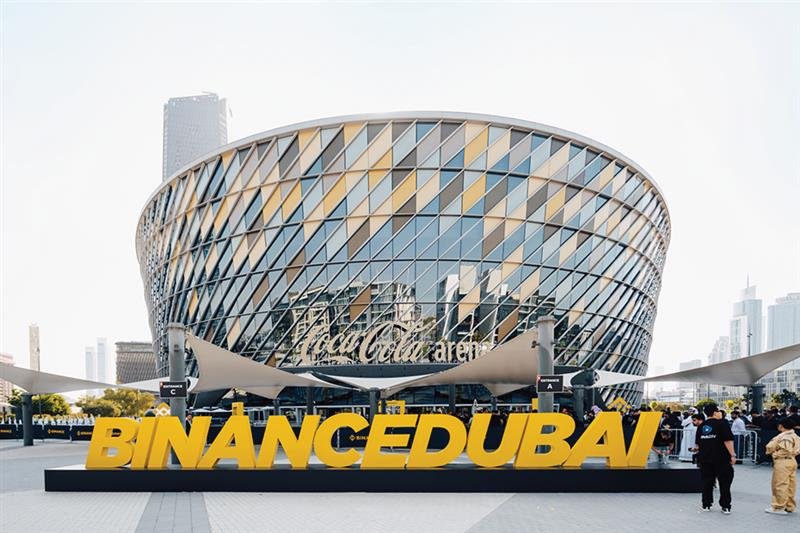
For Binance, the UAE serves as both a regional base and a hub for education, institutional collaboration, and product innovation, from self-custody solutions like Trust Wallet – now serving over 280 million users – to Binance Institutional, which provides compliant trading and custody for global investors. It also serves as the home of this year’s Binance Blockchain Week for the second consecutive year – the brand’s flagship gathering taking place in December at the Coca-Cola Arena.
Saudi Arabia is investing in fintech sandboxes
Saudi is now signaling its own intent to join the digital-asset future. Under Vision 2030, the kingdom is investing in fintech sandboxes and pilot blockchain projects aimed at financial inclusion and efficiency.
For the initiated, the opportunity is obvious, for the curious, it’s vast and exciting. The tokenisation of real-world assets (RWA) — from real estate to corporate debt — already exceeds $20bn globally, with a projection of another $10tn to follow in the coming years.
There is no doubt that MENA’s strong regulatory infrastructure will make it a key gateway for this new capital market.
By pairing this ambition with accountability, MENA is building a bridge between traditional finance and the decentralised future. It’s unrivaled in terms of readiness, eagerness, governmental support, and global talent. You need only do a 360 turn almost anywhere in the Emirates to see it.
The Gulf is no longer a follower in the crypto story. It is a co-author, helping to define a more transparent, inclusive, and hybrid financial system for the world.
Read: Binance’s regional head on driving crypto growth and digital innovation in the Gulf
