



Image: Supplied
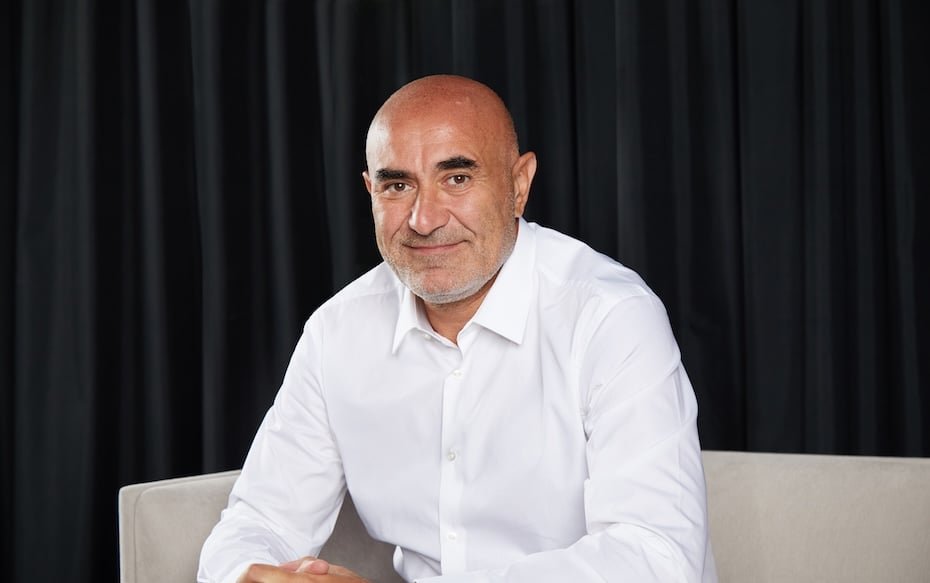
As Amazon’s VP for the Middle East, Africa, and Turkey (MEAT), Ronaldo Mouchawar oversees one of the e-commerce giant’s most diverse and fast-evolving territories. Tasked with driving growth across markets ranging from the Gulf’s advanced infrastructure to Africa’s emerging digital economies, he has centered his leadership on Amazon’s core tenets: customer obsession and innovation at scale.
In this interview with Gulf Business editor, Neesha Salian, he discusses how this philosophy has made the region a global launchpad for services such as Amazon Now, details the unique localisation challenges, from navigating non-traditional addresses to managing cash payments, and explains how generative AI is now transforming everything from minute-by-minute logistics to the future of shopping itself.
You’ve been a pivotal figure in the region’s e-commerce landscape since the Souq.com days. What leadership lessons and strategies have you carried from that entrepreneurial chapter into your role as Amazon VP for the Middle East, Africa, and Turkey?
The one principle I’ve always held on to is staying close to our customers, listening to them, understanding what they need, and never allowing that connection to fade.
It’s important to stay connected — to keep listening and observing what’s happening on the ground. We meet sellers and vendors often, and those conversations give us real perspective. We also do ride-alongs with our drivers and visit warehouses to understand the daily realities of the business. Staying close to the operation and the people behind it is, I think, essential.
The second is really relying on technology to solve problems. It’s very easy to start a business. Maybe you started with an Excel sheet, a Word document or a PowerPoint presentation, but if you really want the business to scale and deliver consistency to customers time and time again, use technology and innovation to solve customer needs at scale.
You oversee a diverse region spanning the Middle East, Africa, and Turkey. How do you balance Amazon’s global values with localisation and regional innovation?
The whole premise of the Amazon-Souq acquisition was about understanding the local needs and what we’ve done differently locally, and bringing the global experience of how to operate at scale with the local nuance of each of these markets.
Each one has particularities in delivery, in payment, in the way customers transact, what they buy. However, the main principles around having large selection of products, having good prices, convenience in delivery, and seamless customer service are things that we’ve seen are almost the same across all these markets. No one wants to pay more. No one wants products to be delivered slower.
However, every country has its specificity and a different level of maturity in terms of e-commerce penetration, customer habits, the use of the internet, the use of mobile phones. Obviously, it’s different between the different locales. It varies a lot between the Gulf, Africa, some of the countries I manage, as well as Turkey, which is quite advanced in e-commerce.
What have been some of the key takeaways about the peculiarities of each market that might surprise people?
For me, the biggest challenges have always been payments, delivery and addresses — and they’re all quite localised. Some countries have advanced postal systems with clear addresses that customers know and use easily. But in others, formal addresses were never part of the culture. People describe where they live using landmarks — ‘next to this’ or ‘in that community’ — rather than a precise address. With the technology and mapping tools we have today, we’ve been able to overcome that. In many of these markets, there wasn’t a strong postal system to begin with, so we had to build our own last-mile and delivery networks from scratch.
Payments are a bit different. You have banked consumers who prefer credit cards, others who stick to debit cards because of Sharia law, and a big portion of unbanked consumers who rely on cash. For instance, in Egypt, the percentage of cash-on-delivery orders is still higher than in the Gulf.
When we started, there wasn’t much trust in online transactions, so cash on delivery was the norm. But over time, as governments strengthened digital payment systems, as we enhanced our processing and user experience, and as new payment options became available, we’ve seen a big shift toward digital payments.
Amazon Now was launched globally from this region. Why was the Middle East chosen as the destination to launch it?
I think part of our flywheel has always been about offering a wide selection, competitive prices, and convenience — and a big part of convenience is speed. In this region, speed really matters. Customers constantly push us to go faster and faster.
Read: Ultra-fast ‘Amazon Now’ delivery service launches across UAE
Across the Amazon website, we offer hundreds of millions of products, but over the last two to three years, we’ve seen a major shift. Customers are increasingly buying their everyday needs and essentials from us. We started with categories like electronics, cosmetics, and apparel, but today, Amazon is where people shop for their daily products too.
Some of these — like milk, eggs, or vegetables — are needed immediately, as customers prepare meals or run out of something. That’s where ultra-fast delivery comes in. Certain products can arrive within 10 minutes. Our fastest delivery so far was six minutes — imagine getting an Apple Watch in six minutes, it’s incredible.
Then there are products customers need within a few hours. For that, we have our two-hour service, called Rush, which covers a wide range of items. Beyond that, we offer hundreds of millions of products that are either stocked locally and delivered within a day, or sourced globally. For example, customers in the UAE can shop from our Germany, UK, or US websites directly through the app, with delivery in under five days.
It’s a diverse ecosystem, but what’s really exciting is our ability to serve customers in minutes. The demand is there — people want their products faster, whether it’s fresh, frozen, or perishable goods. Essentially, your everyday needs and meals can now be delivered through Amazon
What have been the key learnings driving this growth, and when can we expect the rollout across the region?
For us, we pride ourselves on operational excellence. Customers who use Amazon really depend and rely on us. We take that very seriously. For us, it’s making sure when we’re promising X minutes — 5, 10, 15, whatever it is — that we are able to deliver the whole cycle from the payment to picking the order to getting it to the delivery associate to getting to your doorstep within exactly that time frame. This has been the learning — to learn to do that well.
You need to understand the local topology, make sure your micro warehouses are located near customers where there is demand, put the right assortments for customers. Different regions, different cities, they order different products on given days or based on seasonality of these products. And just operating that well has been our motto — not going too fast, making sure it’s super reliable and dependable.
The key right now is to make sure most of the customers that we have in the GCC are served within 10 minutes, and then we’ll expand beyond the region.
How important are partnerships to making Amazon Now happen?
In this part of the world, honestly, we don’t need to build everything from scratch. There are existing players who have been in the region for a very long time. When we started our fresh and grocery journey in Dubai, we partnered, for example, with Lulu, which is a very established hypermarket chain. Same in Saudi with Al Othaim, which is one of the leading supermarkets there. So this was our first entry.
And then getting closer to customers, we kept exploring partnerships with companies or entities that had local presence in the communities we wanted to deliver quick commerce services in, because proximity to customer is the number one element to deliver within 10 minutes or five minutes. For example, in the UAE, Emirates Post’s 7X is the company that runs that. We’re working with a lot of the petrol stations and many of the grocery chains in the region.
I do believe in this region you have established players who’ve been doing what they do for a long, long time. And with Amazon coming in with a bit of digital transformation, we can repurpose many of these assets to not only serve the businesses but also serve Amazon and its customers in a more advanced way.
What have been some of the challenges as you’ve expanded across different markets?
There have always been challenges. We have a motto at Amazon: “fail fast”. So, you need to try things. Some of them work, others won’t.
When we launched Amazon in the region, for example, making sure our Arabic service, our local search, understood local customers took a bit of time. So there was a lot of focus on improving our content, the way our translation services work, because many of the products that we offer here are made all over the world.
And then understanding the customer, the habits, the words they use to search. In Saudi, you have different dialects. In Egypt, they use different words for the same product. “Jawwal” and “mobile phone,” for example, is a good example of two words that mean the same thing.
So just becoming a lot more adaptive, adapting our global technology to our local customer, has been one of the reasons I feel there’s a purpose for us being here.
Localising the service but not compromising on the standards and maintaining Amazon’s high focus on customer and reliability of the services we deliver.
How has AI transformed everything from logistics to the retail experience and personalisation?
Today, AI is part of everything we think about. For me, it’s a massive shift — one that brings a bit of anxiety because of how profoundly it will transform what we do, but also a lot of excitement to be part of this change.
We have teams working on several initiatives to make our operations smarter. On the customer side, it’s about how we position products closer to them so that we can deliver within 10 minutes, and how we calculate delivery promises — literally down to seconds — to get product X from a location to their doorstep as fast as possible.
For our sellers, we’re focused on marketing and listing tools — how they showcase products, how efficiently they manage their inventory, and how they can benefit from data-driven insights. These are all areas where we’re investing heavily to ensure both customers and sellers gain from the ongoing generative AI revolution and its real-world impact.
It’s an incredibly exciting time. I see this moment as similar to when the internet arrived, then the personal computer, and later the mobile phone. AI represents another seismic shift in how we live and work. And it’s great to see that the region is embracing this transformation just as actively.
What other trends do you think will shift the landscape in the years ahead?
I think the way customers shop over time will change. Obviously, we see agentic AI — having these agents that do super complicated tasks for you. This will impact the way you work. This will impact the way you shop.
So we’re building products. We have a product in the US called Rufus, which assists you in shopping. I do believe the way you shop today and the way with AI we’ll shop will be quite different. And these agentic agents that are being built will help support your journey, will help support our employees with much more complicated tasks. So definitely there are big changes that will come.
You recently launched a credit card in the UAE. Tell us about it.
Our customers, as I said, with daily essentials, many of our customers come back every day to our website. The credit card we’re launching will enable these customers to save more as they shop with us. There is a 6 per cent cashback for customers as they use the card.
Again, it’s one more service that we localise, working with a local bank here, trying to launch a service that customers would use every day, but also it provides value and savings to them, especially for our Prime members.
What can we expect from Amazon in the coming months?
We’re a company who likes to do things first and then talk about them later. The big focus right now is making sure on convenience — that we are delivering to most of our customers within minutes and making sure not only we’re delivering fast, but always having the relevant products that they need available in these locations to meet their daily needs at any time they think of needing something that we can deliver in minutes.
Across the markets you oversee, where are you seeing the most opportunity?
I’m lucky to be in the emerging world. We’re seeing huge growth in digital adoption and adoption of e-commerce. We have countries and local sites in Africa, for example, in Egypt, in South Africa, and we see a huge change there in terms of embracing digital technology, in terms of buying online — trends that maybe lag a bit from the global adoption rates, and these are all exciting times for all these markets.

What lessons can other retail giants learn from how Amazon has succeeded in this region?
We always focus on the customer. We focus on being reliable at scale. We use technology to solve customer pain points. We try to innovate on behalf of customers, and we don’t shy away from trying things that may work and may not work. So we fail fast at experiments that we do daily on our website. There are hundreds of experiments taking place. Every team member has the liberty to experiment with a thought, and we have a process for that.
So embracing that within your culture will drive innovation. If you haven’t failed enough, you probably are not driving enough innovation to your customers. So I think just continue — this is what we do. We do it well. We embrace it internally, and I think there’s a lot to learn from how Amazon has scaled and remained consistent for its customers.
Amazon supports entrepreneurs, and you yourself were one. What differentiates those who scale successfully?
We play a big role for entrepreneurs. We’re a website that’s open for third-party sellers to sell on our platform, so not everything we sell is bought and sold by Amazon. Actually, the majority of our products are sold by entrepreneurs who create their own brands and sell them online.
We’ve had a lot of success in the GCC with local UAE nationals and Saudi nationals really creating brands, and we’re hoping to take them obviously global. So on the marketplace itself, there’s a lot of opportunities for anyone who loves a certain space, has understanding of a domain, and can excel selling online.
For entrepreneurs, it’s simple. You have to be persistent in your vision because you set that vision. I believe that we have a lot of problems that still need to be solved in this part of the world. And then making sure with focus on technology that at the end, you’re solving a real problem for a customer — and with that, success will come.
I think good leaders make good companies or drive good companies, and leaders play a very important role.
What values have driven your personal journey and the way you lead?
If you think of our journey, the big step change happens when you have good team members on your team that complement your skills. During the Souq days, finance was not my biggest forte. I had a good team that really helped me grow the Souq business. The same applies at Amazon.
Grooming good leaders that can really scale is something that, at our level, is the most important criteria. Set the vision, and then ensure you have the people who can execute and let them run to deliver for you. And obviously, growth will come with time with these leaders.
So that’s the real success. You can’t really do everything alone. You can set a good vision as an entrepreneur or a leader or a founder or even as a CEO, but at the end, it’s the team, the dynamics of the team that make it all work.
What’s the one thing that always picks you up or gets you excited about your job?
For me, it’s solving problems. When we have anecdotes from customers around an experience they have, and then someone from the team picks it up and is able to solve it, and over time we see that we’ve been able to address a customer need — it’s probably, as an engineer, building things and solving problems. It’s probably the most fun thing that I do at work. Building these solutions, from looking at how you deliver in minutes and how do you compute the promise to deliver in minutes to what goes into placing the inventory and how AI plays a factor, is super exciting.
