



Images: Supplied
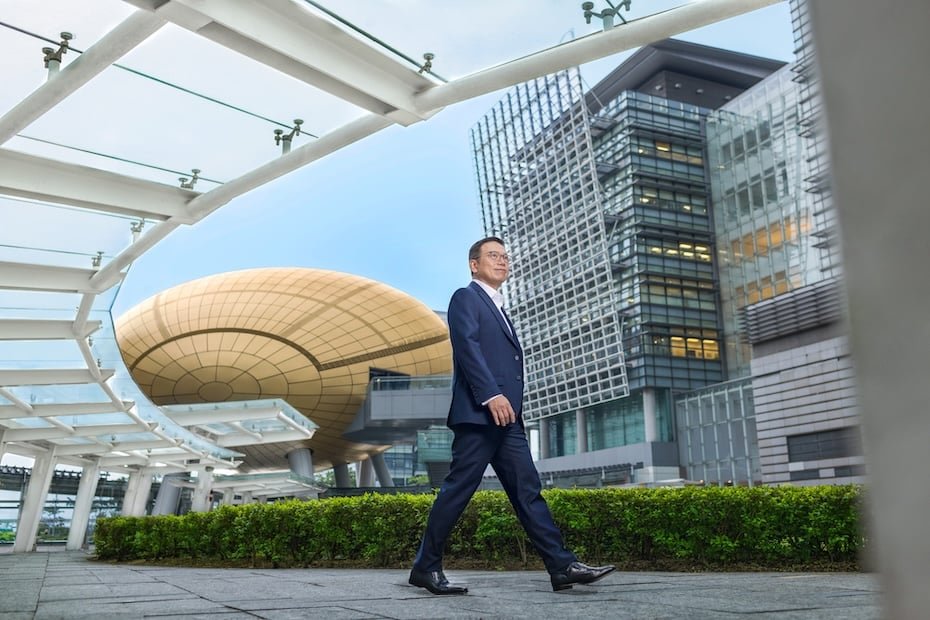
The Hong Kong Science and Technology Parks Corporation (HKSTP) has been a key driver of Asia’s innovation ecosystem for over two decades. Located on the Tolo Harbour waterfront in Pak Shek Kok, the 400,000-square-metre campus provides a vibrant environment where science and technology companies can innovate and grow, supported by state-of-the-art R&D facilities, market-led laboratories, and other amenities that create a live-work-play ecosystem.
HKSTP serves as a magnetic hub for the world’s brightest innovators and most ambitious capital, powering a dynamic ecosystem of nearly 25,000 working population. This is where students evolve into startup founders, and successful alumni return as mentors. This self-reinforcing cycle of growth and collaboration—this is the essential “soft power” that HKSTP provides to its 2,400 park companies.
Following a successful debut at LEAP 2024 that resulted in deep conversations with local authorities and MOUs with innovation bodies including establishing solid action plans for exchange and nurturing programmes, HKSTP has also returned to GITEX GLOBAL 2025 to showcase its offers and tap collaboration opportunities with the Middle East region.
We sat down with CEO Terry Wong to get the details on HKSTP’s objectives for GITEX GLOBAL and the park’s broader engagement with the Middle East.
We sat down with CEO Terry Wong to get the details on HKSTP’s objectives for GITEX GLOBAL and the park’s broader engagement with the Middle East.

What did you showcase at GITEX GLOBAL 2025.
Thanks to last year’s delegation to the Middle East, we have established a good network and communications with companies and entities in the region. The exciting part is that we are in positive conversations for collaborations. That’s really one of the best outcomes we got from last year. And we’re going to solidify more partnerships.
We’re showcasing exciting things this year too. First, our team gained insights from last year’s event, learning what the market, participants, potential customers, and investors are interested in. This year, our team lead a delegation of 17 of Hong Kong’s brightest innovators specialising in AI, life and health, green technology, and more, to join GITEX Global and Expand North Star. The delegation was a strong representation of Hong Kong’s I&T power as a global innovation and technology hub.

Secondly, our team has lined up over 200 business meetings connecting our park companies with international partners and different people so that we have a better understanding of who or where we want to meet to have a greater impact afterwards and bring in a follow-up with the highest success rate.
One notable achievement is Comba Telecom, which landed a partnership with Nedaa, the local telecommunications provider, to advance next-generation communication technologies across the UAE and surrounding regions.

What makes HKSTP such an important partner for companies looking to expand into Asia?
Let’s start with some good news for our city. Recently, Shenzhen-Hong Kong-Guangzhou cluster — was ranked the top tech cluster in the world by WIPO. Being recognised as the number one cluster is a strong endorsement of Hong Kong as a hub for R&D and IP development. Another key factor in this ranking was the activity of investment and funding for R&D initiatives, which highlights that this cluster is not only ideal for startups to launch, but also attractive for investors seeking innovation opportunities.
Another supporting strength is talent. Hong Kong ranks among Asia’s top destination for international talent and holds the 4th position globally. This means startups can access some of the best talent from around the world. The city is also home to world-class universities and academics, providing an ecosystem rich in knowledge and expertise.
With the broader Greater Bay Area, which includes Hong Kong, Shenzhen and Guangzhou, HKSTP can capture the full value chain — from ideation and incubation to commercialisation and market expansion. The region offers ample resources, land, and infrastructure to support every stage of a startup’s growth.
The Hong Kong cluster provides comprehensive solutions in a way that’s rare globally. For startups and investors from the Middle East, it’s an ideal place to establish a presence, seek partnerships, or explore investment opportunities. It also opens pathways back to the Middle East for commercialisation and collaboration. In short, Hong Kong is a strong starting point and a reliable partner for anyone looking to innovate and scale in Asia and globally.

Can you shed some light on existing partnerships and collaborations with companies, startups, or government authorities in Hong Kong?
We have a wide range of partnerships. Take the life and health tech sector as an example. The HKSAR Government provides extensive support through enabling policies. These not only ensure the right legal and regulatory framework for IP protection, but also give us access to Hong Kong’s network of hospitals for test cases, trials, and clinical studies.
The government is also establishing a Hong Kong equivalent of the FDA to approve drugs and medical devices. Once certified, these products can enter the Greater Bay Area and potentially expand into China and other Asian markets. These policies are critical for startups aiming to scale regionally.
On the private sector side, many multinational pharmaceutical and biotech companies have established a presence at HKSTP. They bring strategic value — not just through R&D, but also by providing commercial networks that help our startups with clinical trials, guidance, and commercialisation. They also assess startup viability, offering expertise and support across multiple dimensions.
Equally important, many partners view Hong Kong as a springboard into the China market. As a result, our collaborations serve multiple strategic purposes, creating a dynamic ecosystem for startups and established companies alike.

Tell us about your investor network.
Over our 24-year history, we have developed an extensive virtual network of over 1,000 investors. Many of them are actively reviewing and engaging with startups on a day-to-day basis. So, when startups want to tap into investment opportunities, this network is readily accessible.
Another notable trend is the influx of successful, mature companies from Chinese Mainland coming to Hong Kong, often with ambitions to expand globally and pursue IPOs here. Many of these companies establish themselves at the park, where we provide end-to-end support — from setting up operations and accessing financing in Hong Kong, to entering overseas markets and attracting international talent for R&D. Many partnerships have already been formed, and we expect even more to develop as this ecosystem continues to grow.
What other areas of technology have potential for collaboration, such as fintech or space? What can you offer startups or companies in the Middle East looking to come to the park?
At HKSTP, we host hundred fintech companies and many of them have achieved significant success. For example, a virtual bank that started as a Hong Kong-based startup is now expanding successfully across Asia.
Hong Kong has long been an international financial hub. Companies here can access the Hong Kong Exchange, benefit from strong regulatory frameworks, and leverage government support for emerging areas like virtual banking and digital assets. The government issues full licences for virtual banks to encourage growth in this sector.

Combined with Hong Kong’s deep expertise in finance, it’s one of the best places to launch a fintech venture, supported by clear policies and a strong, autonomous business environment with robust IP protection. Hong Kong’s legal system, based on common law, is another key advantage.
Based on these factors, many companies choose Hong Kong as a starting point for their business, and I hope to see even more from Dubai and the region exploring opportunities here.
What are some key takeaways companies can learn from Hong Kong in the way it’s conducted business or promoted technology?
I think Dubai has made remarkable progress over the past few decades and is already a strong success story on its own. In Hong Kong, government policy plays a distinct role in fostering private sector growth. It gives businesses ample room to operate independently while providing strong protections — like intellectual property rights, world-class arbitration centre, and other policy-driven frameworks — that ensure a secure environment for business.
Equally important is the free flow of talent. Hong Kong encourages easy access for professionals and expatriates, making it simple for them to settle and work here. Hong Kong has been serving as a hub for international talent, so this convenience is crucial for attracting skilled individuals.
Education, particularly tertiary education, is another key focus. Policies are in place to attract top-tier professors and academics who collaborate with local universities and researchers on R&D projects. This creates a supportive environment for upstream research and innovation.
Moreover, Hong Kong has long been one of the world’s leading free trade areas. Its flexibility and openness make commercialisation and business development straightforward and dynamic. These attributes define Hong Kong’s appeal.
I believe the GCC, including Dubai, is moving in a similar direction. Some markets are already showing strong results, while others are still emerging, but overall, the trajectory is positive and promising.
If a startup from this region comes to your team talking about scaling up, what would be the process they would expect to go through?
We have a very unique process to nurture startups all the way to unicorn status. Honestly, I’ve always wondered why we haven’t trademarked it — it’s that distinctive.
When a startup joins HKSTP, we’re not just offering office space or laboratories. We have structured programmes tailored to each stage of their growth. The first stage is ideation. Startups receive around HK$100,000 in seed funding after going through a thorough application and screening process. But it’s not just about the money — they’re assigned account managers who follow them closely, helping with business challenges and even personal issues.
If a startup successfully moves through ideation, they enter the incubation phase. Here, they receive higher funding to match their development needs. We also start connecting them with investors to showcase their ideas and business models. They gain access to industry experts, training programmes, conferences, and mentorship from experienced entrepreneurs, which teaches them skills outside their core expertise.
Next comes the acceleration phase. Funding increases again, and the criteria for participation become more stringent. This phase is more tailor-made, often including international exposure. Some startups are selected to go to the US for six months, where they receive intensive training, networking opportunities, and introductions to active investors in Silicon Valley. Last year, companies that went through this stage collectively raised over US$15m in business contracts and investments. They return transformed, more confident, and much better positioned to scale.
Finally, our elite programme provides bespoke support for Series B and C funding, guiding startups toward IPOs or further international expansion. It’s a comprehensive system designed to match each startup’s growth cycle.
Over the past 20 years, the programme has supported 13 unicorns. Just last week, I met a company that, on the verge of going public, chose to merge with a multinational to accelerate growth. Stories like this are becoming more common, and it’s exciting to see the impact of a structured, long-term approach.
Apart from Hong Kong-based and Chinese startups, from where else in the world do you have startups located in Hong Kong?
We have quite a significant percentage of international startup companies coming in. Currently, HKSTP is home of over 2,400 technology companies from 26 countries and regions, focusing on healthtech, AI and robotics, fintech, smart city technologies, and more.
There is one interesting case involved young entrepreneurs from different countries who had never met in person. They connected on the internet, shared their ideas, and discovered they had the same vision and dreams. When they started looking at places to start a business, they compared options like Singapore and others, and found that nothing compared to Hong Kong in terms of friendliness, ease of setting up a company and facilities. They eventually chose to base themselves in Hong Kong at our park, working in the labs and facilities we provide. They joined our incubation programme.
Sometimes it’s amazing — you wonder why they choose to come here. But I think they know what we’re doing and appreciate the very unique process I just laid out. They have full confidence in how they can develop and access what they need.
Hong Kong is exceptionally friendly for expatriates. It offers lifestyle, not just work. Our park is very vibrant with restaurants, clubs, and gyms among other offerings. We provide a complete lifestyle.
Looking ahead to 2026, what are the park’s plans to enhance its offerings?
As everybody knows, AI is everything, everywhere. AI has continued to dominate quite a bit in the technology space and our daily life. Going into next year is going to be explosions of applications using AI. Ordinary people, small and medium enterprises, big enterprises—they all started to appreciate and apply AI applications in business to be more efficient and achieve other things they never imagined they could achieve. That’s the major trend.
To harness this momentum, we are excited to announce the establishment of “INNOPOLE,” our new 20-hectare I&T hub in the San Tin Technopole. This strategic hub will provide the dedicated space needed to attract top-tier enterprises and talent, fostering collaboration across the entire innovation value chain.

To harness this momentum, we are excited to announce the establishment of “INNOPOLE“, our new 20-hectare I&T hub in the San Tin Technopole. This strategic hub will provide the dedicated space needed to attract top-tier enterprises and talent, fostering collaboration across the entire innovation value chain.
Through “AI+ initiative”, we will accelerate the transformation of key industries–from life and health tech to advanced materials, new energy, microelectronics, and electronics. This fusion of digital innovation with Hong Kong’s strengths allows us to proactively meet future societal challenges.
Our park is already a thriving ecosystem for AI, home to over 500 AI-focused startups and 5,000 AI professionals. We are here to ensure that we embed AI as a foundation enabler for all our other technology clusters to develop.
