



Image: Supplied
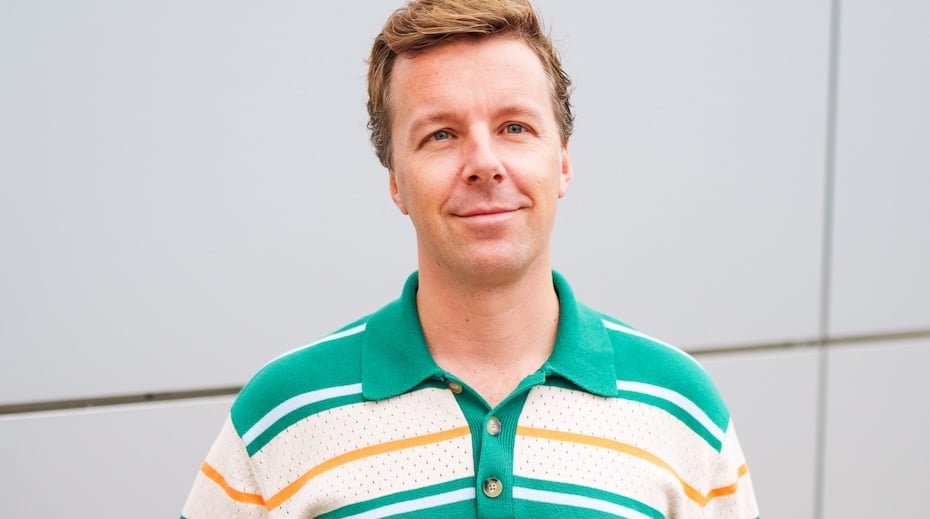
As AI reshapes industries across the Middle East, Ainigma is betting on a people-first approach. The boutique AI consultancy headquartered in London and Amsterdam was founded in 2024 by Arne Mosselman. In October 2025, Ainigma formalised a partnership with regional communications consultancy TRACCS to help organisations across the Middle East adopt GenAI ethically and strategically.
Through its partnership with TRACCS, the company aims to bridge the gap between technology and talent, driving practical adoption and measurable impact.
In this interview, Mosselman discusses what “human-centric” AI really means, how it can amplify creativity rather than replace it, and why the region’s success with AI will hinge on ambition, inclusion, and responsible innovation.
The partnership between Ainigma and TRACCS comes at a time when many organisations in the Middle East are experimenting with AI but struggling to integrate it meaningfully. What gap are you aiming to fill through this collaboration?
The answer is clear: most organisations are treating generative AI (GenAI) solely as a technological development, an IT solution designed to automate work. We see this differently. The real value—and the science backs this up — is unlocked when AI is put in the hands of people. When people work with AI, their productivity can increase by 20 per cent or more.
But achieving this isn’t about building new technology; it’s about change management. It’s about fostering curiosity, upskilling teams, and innovating on existing workflows. The gap we are filling with TRACCS is precisely this element of human connection. TRACCS brings deep regional expertise and trusted relationships, while we bring the playbook for human-centric AI adoption.
Together, we focus on capacity building, ensuring teams can actually use these powerful tools effectively and responsibly.
“Human-centric” is a term often used in AI discussions but rarely defined in practice. What does a genuinely people-first approach to GenAI look like in business and communications?
A people-first approach means starting with human ambition, not machine capability. Instead of asking, “what can we automate,” we ask, “where are the friction points in our teams,” or “what do our customers truly need?”
In practice, this looks like bottom-up innovation , where employees are empowered to find and build their own solutions based on their unique knowledge. You equip them with the skills and, just as importantly, the confidence to use these tools to solve those problems.
Research shows that when people use GenAI this way, they don’t just get more done; they enjoy their work more, they are more creative, and they can focus on the high-value, strategic tasks they find most important. For us, “human-centric“ isn’t a soft term; it’s a hard business strategy. It’s good for your people, and it’s good for your bottom line.
There’s growing concern that GenAI could dilute creativity rather than enhance it. How do you see the balance between human imagination and machine capability evolving?
This is a fear we’ve seen with every major technological shift. When the camera was invented, people feared it would be the end of painting. Instead, it unlocked entirely new art forms.
GenAI is a powerful tool, much like a pen or a camera. In a static world, it might look like machines are doing work humans used to do. But history shows that when we get more powerful tools, human imagination simply sets higher goals. AI is a tool to enlarge human creativity.
GenAI is a massive enabler; it democratises the ability to create. You no longer need to have mastered a specific technical craft to bring a vision to life. If you have imagination, taste, and critical thinking, these tools allow you to unleash that creativity. It will lead to more human expression, not less.
Beyond the hype, what are some of the most realistic and high-impact ways you see GenAI transforming industries in this region, particularly in communications, government, or creative sectors?
The most realistic and high-impact transformation we see is the “super-powered team.” GenAI can make a small, focused team five or ten times more effective. Projects that once seemed impossible or would have required a massive budget are suddenly within reach.
For the creative and government sectors, this means an abundance of new content, new services, and new ideas. We will see more startups and new initiatives able to compete with large incumbents because they are AI-native from day one. The challenge will actually be for larger, established organisations to adapt their ways of working. For a region with so much ambition, this technology is a powerful accelerator for turning visionary goals into reality.
Ethical use of AI is becoming a pressing issue globally. How can companies in the Middle East adopt GenAI responsibly while ensuring compliance, transparency, and trust?
This is a critical issue, and with powerful new tools comes great responsibility. The challenge is that these tools are already ubiquitous. Employees are already using them, whether the company has a policy or not.
Therefore, the most irresponsible thing an organisation can do is to try and “close the door.” A responsible approach starts with acceptance. Companies must provide their teams with safe, secure tools and then, crucially, upskill everyone on the risks. This includes practical training on privacy, data security, and identifying bias.
Trust and transparency are built not by banning AI, but by creating a clear, ethical framework for its use and empowering employees with the knowledge to navigate it safely.
As the region doubles down on digital transformation through national visions, what will determine whether AI adoption leads to real productivity gains rather than surface-level innovation?
The difference will be ambition.
What will determine success? Whether an organisation treats this as a technology problem or a human opportunity. If AI stays in a silo, you’ll get surface-level innovation. But real gains come when leadership puts AI in the hands of everyone and combines it with ambitious goals. We have to aim higher than just ‘AI literacy’. We need AI proficiency.
When people are truly empowered with these tools, they don’t just become more productive. As we’ve seen in research, they become more creative, they like their work more, and they can focus on what they do best. That is the real productivity gain, and it’s driven entirely by people, not by code.
Read: ‘AI can serve the greater good’, says Amazon CTO Dr Werner Vogels
