


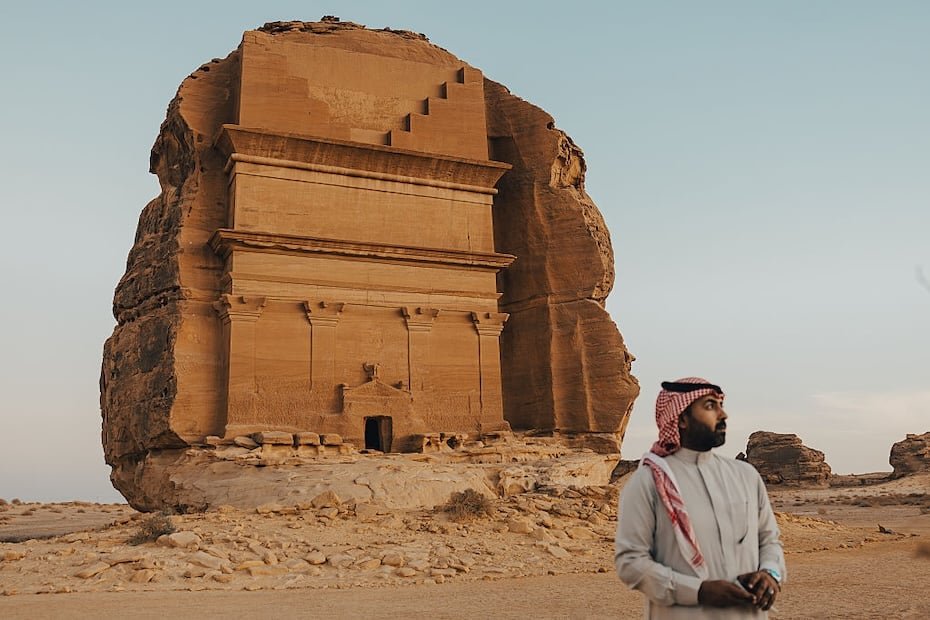

A view of Mada’in Salih, also knows by its ancient name Hegra, listed as a UNESCO World Heritage site in Medina province, Saudi Arabia. (Getty Images)
Saudi Arabia is expanding its mid- and upper-mid-range tourism options and plans to increase access to hotel accommodation for religious pilgrimages after years of focusing on developing high-end luxury resorts, the kingdom’s tourism minister has said.
“We started by building luxury destinations for luxury travellers, and we have already begun developing destinations for the middle class and upper-middle class,” Saudi Tourism Minister Ahmed Al-Khateeb told Reuters.
“We will not ignore this segment,” he said on the sidelines of the UN Tourism General Assembly, being hosted in Riyadh for the first time.
Attracting tourists is a central pillar of Saudi Crown Prince Mohammed bin Salman’s Vision 2030 plan to diversify the kingdom’s economy away from oil and transform society in the once ultra-conservative country.
Under the plan, Saudi Arabia aims to attract 150 million tourists per year by 2030, at least a third of them from overseas.
With flagship Red Sea coastal resorts charging around $2,000 per night, few mid-income travellers currently have hotel options.
Al-Khateeb said ten new resorts due to open in the coming months on the Red Sea’s Shebara Island would offer a “much lower price point” than existing options, without giving figures.
Religious tourism remains at the core of Saudi Arabia’s economic strategy.
Al-Khateeb said the kingdom planned to nearly double the number of pilgrims visiting the holy cities of Mecca and Medina to 30 million by 2030, supported by tens of thousands of new hotel rooms.
Saudi Arabia is also seeking to encourage more regional visitors, including through a plan to introduce a Schengen-style visa for Gulf Cooperation Council countries.
Al-Khateeb said this should become available “in 2026, at the latest by 2027.”
