


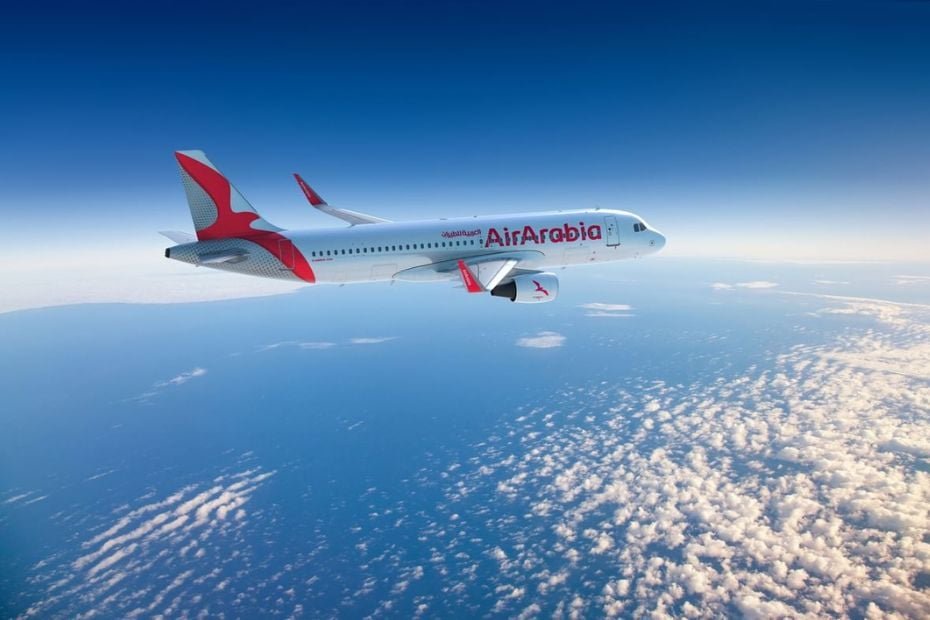

Image credit: WAM/Website
Air Arabia (PJSC), the Middle East and North Africa’s first and largest low-cost carrier, has reported record financial and operational results for the third quarter and first nine months of 2025, underscoring its strong market position and resilience amid global aviation challenges.
For the quarter ending September 30, 2025, Air Arabia’s net profit surged 16 per cent year-on-year to Dhs656m, marking one of its strongest quarterly performances on record. Revenue climbed 14 per cent to Dhs2.04bn, reflecting robust travel demand across its expanding route network, a WAM report said.
Read more-Etihad, Air Arabia chart new routes: Here’s what travellers need to know
Passenger traffic also continued its upward trajectory, with more than 5.9 million travellers carried across Air Arabia’s hubs during the period, up 16 per cent from a year earlier. The airline’s average seat load factor, a key indicator of operational efficiency, rose four percentage points to 85 per cent, highlighting sustained demand and effective capacity management within its low-cost model.
Chairman Sheikh Abdullah bin Mohammad Al Thani said the results underscored the “continued strength” of Air Arabia’s business model and the “sustained demand for its value-driven product.” He noted that despite ongoing geopolitical and supply chain challenges, the carrier has maintained solid profitability through operational efficiency, disciplined cost control, and network optimisation.
“Our performance is a testament to the management team, the trust of our customers, and the strength of our strategic vision,” Al Thani added.
Strong nine-month results driven by expansion
For the first nine months of 2025, Air Arabia reported a net profit of Dhs1.42bn, a 13 per cent rise over the same period last year, with total revenues reaching Dhs5.49bn, up 10 per cent year-on-year. Passenger numbers for the January–September period reached more than 16 million, an increase of 14 per cent compared to 2024. The average seat load factor for the nine months also rose four percentage points to 85 per cent, reflecting consistently high utilisation levels.
During this period, Air Arabia continued to strengthen its network reach and fleet capabilities. The airline launched 12 new routes across its operating hubs in the UAE, Morocco, Egypt, and Pakistan, expanding its total network to 212 routes. It also added six new aircraft to its fleet, bringing the total to 88 Airbus A320 and A321 aircraft, both owned and leased, with more deliveries expected before the end of 2025.
In a move that underscores its regional growth ambitions, Air Arabia, alongside Nesma Group and KUN, was selected by Saudi Arabia’s General Authority of Civil Aviation (GACA) to establish and operate a new national low-cost carrier based at King Fahd International Airport in Dammam. The new airline aims to enhance connectivity within the kingdom and support Saudi Arabia’s broader aviation and tourism expansion goals.
Sustainability and social responsibility
Sustainability remains a central pillar of Air Arabia’s strategy. During the third quarter, the airline retained its MSCI ESG “AA” rating, placing it in the global “Leader” category for airlines. As part of its broader sustainability roadmap, Air Arabia completed a materiality assessment involving more than 400 stakeholders, identifying 12 key sustainability priorities.
A major milestone came with the delivery of its first Airbus A320neo, part of a 120-aircraft order that promises up to 20 per cent lower fuel burn and CO₂ emissions. These sustainability gains are reinforced by ongoing fuel optimisation initiatives, a paperless cockpit program, and digital transformation across operations.
Beyond environmental goals, the company’s Charity Cloud initiative continued to expand its global humanitarian footprint. Two new clinics opened in Bangladesh and Egypt, offering vital healthcare to underserved communities. This brings the total number of Charity Cloud schools and clinics to 15 across 12 countries, reaffirming Air Arabia’s commitment to community well-being and social development.
As Air Arabia enters the final quarter of the year, Sheikh Abdullah bin Mohammad Al Thani said the airline will maintain its focus on executing its long-term growth strategy while sustaining profitability and efficiency.
“Our priorities remain centered on network expansion, operational excellence, and customer experience enhancement,” he said. “Through innovation and disciplined growth, we aim to deliver consistent, sustainable results and long-term value to all stakeholders.”
