


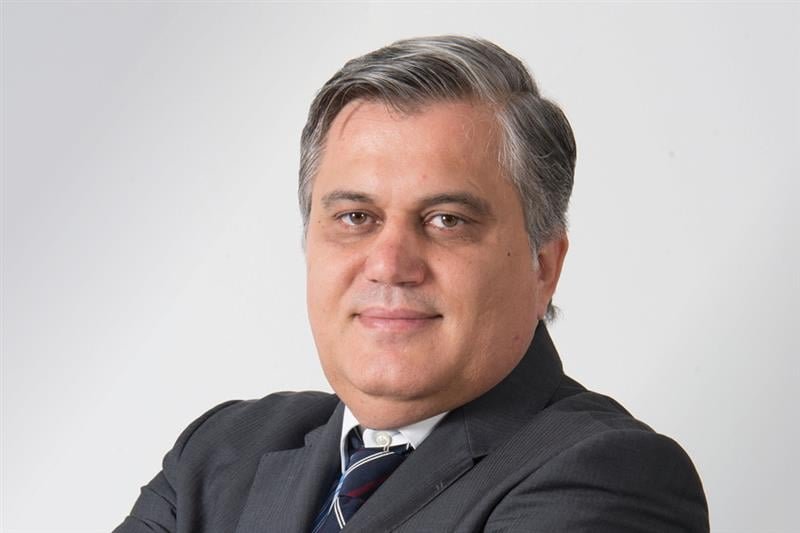

Image: Supplied
Khazna Data Centers has committed to one of the region’s most ambitious infrastructure expansions, announcing at GITEX Global 2025 plans to add over 1 gigawatt of hyperscale capacity by 2030 across multiple countries. Backed by a $2.62bn financing facility from Abu Dhabi Commercial Bank (ADCB) and First Abu Dhabi Bank (FAB), the UAE-based operator is targeting strategic markets including Saudi Arabia, Italy, Turkey, and Southeast Asia as nations race to build sovereign, AI-optimized digital infrastructure.
The expansion comes as artificial intelligence workloads drive unprecedented demand for data center capacity, with governments increasingly prioritising national control over compute resources and data governance. Khazna is already delivering infrastructure for Stargate UAE and partnering with Microsoft to support sovereign AI use cases across the region.
Sustainability anchors the buildout: Khazna’s facilities integrate nuclear, photovoltaic, and concentrated solar power (CSP), achieve LEED Gold certification, and deploy advanced cooling systems including water reuse and adiabatic technologies to reduce power and water consumption. The company’s decarbonisation trajectory aligns with the UAE’s net-zero target by 2050.
In this interview, Tinboat Arslanouk, chief business officer – International at Khazna Data Centers, explains how the company is positioning itself as the foundational layer of the AI era, what sovereignty means in the context of hyperscale infrastructure, and why the decisions made today about where and how data centres are built will shape the global digital economy for decades.
You just announced at GITEX Global 2025 a major expansion adding over 1GW of hyperscale capacity by 2030 across multiple countries, backed by a $2.62bn financing facility from ADCB and FAB. What prompted this ambitious growth trajectory, and why is now the pivotal moment for Khazna to scale globally into markets like Saudi Arabia, Italy, Turkey, and Southeast Asia?
Artificial intelligence (AI) is scaling faster than infrastructure can keep up, and we’re aiming to close that gap. This expansion isn’t just about adding capacity; it’s about delivering capability, where and how it’s needed most.
We’re seeing clear demand at the national level for sovereign, AI-optimised infrastructure that can be trusted. And it needs to be delivered quickly, built sustainably, and designed to evolve. We have demonstrated experience here.
The financing facility gives us the agility to move decisively into strategic markets. We’re looking at regions that are accelerating toward a more digital, AI-native economy, but need the foundational infrastructure to get there. We’re uniquely positioned to deliver that, and we’re helping nations build the base layer of their next economies.
Your mission is to deliver “resilient, sustainable, and sovereign-ready AI infrastructure”. Can you explain what sovereignty means in this context, and how Khazna’s infrastructure is specifically engineered to enable the UAE and other nations to build AI-native economies while maintaining data control and security?
Sovereignty, in the context of AI infrastructure, means more than just where the data sits. It’s about who governs it, who controls the compute, and who sets the rules. As nations accelerate their AI strategies, they’re realizing that true digital independence requires physical infrastructure they can trust and control. That’s where we come in.
Our facilities are engineered for sovereign readiness from day one. That means full data jurisdiction, secure architecture, and operational transparency. We design, build, and operate our infrastructure end-to-end, which gives our clients the confidence that their most sensitive workloads remain under national governance. For many countries, this is becoming a strategic priority.
Sustainability is central to your expansion — your facilities use nuclear, photovoltaic, and CSP solar power, achieve LEED Gold standards, and employ advanced cooling systems. Given that data centers are energy-intensive, how are you balancing rapid capacity growth with environmental responsibility, and what’s your renewable energy target across all operations?
Growth without responsibility isn’t an option. As we scale to meet AI demand, we’re engineering efficiency into every layer of our infrastructure. So that’s from the energy we source to the way we cool our systems. Our facilities are built to run leaner, smarter, and cleaner. Our overall goal is line with the UAE’s national goal of net zero by 2050. And as the country’s grid decarbonises, we are decarbonising with it.
We are already achieving LEED Gold across our campuses, and our facilities integrate water reuse, closed-loop cooling, and adiabatic systems to drastically cut both power and water consumption. Our goal is simple: build infrastructure that can support the future of AI without compromising the future of the planet.
You’re delivering the infrastructure layer for Stargate UAE and working with Microsoft to support AI use cases. How critical is partnership and knowledge transfer in accelerating AI adoption across enterprises and governments in the region, and what role does training and talent development play in your ecosystem?
The AI industry isn’t growing out of a single, isolated company. Like any other industry, it’s an ecosystem. Building infrastructure is just the start. It’s the partnerships, the platforms, and the people that bring it to life. That’s why collaboration is central to our approach. Whether it’s delivering infrastructure for Stargate UAE or working with Microsoft to enable sovereign workloads for governments and enterprises.
Knowledge transfer is a multiplier. When we partner, we’re building local capability, aligning infrastructure with national strategy, and enabling digital self-sufficiency. And that includes talent. We see data centre infrastructure as a career path, not just a technical field. Our programs invest in local training, mentorship, and STEM engagements. Building AI-native nations means investing in the people who will run them.
Looking ahead, with 1GW of new capacity being added and the UAE’s ambition to become an AI-native nation, what’s your vision for Khazna’s role in shaping the future of sovereign digital infrastructure globally, and what’s the one thing you’d want industry leaders and policymakers to understand about the infrastructure needs of tomorrow?
Our vision is clear: to be the foundational layer of the AI era. Not just in the UAE, but globally. As nations move from digital transformation to digital sovereignty, they’ll need infrastructure partners who can deliver scale, sustainability, and control. That’s our role. We’re building sovereign-ready capacity that enables countries to harness AI on their own terms, with confidence in the resilience, security, and performance of the systems beneath it.
If there’s one thing we’d tell industry leaders and policymakers, it’s that infrastructure is a strategic lever. The decisions made now about how and where we build will shape the global digital economy for decades.
