


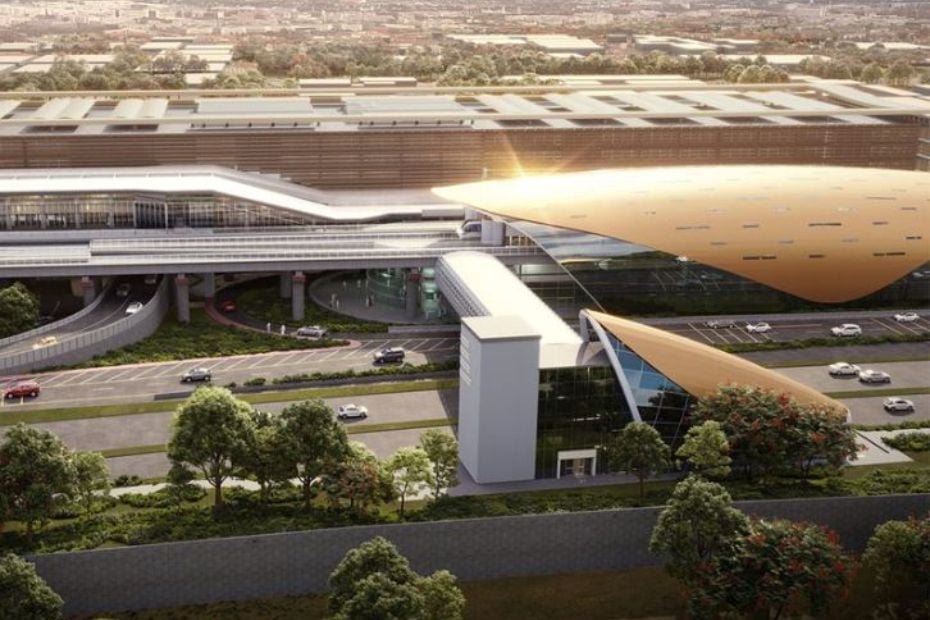

Image credit: Dubai Media Office/X account
Dubai is taking a giant leap in urban mobility with the launch of the Dubai Metro Blue Line, a transformative mass transit corridor designed to connect key residential, commercial, and industrial hubs across the emirate. Stretching over 30 kilometres with 14 strategically located stations, the Blue Line promises to make travel faster, smoother, and more convenient for commuters, while supporting Dubai’s long-term economic and urban development plans.
From Creek Station, which interchanges with the Green Line, to the iconic Emaar Properties Station at Dubai Creek Harbour, each station has been meticulously planned to provide seamless access to residential communities, business districts, academic zones, and technology hubs. By integrating with existing metro lines, feeder buses, and multimodal transport options, the Blue Line not only enhances daily commuting but also aligns with Dubai’s 2040 Urban Master Plan and the city’s ambition to become a global smart city.

The project also emphasizes sustainability, efficiency, and innovation. With 9 elevated and 5 underground stations, modern amenities, and environmentally conscious designs, the Blue Line sets new benchmarks for urban transit in the region. Commuters can expect reduced travel times, improved connectivity between key districts, and a direct link to Dubai International Airport, all while contributing to a reduction in traffic congestion and carbon emissions.
Read more-Dubai Metro Blue Line: What you need to know as the 2029 launch nears
In essence, the Dubai Metro Blue Line is not just a transportation project, it’s a backbone for urban growth, economic expansion, and a better quality of life for more than one million residents across the city by 2040.
الخط الأزرق لمترو دبي، مشروع من #هيئة_الطرق_و_المواصلات يسهّل التنقل ويعزز جودة الحياة في الإمارة، عبر اختصار زمن التنقل بين أبرز المناطق الحيوية في الإمارة، من خلال 14 محطة جديدة، تتضمن محطة أيقونية بطابع معماري متميز، كما يعزز تكامل شبكة المترو عبر محطات انتقالية مع الخط الأحمر… pic.twitter.com/vPz5Rx3s4C
— RTA (@rta_dubai) November 14, 2025
1-Creek Station: A new multimodal anchor
The Blue Line begins with Creek Station, a primary interchange with the Green Line. Serving Al Jaddaf and the expanding Dubai Creek developments, this station strengthens the entire network by reshaping passenger distribution and enhancing journey efficiency. The RTA identifies it as a key point enabling faster cross-network connections, essential for the rising number of daily commuters moving between older and newer city districts. The station’s role extends beyond transfer functionality, it stands as an early anchor designed to support heavy daily ridership, making Dubai Creek a more seamlessly integrated urban zone.
2-Dubai Festival City Station: Elevating retail and hospitality access
The second station on the Blue Line route brings direct transit access into Dubai Festival City, one of Dubai’s central mixed-use destinations. The RTA notes that this station will directly support retail and hospitality sectors by improving access for both residents and visitors. With Dubai Festival City positioned as a major shopping, business and leisure hub, the station reinforces the area’s long-term commercial competitiveness and aligns with the emirate’s broader economic diversification goals. The enhanced public transport link is expected to support higher footfall, especially during peak tourism and retail seasons.
3-Dubai Creek Harbour Station: The tallest metro station globally
A defining feature of the Blue Line is the Dubai Creek Harbour Station, described by the RTA as the tallest metro station in the world. Positioned prominently within the fast-developing Creek Harbour district, this station is connected by a specially designed viaduct crossing the Dubai Creek, a landmark structural achievement. The RTA highlights this station as a signature architectural icon and a key mobility entry point into a district known for its expanding residential and commercial developments. Its scale and design underline Dubai’s emphasis on integrating iconic infrastructure into everyday mobility, ensuring long-term urban value.

4-Ras Al Khor Station: Serving industrial and residential corridors
The Blue Line’s next major stop, Ras Al Khor Station, plays a critical role in linking the industrial sector with adjacent communities. According to RTA mapping, the station is positioned to support workforce transit, improve daily movement within industrial zones and enhance mobility for the surrounding residential areas. As a key part of Dubai’s eastward urban grid, the Ras Al Khor station is designed to meet high traffic demand while encouraging greater public transport reliance among daily commuters and labour segments.
5-International City 1 Station: A core interchange hub
The first of the Blue Line’s three International City stations, International City 1 is identified by the RTA as a new interchange hub intended to streamline passenger flow within one of Dubai’s most densely populated districts. As part of the Blue Line’s integrated network design, this station enables interchange opportunities that future-proof the system for rising ridership and commercial density. Its position enhances accessibility for International City residents, Dragon Mart visitors and the broader community, enabling improved mobility and travel time efficiency.
6-International City 2 Station: Supporting residential growth
The second station in the International City cluster, International City 2, expands the metro’s reach deeper into residential and mixed-use districts. According to the RTA, the station integrates seamlessly into the wider metro blueprint, supporting thousands of daily users who rely on public transport for commuting across the city. With International City’s population continuing to grow, the station is designed to optimize coverage and provide a sustainable mobility alternative to road-based travel.
الخط الأزرق لمترو دبي
The Blue Line of Dubai Metro@rta_dubai pic.twitter.com/wdbNWPxSH4
— Dubai Media Office (@DXBMediaOffice) November 24, 2023
7-International City 3 Station: Completing the district network
International City 3 completes the trio of stations serving the precinct. Consistent with the RTA’s network standards, the station enhances local access and ensures balanced distribution of ridership across all three stations. Its placement supports ease of movement for residents and contributes to the Blue Line’s goal of improving coverage across communities with high population density.
8-Dubai Silicon Oasis Station: A mobility engine for technology and innovation
The next major stop along the Blue Line, Dubai Silicon Oasis Station, is positioned as a central mobility anchor for one of the emirate’s most important technology and business ecosystems. As described in RTA’s official updates, Dubai Silicon Oasis is a primary technology and business node on the route, directly supporting Dubai’s vision for an innovation-driven economy. By enhancing accessibility to the area’s tech clusters, start-ups, research centres, and corporate offices, the station serves as a catalyst for workforce mobility and talent attraction.
The station strengthens the district’s role as an urban centre within the Dubai 2040 Urban Master Plan. For companies located in Dubai Silicon Oasis, improved public transit connections can reduce commuting times, improve staff retention, and support sustainable transport usage. For the broader labour force, the station provides a reliable alternative to private car travel, easing congestion on arterial routes and simplifying cross-city movement.
9-Academic City Station: Connecting over 50,000 university students
The Blue Line’s Academic City Station is set to reshape the daily mobility patterns of one of Dubai’s largest and youngest population groups: university students. As per RTA documentation, the station will serve the city’s academic zone, making higher education and research centres more accessible for thousands of students and staff. The extended Academic City corridor is projected to accommodate over 50,000 university students by 2029, making heavy reliance on efficient public transit essential.
This station enhances the integration of educational institutions with the broader city, enabling students from across Dubai to reach the academic district without the need for personal vehicles. For universities and research centres, the new connectivity supports enrollment, reduces logistical barriers for faculty and staff and encourages environmentally conscious mobility. In line with Dubai’s sustainability focus, Academic City Station is expected to make a meaningful impact in reducing carbon emissions generated by student commuting.

10-Metro Depot Al Ruwayyah 3 Station: The functional backbone
Further along the route lies Metro Depot Al Ruwayyah 3 Station, serving as the operational backbone of the Blue Line. While primarily a functional depot rather than a commercial stop, it plays a crucial role in ensuring the smooth running of the entire network. As referenced in RTA materials, this site supports train and systems maintenance, forming a vital link in the reliability and efficiency of Blue Line operations.
The station’s inclusion highlights the RTA’s emphasis on building a resilient transport system that can sustain high-capacity ridership. With Dubai’s railway fleet set to expand from 140 to 168 trains, 157 for the Dubai Metro and 11 for the Dubai Tram, the depot is central to the long-term operational stability of the network.
11-Al Warqaa Station: Infrastructure for a growing residential corridor
The Blue Line continues into Al Warqaa, one of Dubai’s rapidly expanding residential areas. RTA statements emphasize that Al Warqaa Station is specifically designed to support a growing population in one of the emirate’s major residential catchment zones. The station features multimodal connectivity options, including dedicated parking, feeder bus stops, taxi zones and infrastructure supporting People of Determination.
By providing direct public transit access, the station enables residents to benefit from shorter commute times and reliable transport connections to academic districts, technology hubs, shopping destinations and the airport. This infrastructure enhancement supports the long-term stability and growth of Al Warqaa’s residential landscape.
12-Mirdif City Centre Station: Strengthening a major community and retail hub
Mirdif City Centre Station brings increased mobility to the heart of Mirdif, further integrating one of Dubai’s established suburban communities into the metro network. According to RTA project releases, the station will improve public transport options for the area, supporting both community life and the district’s retail environment.
As a key suburban retail and lifestyle centre, Mirdif City Centre benefits from greater accessibility for shoppers, staff, and surrounding residents. The station fosters economic activity by expanding footfall potential and facilitating easier cross-district travel for both business and leisure. It reinforces Mirdif’s role as a thriving community node anchored securely within Dubai’s evolving transit grid.
13-Centrepoint Station: A high-capacity interchange linking blue and red lines
A defining feature of the Blue Line is its seamless connection to the existing metro system. Centrepoint Station, serving as the interchange with the Red Line, is central to this integration. The RTA specifies that Centrepoint enhances connections for airport access, cross-city travel, and multi-line transfers, making it one of the most important stations for overall network efficiency.
This station is equipped with park-and-ride facilities and optimised feeder services, directly supporting Dubai International Airport access and the mobility needs of residents across the eastern corridor. As a major interchange, Centrepoint enables the Blue Line to operate not as a standalone route but as an interconnected component of Dubai’s full metro network.
14-Emaar Properties (Creek Harbour) Station: A signature landmark
The Blue Line’s final station, Emaar Properties (Creek Harbour) Station, stands out for its architectural prominence. Highlighted by the RTA as the tallest metro station globally, this station underscores Dubai’s focus on iconic design and large-scale infrastructure. Positioned within the heart of Dubai Creek Harbour developments, the station is engineered to manage high passenger volumes and enhance connectivity across one of the city’s most prominent waterfront districts.
The station’s advanced facilities support Dubai’s ongoing expansion and symbolise the emirate’s commitment to pushing boundaries in mobility architecture. It functions as a future urban magnet, poised to attract residents, visitors and businesses seeking seamless transit access.

Setting new Benchmarks: The Blue Line’s structural and sustainability achievements
Beyond the stations themselves, the Blue Line incorporates several network-wide innovations. It includes Dubai’s first metro bridge crossing Dubai Creek, extending 1,300 metres; the largest underground interchange station spanning over 44,000 square metres with a projected capacity of 350,000 passengers per day; and it is the first transport project in Dubai to fully comply with green building standards at the Platinum Category.
These features demonstrate that the Blue Line is engineered not only to meet current mobility needs but to accommodate future capacity and sustainability goals. With upgrades that support energy efficiency and multimodal integration, the stations serve as models for future transport infrastructure in the emirate.
Upon completion of the Blue Line, Dubai’s total railway network will extend from 101 km to 131 km, including 120 km for the Dubai Metro and 11 km for the Dubai Tram. The number of metro and tram stations will increase from 64 to 78, with 67 stations dedicated to the metro and 11 to the tram. This expansion underscores the magnitude of the Blue Line and its integration into Dubai’s wider mobility system.
The fleet will also expand from 140 to 168 trains, 157 for the Dubai Metro and 11 for the Dubai Tram. This enlarged fleet ensures the Blue Line’s stations can support projected ridership and maintain operational reliability. The broadened network reinforces Dubai’s position as one of the world’s most advanced mass transit cities.
The Dubai Metro Blue Line stands as the fifth strategic public transport project, joining the existing Red and Green Lines, the Dubai Tram, and the Route 2020 extension. It is noted as one of the largest strategic transport projects currently being developed in the city. Its placement within Dubai’s mobility framework signals an era of expanded rail service that brings new districts into the city’s transit fold.
As Dubai continues to embrace a multimodal future, the Blue Line’s 14 stations serve as the structural pillars of this transformation. Each station reinforces Dubai’s ambition to create a world-class transportation backbone capable of supporting population growth, tourism, and economic diversification.
The Blue Line introduces a range of distinctive features that place its stations at the forefront of global transit design. The iconic Emaar Properties Station at Creek Harbour anchors this ambition, while the first metro bridge crossing Dubai Creek, stretching 1,300 metres, demonstrates the engineering scale of the project.
The line features the largest underground interchange station in the Dubai Metro network, covering more than 44,000 square metres with an expected daily capacity of 350,000 passengers. The Blue Line is also Dubai’s first transport project to fully comply with green building standards, achieving Platinum Category certification.
Collectively, these station innovations reflect Dubai’s pursuit of future-ready infrastructure. They highlight a network structured to support high ridership, operational durability and long-term sustainability.

Connecting One million residents across high-density areas
The Blue Line was planned with sustainability and density alignment at its core. It connects existing and future population concentrations estimated to reach around one million residents by 2040. The stations directly serve Dubai Creek Harbour, Dubai Festival City, International City, Dragon Mart, and numerous residential complexes.
Additional coverage extends to Al Rashidiya, Al Warqaa, and Mirdif, communities that benefit significantly from direct, rapid rail access. The line also integrates Dubai Silicon Oasis, one of the Dubai 2040 Urban Master Plan’s designated Urban Centres, and Academic City, projected to host over 50,000 university students by 2029.
These station catchment areas strengthen Dubai’s long-term economic and social infrastructure, providing residents with fast and reliable mobility options while easing road congestion.
Initial RTA studies highlight that infrastructure investments like the Blue Line drive economic growth across cities. The project aligns with the Dubai Economic Agenda D33, generating economic, social and environmental returns estimated to exceed Dhs56.5bn by 2040. Benefits include savings in time and fuel, reductions in accident-related fatalities and lower carbon emissions.
Station areas are expected to see an increase in land and property value by up to 25 per cent, reflecting the economic magnetism of metro accessibility. The Blue Line is also projected to relieve traffic congestion on served routes by approximately 20 per cent.
The line provides a direct connection between Dubai International Airport and nine key districts, strengthening the economic relationship between residential communities, retail zones and employment hubs. Its station network ensures that all major urban centres, including the fifth urban centre, Dubai Silicon Oasis, are seamlessly connected via mass transit.
Dubai Metro’s global standing reinforced
The Blue Line builds upon the success of the Dubai Metro since its inaugural run on 9/9/2009. The metro has become the backbone of Dubai’s public transit system, accounting for nearly 60 per cent of ridership across all transportation modes. From launch to the end of 2024, the Dubai Metro transported 2.527 billion passengers, averaging over 900,000 daily riders that year.
With a 99.7 per cent punctuality rate, the metro maintains one of the highest operational efficiency standards globally. Its role in supporting international events such as Expo 2020 demonstrates its influence in shaping mobility-driven economic and tourism growth.
The Blue Line strengthens this legacy, expanding Dubai’s rail length to 131 km and enhancing the city’s global standing in modern transit development.
With 14 strategically placed stations serving more than one million residents, the Dubai Metro Blue Line is set to redefine mobility, connectivity and urban development across the emirate. The project’s architectural innovations, multimodal hubs, large-capacity interchange stations and environmentally conscious designs position it as a new benchmark for the region.
As Dubai advances toward its targets outlined in the Dubai 2040 Urban Master Plan and the Dubai Economic Agenda D33, the Blue Line’s station network stands as the structural framework supporting this evolution. From Creek Station to Emaar Properties Station, each stop serves as an economic engine, enhancing accessibility, reducing congestion, and shaping the city’s next chapter of sustainable growth.
