


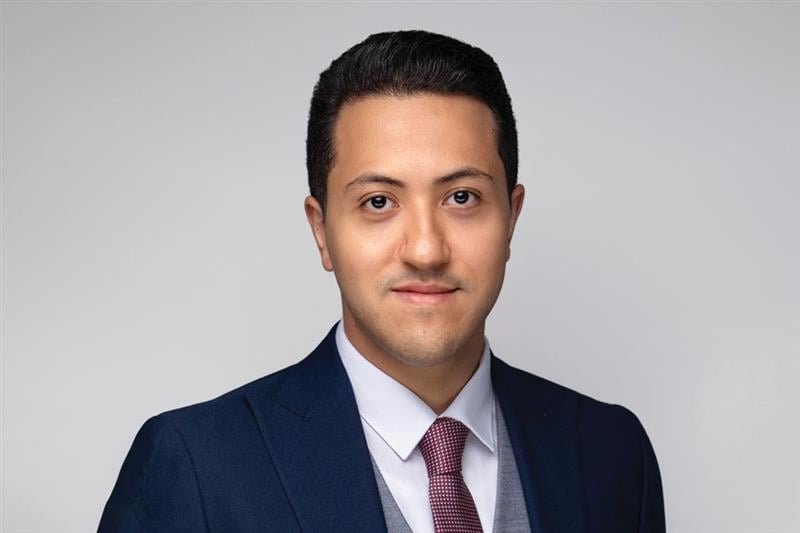

Image: Supplied
The GCC is undergoing a transformative shift in foreign direct investment (FDI), with capital flowing into the region driven by regulatory reforms, economic diversification, and sector-specific opportunities, says Mohanad Yakout
The landscape of foreign direct investment (FDI) in the Gulf Cooperation Council (GCC) has entered a defining new chapter. A decade ago, the region was viewed primarily through the lens of hydrocarbons and state-led megaprojects.
Today, global capital is flowing into the Gulf for very different reasons: regulatory liberalisation, investment-friendly laws, advanced infrastructure, and a wave of economic diversification strategies that are reshaping entire industries. For investors, the question is no longer whether the Gulf is attractive, it is where in the region the smartest capital is being deployed, and why.
The UAE remains the GCC’s most dynamic magnet for global capital, driven by its decision to allow 100 per cent foreign ownership in many onshore sectors, as well as the ongoing expansion of its free zones and special economic clusters.
The UAE is now targeting advanced manufacturing, renewable energy, financial technology, digital infrastructure, artificial intelligence ecosystems, and logistics. Its network of comprehensive economic partnership agreements (CEPAs) with countries such as India, Indonesia, Turkey, Israel, and Central Asian partners is further boosting investor confidence by creating preferential trade lanes and long-term legal certainty.
GCC: A SAFE HAVEN
For investors seeking an execution-ready market with proven regulatory clarity, the UAE continues to offer one of the region’s smoothest landing points. Saudi Arabia, meanwhile, is where long-term, transformative capital is being deployed. The kingdom’s Investment Law of 2025, which guarantees equal treatment between foreign and domestic investors, has eliminated many historical frictions.
This reform sits alongside giga-projects, new special economic zones, and a government-backed drive to localize industry, tourism, entertainment, mining, renewable energy, and electric vehicle supply chains.
While the kingdom has yet to consistently reach its annual target of one hundred billion dollars in foreign direct investment, it is attracting a surge of large greenfield commitments. For investors with long horizons and higher risk tolerance, Saudi Arabia offers scale, vision, and first-mover advantages that are difficult to replicate elsewhere.
Oman is positioning itself as the Gulf’s emerging energy-transition hub. The spotlight is on green hydrogen, metals, petrochemicals, and logistics, backed by incentives such as long tax holidays, customs exemptions, and profit repatriation through special economic zones in Duqm, Sohar, and Salalah.
A new 2025 law streamlining free-zone regulation has already accelerated approvals and strengthened investor protection. Oman may not yet compete with the UAE or Saudi Arabia in volume, but it offers highly targeted opportunities in strategic sectors aligned with the global shift toward clean energy.
Bahrain, with its “Golden License” initiative introduced in 2023, has quietly built a niche for financial services, technology, manufacturing, and tourism. The license provides fast-track approvals, land access, and priority support for large projects. Bahrain also benefits from its free trade agreement (FTA) with the US, giving export-oriented manufacturers and service providers a unique gateway into Western markets.
Infrastructure expansion
Qatar is taking a more selective approach. Its foreign investment law allows full foreign ownership in most sectors, but the country is channeling capital toward logistics, energy services, and sports-related industries in the aftermath of its World Cup-driven infrastructure expansion.
Kuwait, though slower to reform, has introduced new rules that allow foreign branch offices and have partially eased real-estate ownership restrictions for foreign investors. Its opportunity profile will improve further if policy execution continues. Across the region, bilateral investment treaties (BITs) and free-trade frameworks are playing an increasingly strategic role.
Investors are no longer looking only at incentives such as tax holidays or zero-tariff imports, they are assessing legal predictability, dispute-resolution mechanisms, and cross-border supply-chain integration.
In this context, the Gulf’s growing web of treaties is creating a more stable, rules-based environment that global capital prefers.
Ultimately, the Gulf’s foreign direct investment landscape is no longer a one-dimensional landscape. The UAE offers the most effortless entry and the broadest sector diversification. Saudi Arabia offers the biggest transformational upside.
Oman and Bahrain deliver high-incentive, high-focus environments where approvals are fast and support is hands-on. Qatar and Kuwait present selective or developing opportunities that will reward patient capital as reforms deepen.
For global investors, the winners will be those who match their strategy to the right jurisdiction: scale in Saudi Arabia, speed in the UAE, energy-transition opportunities in Oman, niche gateways in Bahrain, and targeted plays in Qatar and Kuwait.
The Gulf is becoming one of the world’s most compelling investment theatres, smart money is already moving. The only question now is: who will seize the lead, and who will have to catch up?
The writer is a senior markets analyst at Scope Markets.
Read: The key to unlocking the future of banking and finance
