


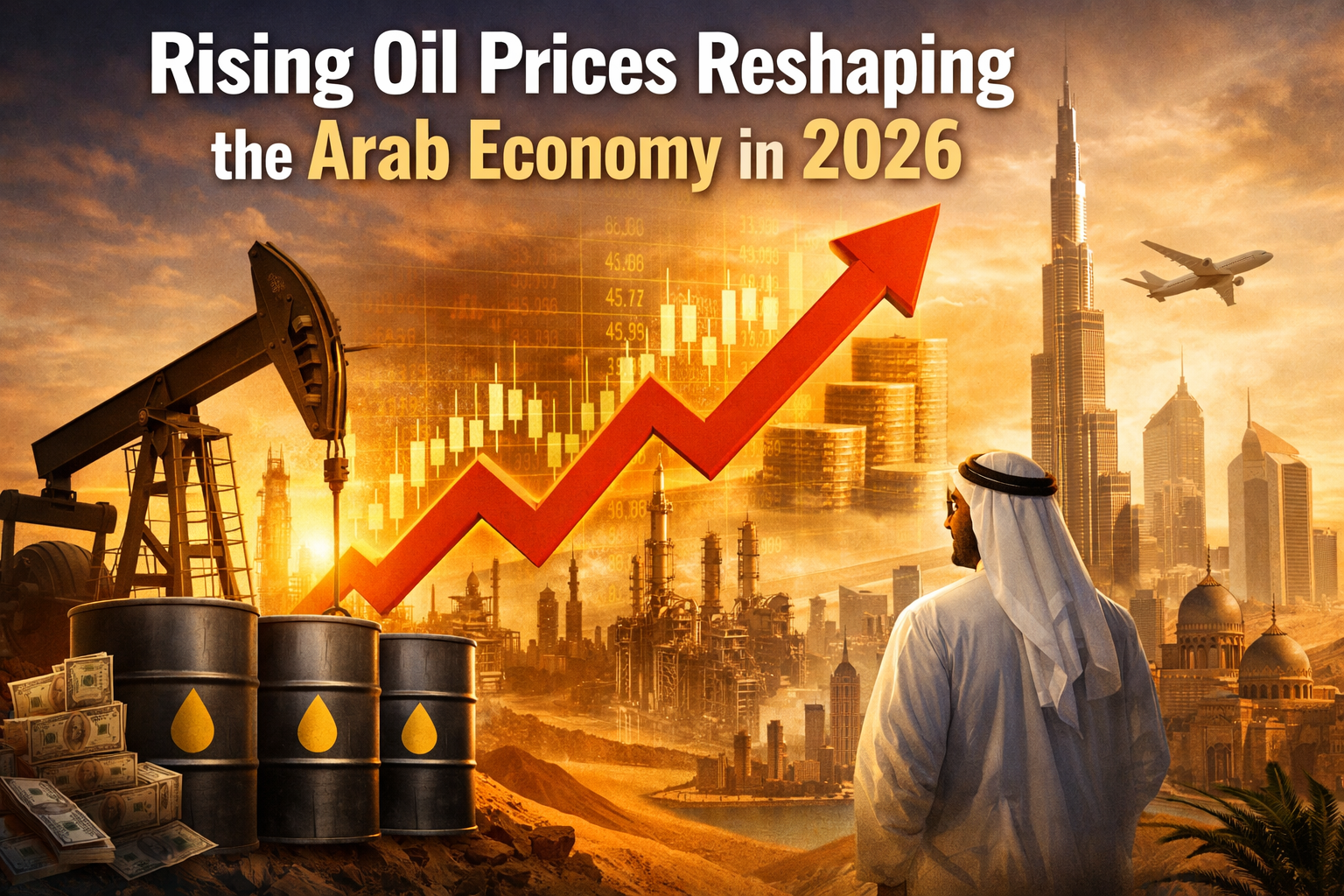
Rising oil prices are once again becoming a defining force for the Arab economy in 2026. As global demand increases and geopolitical uncertainties continue, oil-producing Arab nations are experiencing significant economic shifts. From government revenues to job creation and regional investments, higher oil prices are reshaping economic priorities across the Middle East and North Africa.
This year, oil is not just driving income—it is influencing long-term economic strategies, diversification plans, and global trade relationships.
Why Oil Prices Are Rising in 2026
Several global and regional factors are pushing oil prices upward:
- Strong post-recovery global energy demand
- Production controls by OPEC and allied nations
- Ongoing geopolitical tensions affecting supply chains
- Slower transition pace from fossil fuels to renewables in developing markets
These factors have pushed oil prices to levels that directly impact Arab economies, especially those heavily dependent on energy exports.
Impact on Government Revenues and Budgets
Higher oil prices are boosting government revenues across major oil-exporting Arab countries. This increase allows governments to:
- Reduce fiscal deficits
- Increase spending on infrastructure and public services
- Strengthen foreign exchange reserves
- Fund long-term economic reform programs
In 2026, many Arab governments are using oil windfalls more strategically than in the past—focusing on sustainability rather than short-term consumption.
Economic Diversification Gets a Strong Push
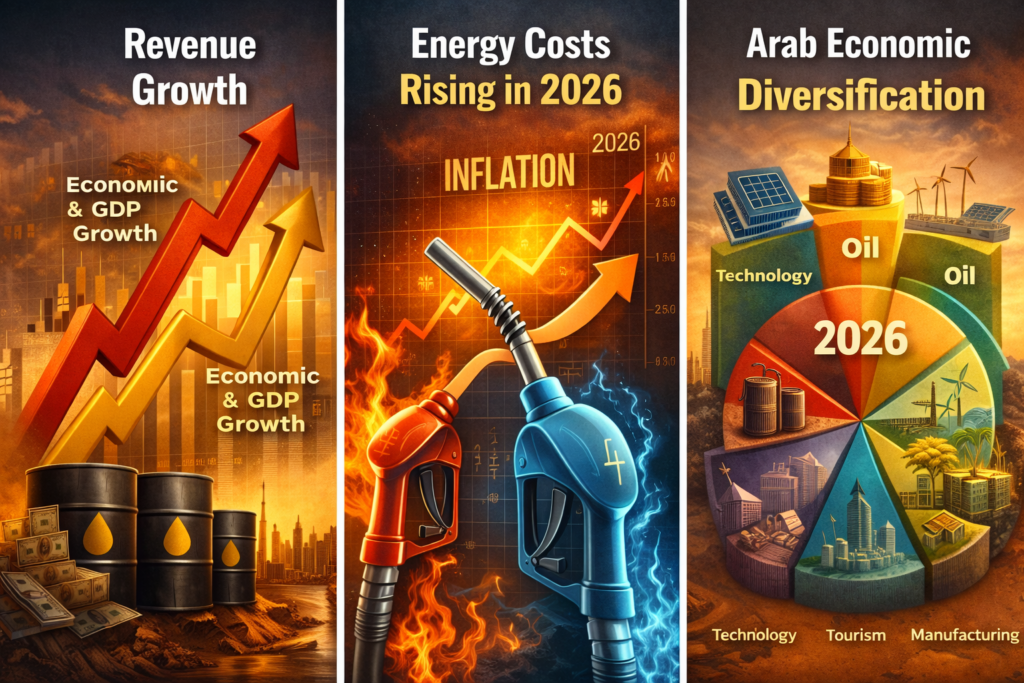
One major lesson learned from past oil cycles is the need to reduce dependence on oil alone. Rising oil prices in 2026 are giving Arab nations the financial breathing room to invest in:
- Technology and digital economies
- Tourism and hospitality sectors
- Manufacturing and logistics hubs
- Renewable energy projects
Instead of delaying diversification, many countries are accelerating it—using oil profits as fuel for economic transformation.
Job Creation and Private Sector Growth
With higher public spending and renewed investor confidence, job opportunities are expanding across the region. Key growth areas include:
- Energy infrastructure and services
- Construction and smart city projects
- Banking, fintech, and investment services
- Transport, ports, and global trade logistics
This shift is helping reduce unemployment while supporting private-sector participation in national economies
Inflation and Cost-of-Living Challenges
While higher oil prices benefit exporting nations, they also bring challenges. Rising energy costs can increase:
- Transportation expenses
- Food and import prices
- Overall inflation
To manage this, Arab governments in 2026 are implementing targeted subsidies, price controls, and monetary policies to protect consumers without hurting economic growth.
Global Influence of the Arab Economy
Rising oil prices are strengthening the Arab world’s position in global economic discussions. Energy-rich nations now hold greater influence in:
- Global trade negotiations
- Energy security planning
- International investment flows
- Strategic partnerships with Asia, Europe, and Africa
This renewed influence is reshaping how global markets view the Arab economy in 2026.
What This Means for the Future
The impact of rising oil prices in 2026 goes beyond short-term profits. The real transformation lies in how Arab economies are using this opportunity to build resilience, diversify income sources, and prepare for a post-oil future.
If managed wisely, today’s oil price surge could mark the foundation of a more stable, innovation-driven Arab economy.
Frequently Asked Questions (FAQ)
How do rising oil prices affect the Arab economy?
Rising oil prices increase government revenue, support economic growth, boost investment, and strengthen global influence, especially for oil-exporting Arab nations.
Are higher oil prices good or bad for Arab countries?
They are mostly beneficial for exporters but can increase inflation. Balanced policies are needed to manage both growth and living costs.
Will Arab economies remain dependent on oil in 2026?
While oil remains important, many Arab countries are actively diversifying into technology, tourism, manufacturing, and renewable energy.
How do oil prices impact jobs in the Middle East?
Higher oil revenues lead to more infrastructure projects, private-sector growth, and employment opportunities across multiple industries.
Is 2026 a turning point for the Arab economy?
Yes. Rising oil prices combined with diversification efforts make 2026 a crucial year for long-term economic transformation.
