


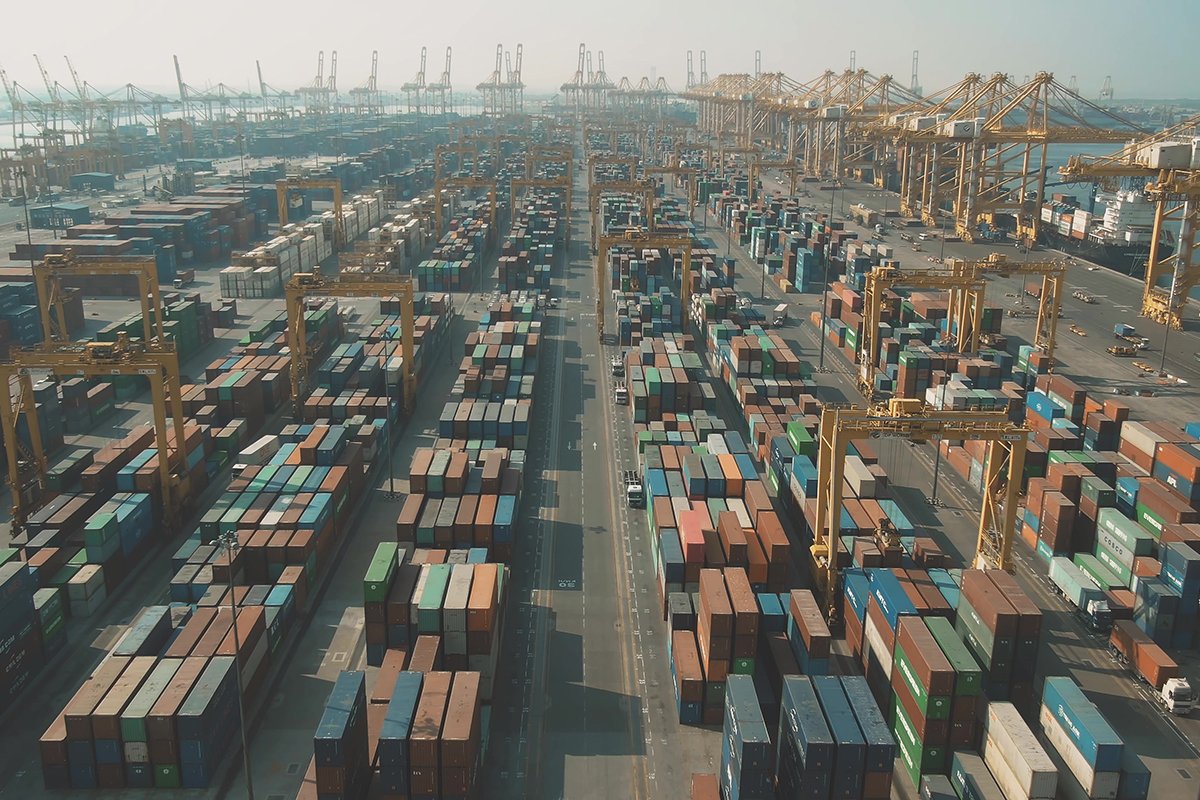
This is because the current shift, which is seen effectively as a stress-test for the global system, signals a broader move toward a multi-polar world, and the forces driving this change are not exclusively the result of US policy decisions, they said.
The US and China on Monday announced a major climbdown in their posturing on the trade front, slashing tariffs to 30 and 10 per cent, respectively, signalling the US striking similar deals with other countries as well.
How fast and smooth the transition will evolve in the region, however, will depend on the UAE’s role in fostering local industry, diversifying its economy, and promoting regional integration – the key measures needed to help businesses to mitigate risks and seize new opportunities, experts said.
The region’s industries and businesses are also required to chip in with striking stronger local partnerships and tie-ups with regional producers instead of solely relying on global players, even if it means sacrificing some short-term economic benefits for long-term stability, they said.
“Trade tensions, today, are accelerating the trend toward supply chain localisation,” Andrey Chernogorov, co-founder of Zinit Tech, the Dubai-based AI-powered procurement platform, told Arabian Business.
“Unlike the previous era, which fostered total globalisation, we’re seeing a shift toward stronger local partnerships and reliance on regional producers,” he said.
Supporting Chernogorov’s views, senior industry executives said the current shift towards supply chain localisation is actually the continuation of the global disruptions that began with the logistics crisis of 2019.
These have evolved into ongoing geopolitical challenges, they said.
The founder of Zinit Tech, which is set to launch operations in the UAE this year to tap the growing opportunities in the procurement sector, estimated to be worth $400 billion GMV (gross merchandise value), said while no one can predict the exact future, the fact that businesses are becoming increasingly resilient signals that the ongoing supply chain localisation drive is to gather more steam going forward.
“The recovery cycle post-pandemic took 1-1.5 years, but the recovery from the crises of 2022-2023 was only 3-6 months. I expect the current trade wars to follow a similar trajectory,” he said.

Localising supply chains strategically
Industry experts said the trend towards supply chain localisation will help businesses in a big way in the long run as it will lead to supply chains becoming leaner and more efficient as more intermediaries are phased out.
Companies in the region should also focus on developing and nurturing local suppliers instead of solely relying on global players, they said.
Chernogorov said companies should build a broad supplier funnel, starting with a wide range of pre-approved suppliers (10-15 per category), and narrow it down as needed.
The key is balancing local and international suppliers – preferably on a 2-to-1 ratio, large and small businesses – again on a 2-to-1 ratio, and Eastern and Western vendors on a 1-to-1 ratio, he said.
“This diversification across many fronts reduces supply chain risk and ensures business continuity, allowing companies to maintain stability and scale,” he said.
Chernogorov, however, said the procurement metrics could see delivery times increase by 10-30 per cent, cost bases rise by 5-15 per cent, and asset turnover worsen by 10-15 days.
He, however, said this will be temporary, and to navigate these disruptions with minimal impact, companies should begin implementing procurement localisation, expanding their supplier pipeline, increasing competition in tenders and upskilling procurement professionals.
“In the next 1-3 years, these metrics are likely to worsen. However, I view this as an opportunity for businesses and countries that can adapt to reach a new level of growth,” he said.
Other sector experts also said they do not see the projected disruptions in procurement metrics as a local crisis that needs to be overcome, but more as a structural shift.

Balancing global and local procurement
With the surge in the drive for supply chain localisation, sector experts such as Zinit Tech are advising clients to rebalance supplier portfolios – global vs. regional vs. local – to hedge against potential tariffs and shipping disruptions.
Chernogorov said there is not a one-size-fits-all solution and procurement for large corporations is complex and must be approached with category management in mind, he said.
Industry players said historically, procurement followed a model like the 70-30-0 rule, where 70 per cent of volume went to the primary supplier, 30 per cent to a secondary supplier, and the rest was reserved for contingency.
But given the current market volatility, geopolitical risks, and logistical disruptions, this model is no longer sufficient, they said.
Chernogorov, however, said the UAE – and the wider regional market, still faces many barriers and challenges on digital procurement adoption.
“The barriers we see in MENA are common across many fast-growing economies. These include a low level of procurement maturity, limited culture of competitive tendering, closed supplier networks and deep resistance to changing old habits,” he said.
He said Zinit Tech, however, views these barriers as major opportunities, and is scaling fast — entering a new market every two months — thanks to a flexible architecture and AI-powered multilingual support, including Arabic.
“Within three years, we aim to capture at least 10-15 per cent of the addressable GMV in this segment – which amounts to roughly $400 billion – by offering a smarter, more transparent alternative to outdated procurement processes,” he said.
