



Image: Supplied
Energy consumption continues to rise across the Gulf with temperature extremes intensifying every year. As a result, the region’s cooling demand is accelerating at a rate faster than ever. HVAC systems already account for more than 60 per cent of electricity usage in several GCC countries, prompting both governments and manufacturers to rethink the future of cooling. Today, the combination of IoT connectivity and AI-driven optimisation is redefining what modern air conditioning should deliver: greater efficiency, meaningful energy savings, and long-term reliability.
This transformation aligns closely with national sustainability agendas across the UAE, Qatar, Bahrain, Kuwait, and Oman, all of which have set ambitious targets to improve energy management without compromising on comfort or lifestyle. As consumers and businesses increasingly look for smarter, more resilient cooling solutions, the role of advanced climate technologies has become central to regional infrastructure planning.
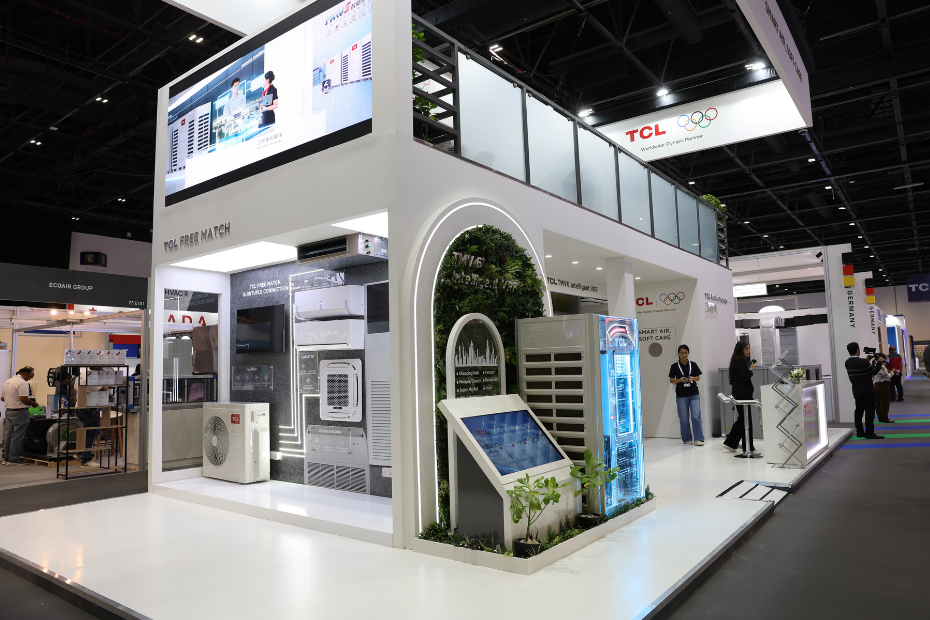
In this environment, innovations showcased at major industry platforms such as Big 5 Dubai have highlighted how the next generation of HVAC products is shifting from purely mechanical systems to intelligent, connected ecosystems. Among these advancements are AI-powered compressors, adaptive temperature control, and IoT-enabled diagnostics, capabilities that can drastically reduce energy waste in homes, offices, and large-scale commercial environments.
TCL has continued to invest in building an HVAC portfolio aligned with these priorities. The brand’s latest smart AC solutions integrate intelligent inverter technology, deep-learning algorithms, and smart environmental sensors to manage cooling output with higher precision. Unlike traditional ACs that operate at fixed speeds and often overconsume energy, AI-enhanced systems can analyse room size, ambient heat conditions, user behaviour, and outdoor temperature to deliver only the required cooling power. The result is a smoother performance curve that reduces electricity consumption and extends compressor life.
The rise of IoT has further accelerated this shift. Remote monitoring and control, once a premium feature, has become an essential requirement for households, facility managers, and developers. TCL’s IoT-powered solutions integrate seamlessly with smart home platforms, enabling users to schedule usage, detect faults, and track energy consumption patterns directly from their smartphones. For businesses managing multiple cooling units, cloud-based monitoring offers valuable insights that enable more effective maintenance planning, reduced downtime, and the prevention of operational disruptions.
Durability has also emerged as a major purchasing factor in harsh climates such as the Middle East. High humidity, sand exposure, and prolonged operation place immense strain on AC components. TCL’s focus on corrosion resistance through technologies such as the Titan Gold and Blue Fin anti-corrosion coatings addresses this challenge directly. These enhancements prolong heat exchanger life, maintain long-term cooling efficiency, and reduce the total cost of ownership, an increasingly important consideration for both residential and commercial customers.
Beyond individual households, smart AC innovations have significant implications for the region’s broader development agenda. Large-scale construction projects, hospitality expansion, and sustainable urban planning all require energy systems capable of supporting long-term growth. As nations prioritise eco-friendly building regulations and green building codes, intelligent cooling becomes a central pillar of future infrastructure.
In this evolving landscape, IoT and AI are no longer optional add-ons; they are becoming foundational requirements for next-generation climate control. The GCC market is moving toward smarter, data-driven cooling as customers demand greater control, businesses seek efficiency gains, and governments push for carbon reduction.
With continuous investments in R&D, durability-focused engineering, and intelligent energy management, TCL is strongly positioned to support these regional ambitions. The brand’s combination of AI-driven performance, IoT connectivity, and long-lasting build quality reflects the direction that the HVAC market is heading: smarter cooling that is cleaner, more efficient, and more reliable.
As the Gulf continues its path toward sustainable growth and smarter cities, the integration of IoT and AI in AC systems will play a defining role in shaping how communities live, work, and manage their energy consumption. The next era of cooling is already here, and it is intelligent, connected, and built for the future.
