



Image: Supplied
As governments across the Gulf double down on smart city and sustainability goals, AJi Group has been quietly building a strong presence behind many of the region’s transformative infrastructure projects. From industrial zones in Saudi Arabia to sustainable urban developments in Oman, the firm combines digital innovation with environmental responsibility to create climate-resilient, future-ready cities.
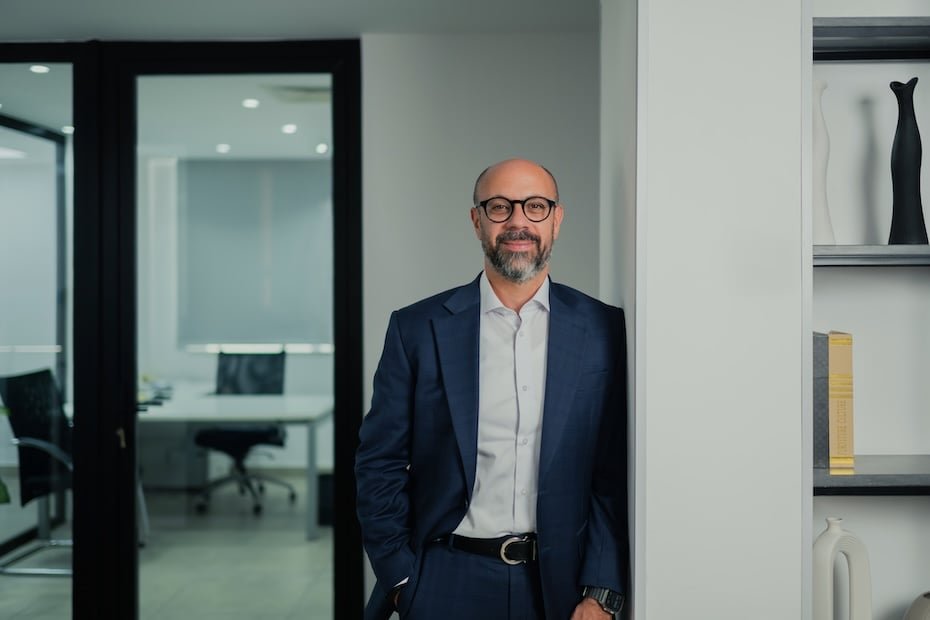
At the helm is Engineer Hamzeh Awwad, CEO of AJi Group, who has led the company through rapid growth, technological transformation, and regional expansion.
In this conversation, he discusses how AJi Group is reimagining infrastructure for the next generation of cities, its rise in ENR’s global rankings, and the future of design and engineering in a region balancing climate goals with economic growth.
Smart cities are central to the Gulf’s future. How is AJi Group designing infrastructure that aligns with net zero ambitions and deeper economic diversification?
Our infrastructure strategy is led by a comprehensive approach to sustainability and digital innovation. Through our six specialised verticals, we’re pioneering smart city solutions that place sustainability at its core.
This is reflected in our organisational commitments too. In the past years, we have accelerated our ESG initiatives, delivering projects that set new benchmarks for sustainable urban development, integrating environmental management systems throughout our operations.
Last year, our efforts yielded a significant achievement, resulting in a 16 per cent reduction in our GHG emissions (Scope 1 & 2) compared to 2022. We continue to build on this, with our newly launched Yellow Lab, a digital-driven innovation unit, which integrates advanced computational workflows and generative design tools to create more sustainable urban environments.
We also focus embedding smart energy systems, advanced water recycling, and low-carbon construction materials across our industrial and urban projects.
By prioritising low-carbon materials, encouraging circular economy principles, and enhancing comprehensive environmental impact assessments initiatives, we are delivering on our longstanding mission to “design smart, build better’.
And we are honoured to contribute to the region’s bold national development agendas, including the UAE Vision 2031, Saudi Arabia’s Vision 2030, and Jordan Vision 2025. These frameworks inspire us to think bigger, build better, and innovate more responsibly as we support governments, clients, and communities achieve their long-term sustainability and growth goals.
For example, in Saudi Arabia, we’re designing smart industrial zones with integrated renewable systems and digital twin technology for real-time emissions monitoring. These projects leverage building information modelling (ISO 19650-certified) and AI-driven solutions to optimize resource efficiency.
Beyond environmental impact, we’re driving economic diversification and social empowerment through integrated solutions that span healthcare, education and industrial development. We also serve more than 50 million people through water and waste facilities.
By embedding sustainability and digital innovation at every level, right from design through operations, we’re supporting both national net zero targets and the region’s economic transformation agenda.
Your portfolio spans smart campuses, healthcare facilities, and sustainable communities. Which at-scale project do you believe will most transform the region’s urban landscape — and why?
It has been our honour to contribute to the region’s infrastructure with a transformative portfolio of over 16,000 hospital beds designed, two million square metres of educational infrastructure, and one million square metres of industrial plant infrastructure, in addition to more than three million square metres of residential developments, shaping inclusive and modern communities.
Among these landmark projects, two stand out for their potential to reshape the region’s urban landscape. The first is the Al-Sadr City redevelopment in Baghdad which underlines our integrated approach to sustainable urbanization. The project spans 10 square kilometres and will deliver over 60,000 housing units for more than 400,000 residents.
This project tackles urban density challenges through our innovative ‘vertical communities’ concept, which focuses on preserving Iraqi cultural heritage while incorporating smart city technologies, advanced water management systems and integrated social infrastructure including healthcare facilities and educational hubs.
In parallel, the Wadi Al-Kabir Industrial City transformation in Oman showcases our eco-futurism capabilities across a 2.15 million-square-metre development. This project leverages our computational design tools and environmental management systems to create a future-ready industrial ecosystem.
It combines advanced digital infrastructure, renewable energy integration, and circular economy principles with mixed-use developments. The project is a testament to our commitment to sustainable industrialisation, and features smart mobility solutions, water-efficient designs and community-centered planning that aligns with our ISO 14001 environmental management standards.
Together, these projects demonstrate how our integrated approach to large-scale development can drive both social impact and environmental sustainability, drive inclusive growth, improve quality of life and set new benchmarks for urban transformation in the Middle East.
AJi climbed 21 spots in ENR’s Top 225, now ranking 86th globally. What is the significance of this?
It is an honour to be ranked 86th globally by Engineering News-Record (ENR) in its 2025 ‘The Best 225’ report of International Design Firms. This is an impressive advancement of 21 positions over the past year and secures our place among the world’s top 100 design firms. I believe it is a true testament to the impact of our work. It reflects the strength of our 60-year legacy, the commitment of our professionals, and our focus on reshaping the future of infrastructure in the MENA region.
Over the years, we have served as a trusted partner to some of the region’s most ambitious projects, and it is the transformative vision of our clients that enables us to push our boundaries to deliver on their priorities, especially in promoting sustainable built environments and embracing advanced technology.
In fact, in its report, ENR highlighted our strategic approach to industry challenges, especially in relation to talent development, embedding sustainability and driving cross-border collaboration. We’ve always focused heavily on technology integration, climate resilience, and energy transition solutions, and the recognition particularly validates our commitment to embedding sustainability and driving cross-border collaboration while empowering local talent.
Since you’ve taken over as CEO in 2020, AJi has seen 210 per cent revenue growth, a profit surge, and 35 per cent workforce expansion. What strategic moves made that rapid transformation possible?
Our transformation was driven by a comprehensive five-year strategic plan centred around 18 key initiatives, with three core priorities: Build on our legacy, empower our people and contribute to the region’s urban future We diversified into six high-growth verticals: Urban Environment, Wellness and Healthcare, Utilities and Environment, Mobility and Transportation, Eco-Futurism and Advisory and Solutions, enabling us to deliver integrated solutions under one umbrella.
We also expanded our regional footprint strategically, now operating through 13 offices including four in Saudi Arabia and three in the UAE. Further, we made significant investments in technology and innovation, securing ISO certifications in building information modelling (BIM) and information security.
Across all our operations, we embedded sustainability at our core, publishing our first GRI-certified ESG report and advancing capabilities in AI and digital solutions. This approach has not only driven financial growth but also strengthened our position as a trusted partner for the region’s most ambitious projects.
Key to our growth has been our investment in innovation. We have also advanced our capabilities in AI and BIM technology and secured critical certifications including ISO 19650 for BIM and ISO/IEC 27001:2022 for Information Security.
This strategic approach has earned us significant client trust, with nearly half our projects coming from repeat clients. We’ve also strengthened our specialised subsidiaries, including HDP Overseas in healthcare and QHC AJI in UAE infrastructure development, while growing our professional team to 1,300 employees across 25 markets. These have positioned AJi as an indispensable partner in the region’s infrastructure development.
How do you envision the role of design and engineering evolving to balance economic development with climate goals across the Middle East?
I personally believe that the future of design and engineering in the Middle East will be shaped by how firms look at transforming climate challenges into catalysts for economic innovation. In fact, we have demonstrated this approach through measurable results, achieving GHG emissions organisation-wide.
Our vision is backed by concrete achievements: we have completed more than 100 renewable energy and waste management projects serving over 50 million people; we have ISO 14001-certified environmental management systems, and ISO 19650-certified Building Information Modeling capabilities.
These enable us to deliver infrastructure that’s both climate-responsive and economically vibrant, covering water-efficient designs in water-stressed regions to smart city solutions that reduce resource consumption while enhancing urban livability.
Looking ahead, we’re focused on three key drivers: digital transformation through advanced technologies like digital twins and AI, circular economy principles in design and material selection, and climate-resilient infrastructure that addresses the region’s unique environmental challenges.
Our integrated approach, supported by our GRI-certified ESG framework, enables us to align with national net zero targets while contributing to economic diversification. We believe it our responsibility to shape a future where sustainable design serves as the foundation of economic competitiveness – as regional governments emphasise on being ‘pro-growth and pro-climate’.
AJi delivers through six verticals, from Eco-Futurism to Utilities and Mobility. How does this diversified structure strengthen your ability to tackle complex, multi-sector projects?
Our six specialised verticals create a unique, integrated delivery model that enhances our ability to take on complex projects and positions us as a one-stop-shop provider.
This structure has proven successful across our portfolio – in addition to those mentioned above – such as over 600,000 square metres of advanced pharmaceutical plants, more than 6,000 keys in the hospitality sector, more than three million square metres of industrial plant infrastructure, some 200,000 square metres of mission critical buildings for national security and essential services, 100,000 square metres of bridges and connective infrastructure, and over 10,000 kilometres of roads, highways and transit corridors.
Each vertical brings distinct capabilities that complement the others. For example, our Urban Environment team’s expertise in architectural services and sustainable building design works seamlessly with our Eco-Futurism vertical’s focus on environmental management and renewable energy solutions. Our Utilities & Environment specialists collaborate with our Mobility teams to create comprehensive infrastructure networks.
The result is an integrated hub that can address multiple technical challenges simultaneously – be it incorporating smart city technologies, implementing advanced water recycling systems or designing climate-resilient infrastructure.
With 13 offices across the MENA region and over 60 years of legacy, AJi Group’s reach is impressive. How do you maintain local relevance while scaling across diverse markets?
Our approach to maintaining local relevance while scaling across multiple markets is anchored in deep community engagement and strategic partnerships. At the governance level, many of our senior professionals contribute to industry standards through membership in national engineering councils across Saudi Arabia, UAE, Oman, and Jordan.
We are also committed to ensuring that we meet local content and in country value for services and products in all markets we operate in to ensure that we engage with local ecosystems and communities in these countries.
Our teams are rooted in local communities but connected to a wider network of international expertise, allowing us to tailor solutions that resonate locally yet meet world-class benchmarks. As an example, we have a strong internship and capacity building programme in Saudi and UAE, where AJi engineers and architects engage interns and collaborate with universities and technical and vocational colleges to ensure the internship programmes achieve their results.
We’re also driving sustainable practices – which is crucial for local impact – through key affiliations, such as our Platinum Corporate Membership in the Jordan Green Building Council. This ensures our work aligns with global standards and national environmental priorities.
Our “Glocal” approach extends beyond business operations to meaningful community engagement. Through our Social Committee, we organise various initiatives from environmental activities to educational seminars, while our projects actively contribute to national development visions. This balanced approach, combining local insights with global excellence, has also helped us maintain strong client relationships.
The Middle East is investing heavily in smart cities, healthcare infrastructure, and sustainable mobility. From your perspective, which of these sectors is set to see the fastest growth in the next five years?
Based on our market position and project pipeline, we see healthcare and sustainable infrastructure leading growth over the next five years. This view is supported by our recent achievements and rankings; we’re ranked 16th globally in Healthcare and 17th in Wastewater treatment by ENR, reflecting the increasing focus on these sectors.
In healthcare, we’re witnessing high levels of investment in advanced facilities. Through our specialized subsidiary HDP Overseas, we’re delivering the Middle East’s first heavy-ion therapy facility at Cleveland Clinic Abu Dhabi, a project that reflects the region’s commitment to world-class healthcare infrastructure.
Sustainable infrastructure development is also accelerating rapidly. The integration of smart city technologies is becoming fundamental to all major developments. This includes water-efficient designs for water-stressed regions and digital twin technologies for real-time infrastructure monitoring.
While smart mobility will also see significant growth, we believe healthcare and sustainable infrastructure will lead the way as the region’s priorities are clear: governments are investing in resilient healthcare systems, water and wastewater infrastructure, and green urban environments that align with climate goals.
Global supply chains, new technologies like AI, and rising sustainability standards are reshaping engineering and design. How do you see these forces influencing the future of the built environment in the region?
I see these forces fundamentally redefining how we design and deliver the built environment in the region. Global supply chain pressures are pushing us toward more resilient and flexible procurement strategies, while technologies like AI, BIM, and Digital Twins are enabling smarter, data-driven decisions that reduce risk and optimise performance.
These converging forces are marking a fundamental shift in how we approach the built environment across the MENA region. And we are responding to this through innovative initiatives. For example, with the Yellow Lab, we are reimagining the entire design process through advanced computational workflows and generative design tools.
The impact is visible in our procurement and delivery systems. Our ISO/IEC 27001:2022 certification has enabled us to create secure, digitally integrated supply chains that enhance project efficiency while reducing environmental impact. Our digital-first outlook extends to our design methodology, where we’re pioneering new approaches to architectural computation and environmental analysis that weren’t possible just a few years ago.
Raising the bar on sustainability standards, means embedding ESG principles into every stage of project delivery. Together, these trends mean the future of our sector will be more integrated, agile and purpose-driven, ensuring that the infrastructure not only meets today’s needs but also supports the region’s long-term ambitions.
We are already seeing a strong focus by governments in the region, such as Saudi Arabia and UAE, on AI integration technologies in the entire life cycle of projects, and this will have great impact on the entire project delivery systems.
Looking ahead, the integration of AI and machine learning with traditional engineering expertise is opening new possibilities for adaptive, smart, climate-responsive infrastructure. I believe that digital innovation, sustainable design and local context are creating a new direction for designing and delivering built environments, which are more resilient, resource-efficient and aligned with the region’s unique environmental and social needs. At AJi, our people are at the forefront in delivering this new approach to design, architecture and consultancy.
