


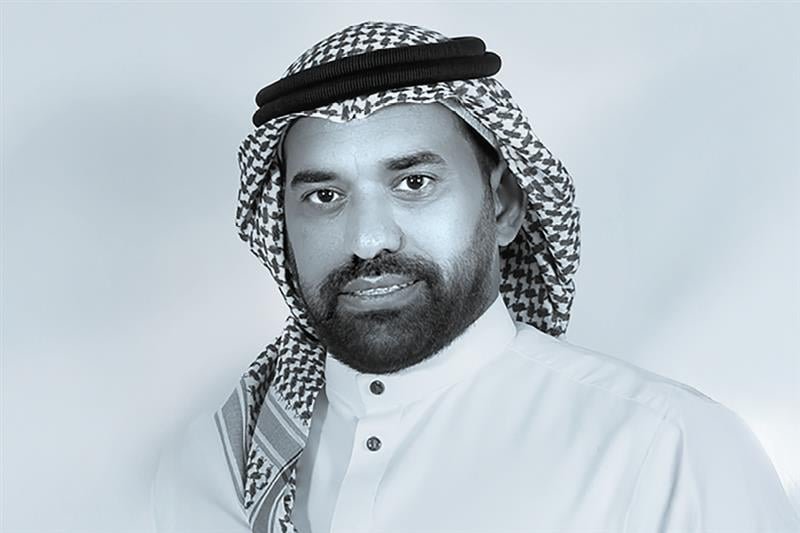

Image: Supplied
Water security is such a critical part of every country’s future growth plan and yet we often forget to mention the people responsible for this vital infrastructure.
Vision 2030 has rightly placed water security at the heart of sustainable growth, with billions being invested in desalination, reuse, and stormwater programmes that will support thriving cities and industries. Saudi Arabia has built one of the most advanced water sectors in the world. It produces over 11 million cubic meters of desalinated water every day, according to SWCC reports, making it the largest desalination market globally.
However, infrastructure alone cannot secure the kingdom’s water future. Technology can be imported, plants can be constructed, and pipelines can be laid. What determines long-term resilience is not just the systems themselves, but the people who operate and sustain them. And here lies one of the most urgent challenges for Vision 2030: the talent gap.
The talent gap: A transition gap
In order to deliver on Saudi Arabia’s ambitious infrastructure pipeline, the readiness of the local workforce must keep pace. Saudi universities graduate tens of thousands of engineers every year, but only a small proportion are exposed to practical training in desalination, wastewater, or distribution networks before entering the job market. Studies confirm that a growing mismatch exists between academic outputs and industry expectations.
A 2024 study examining graduate employability across Saudi industries found that employers perceive significant deficiencies in practical, job-relevant skills and soft competencies, reinforcing the need for structured development to bridge the gap between education and employment.
This is where the private sector and teaching institutes need to work together to fill the knowledge gaps. Saudi Arabia has already created institutions like the SWCC Saudi Water Academy that delivers accredited qualification programmes for new graduates on desalination technologies, plant operations, and water quality, designed to bridge the gap between classroom learning and the technical demands of the sector. Similarly, at AVK Saudi Valves Manufacturing Company, we have been running valve training programmes for 40 years to give graduates applied exposure and prepare them for careers in the water sector.
From compliance to capability
To meet the challenges of delivering clean, fresh water to growing cities all across Saudi Arabia, the focus must shift from Saudisation as compliance to Saudisation as capability.
Companies that are delivering products into infrastructure projects need to understand that meeting hiring quotas may achieve short-term policy targets, but it does not in itself build the technical depth or leadership confidence needed to sustain complex systems.
True resilience comes when Saudi engineers are fully empowered and equipped—not just to participate in the workforce, but to lead it.
Building talent, securing the future
The kingdom is entering a decisive decade for water. Demand is projected to rise by more than 30 per cent by 2030, even as climate pressures intensify and resources are stretched further. The infrastructure being built today is world-class, but without a workforce prepared to sustain it, the kingdom risks jeopardising its own efforts. The next step is to invest with equal ambition in water talent, empowering Saudi engineers as the custodians of their nation’s most critical resource.
What is needed now is a national framework that hardwires collaboration between universities, industry, and regulators. This means embedding practice-based learning in engineering curricula, scaling sector-led training academies, and ensuring every major water project also functions as a platform for knowledge transfer to Saudi professionals.
Leaders driving water security in Saudi
Having invested in Saudi Arabia for more than four decades, we have seen first-hand the capability and ambition of Saudi engineers when they are given the opportunity. Many who joined the sector as trainees are now leaders shaping its future. This is the real measure of progress: not just pipelines and plants, but people prepared to sustain them.
Today’s engineers will be the leaders who safeguard Saudi Arabia’s water security tomorrow and in doing so, they will not only help achieve Vision 2030 they will ensure the kingdom’s security for generations to come.
The writer is the HR manager at AVK Saudi Valves Manufacturing Company.
