


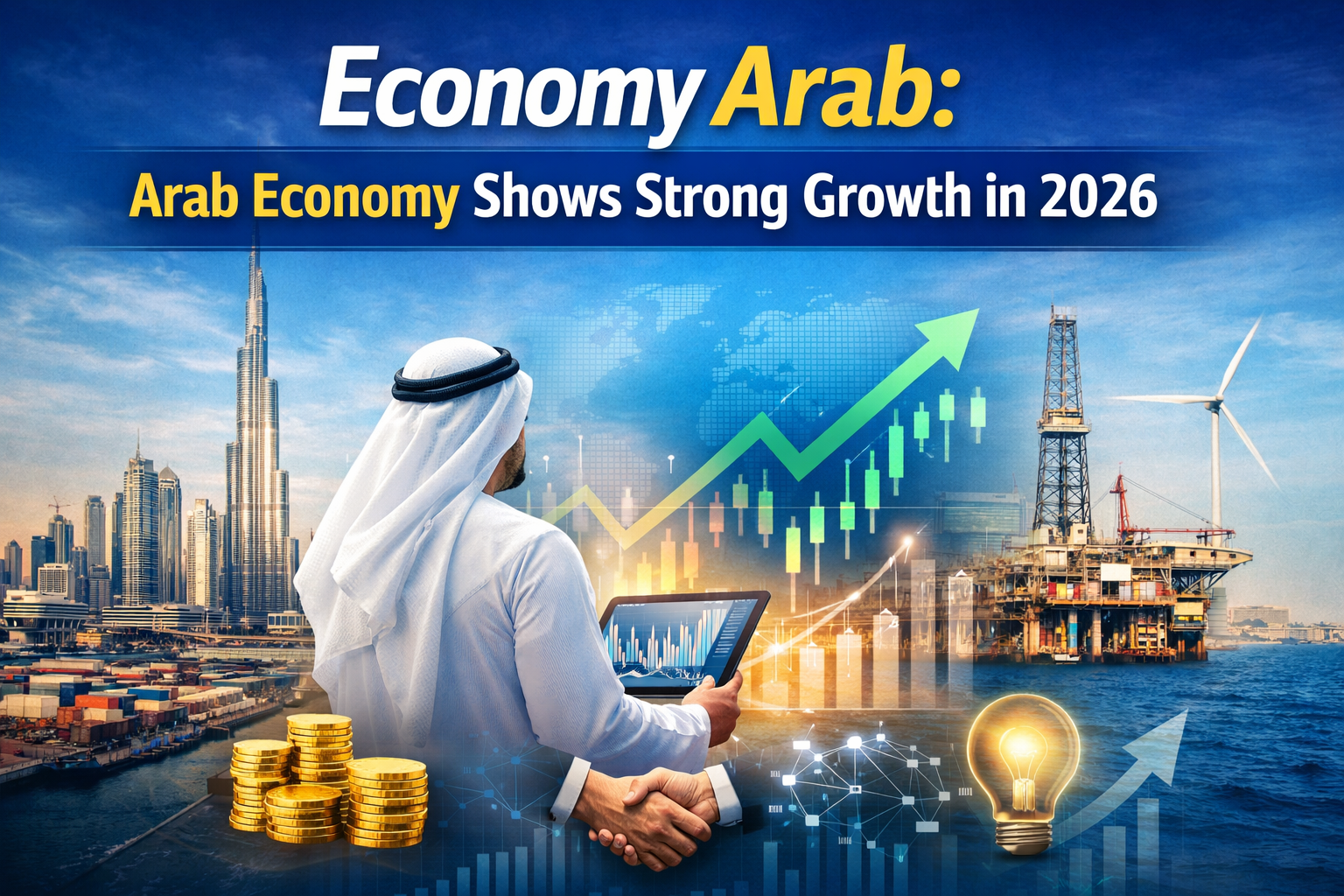
The Arab economy is entering a powerful new phase in 2026. Across the Middle East and North Africa, countries are showing strong economic recovery, rising investments, and rapid digital growth. According to Economy Arab, this progress is driven by smart government policies, diversification beyond oil, and increasing global confidence in Arab markets.
In recent years, Arab nations have focused on innovation, infrastructure, and technology. As a result, economic growth in 2026 looks stronger and more stable than before. This article by Economy Arab explains the key reasons behind this growth and what it means for businesses, investors, and everyday people.
Strong Economic Recovery Across Arab Countries
One of the biggest highlights of 2026 is the steady recovery of Arab economies after global uncertainty. Countries like the UAE, Saudi Arabia, Qatar, and Egypt are seeing higher GDP growth and improved trade activity. Economy Arab reports that increased foreign investment and strong domestic demand are playing a major role.
Tourism, construction, and logistics sectors are expanding rapidly. Mega projects and infrastructure development are creating new jobs and improving economic stability. This recovery is not limited to one region but is visible across the Arab world.
Diversification Beyond Oil Is Paying Off
For decades, oil was the backbone of Arab economies. However, 2026 proves that diversification strategies are working. According to Economy Arab, non-oil sectors such as technology, renewable energy, healthcare, and finance are growing faster than expected.
Governments are investing heavily in clean energy, fintech, and smart cities. This shift is reducing dependence on oil revenues and creating a more balanced economic structure. As global oil prices fluctuate, diversified Arab economies are better prepared to handle challenges.
Digital Economy Driving New Opportunities
The digital economy is one of the strongest growth drivers in 2026. Startups, e-commerce platforms, and AI-based businesses are expanding across the region. Economy Arab highlights that digital transformation is creating new income sources and attracting international tech companies.
Countries like the UAE and Saudi Arabia are leading in digital innovation. Government-backed tech hubs, startup funding programs, and digital payment systems are helping small businesses grow faster. This digital push is making the Arab economy more competitive on a global level.
Rising Foreign Investment and Global Confidence
Foreign investors are showing renewed confidence in Arab markets. Political stability, business-friendly reforms, and transparent regulations are key reasons behind this trend. As per Economy Arab, foreign direct investment in 2026 is expected to reach record levels in several Arab countries.
International companies are investing in energy, real estate, tourism, and technology sectors. Trade agreements with Asia, Europe, and Africa are also boosting exports and strengthening economic ties.
Job Creation and Youth Employment Growth
A strong economy also means better job opportunities. In 2026, Arab countries are focusing on youth employment and skill development. Economy Arab notes that governments are supporting training programs, digital skills education, and entrepreneurship initiatives.
Young professionals are finding opportunities in startups, tech companies, and green energy projects. This focus on employment is helping reduce unemployment rates and improve living standards across the region.
Role of Government Policies and Vision Plans
Vision-based economic plans are another reason behind the strong growth. Long-term strategies like Vision 2030 initiatives are showing real results in 2026. According to Economy Arab, these plans focus on sustainability, innovation, and private-sector growth.
Tax reforms, ease of doing business, and investment incentives are encouraging both local and foreign companies. Governments are also supporting small and medium enterprises, which are essential for economic stability.
Challenges Still Remain
Despite positive growth, challenges still exist. Inflation, global economic pressure, and geopolitical risks can affect progress. Economy Arab emphasizes that careful policy management and regional cooperation are essential to maintain stability.
However, compared to previous years, Arab economies are better prepared to face these challenges. Strong reserves, diversified income sources, and strategic planning are helping reduce risks.
Conclusion: A Positive Future for the Arab Economy
In 2026, the Arab economy is showing strong, sustainable, and inclusive growth. From digital innovation to foreign investment, every major indicator points toward progress. As highlighted by Economy Arab, the region is moving toward a more diversified and resilient economic future.
For businesses, investors, and job seekers, this growth brings new opportunities. With the right strategies and continued reforms, the Arab world is set to remain a key player in the global economy in the coming years.
