


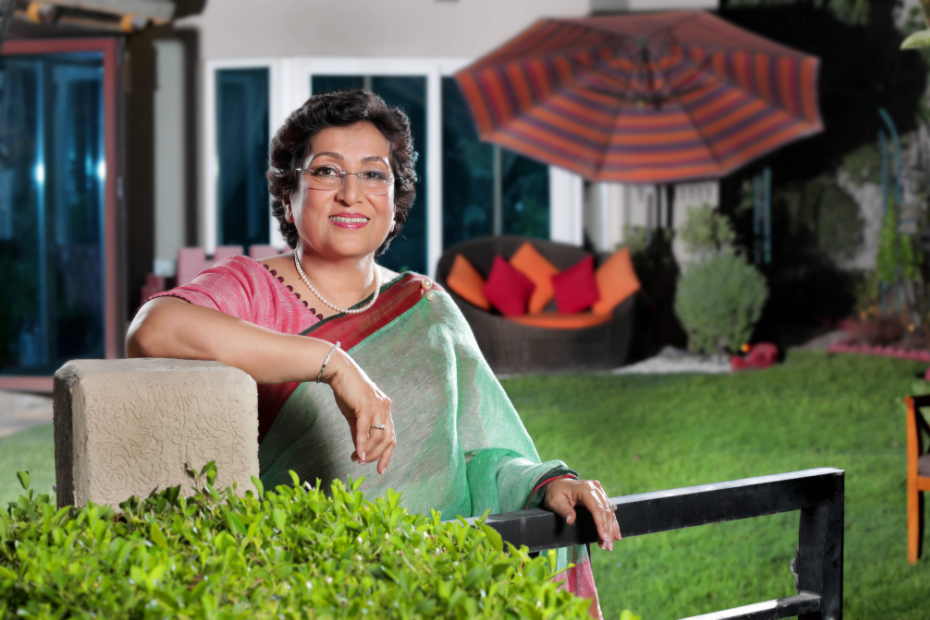

Nazneen Abbas, founder of Ma’an/Image: Supplied
Legacy planning in the Gulf is entering a new era—one shaped not only by rising intergenerational wealth, cross-border investment flows and complex family structures, but also by shifting cultural expectations around stewardship, purpose, and continuity. Yet for Nazneen Abbas, septuagenarian founder of Ma’an, the transformation underway is as personal as it is structural.
Abbas did not come to legacy planning through theory or professional lineage; she came to it through loss. “When I lost my husband at 32, my world changed overnight,” she says. “I had two young children and no clear financial roadmap. I came from a well-established family and believed that would be enough, that systems, people, and good intentions would see me through. But grief has a way of revealing the gaps we never notice in ordinary times.”
Those early years became the foundation of her life’s work. “I discovered how unstructured finances can suddenly turn into a web of confusion, and how quickly wealth can move away from where it truly belongs.” The experience, she explains, exposed the systemic ways in which women—especially in the region—are excluded from financial conversations. “It rarely does” fall into place on its own, she says. “So when I built Ma’an, it was from lived experience. I wanted families to feel secure long before a crisis forces them to think about it. To me, true legacy planning goes beyond a Will and is about designing a life that continues to support your loved ones even in your absence.”
Why legal documents are only half the story
While wills, trusts, and formal documentation remain the backbone of any estate plan, Abbas believes they are insufficient without context and intention. “Legal documents are essential, but they are only half the story. They define what happens to wealth, but not why. And without that ‘why,’ even the best-structured estate can become a source of tension.”
This insight forms the basis of Ma’an’s value-based planning model. “Before drafting a Will or foundation charter, we spend time understanding the individual behind the wealth; what they stand for, what memories they want to preserve, and what lessons they want their children to inherit.” Sometimes this translates into letters of intent, sometimes into charitable structures, and sometimes into documenting the histories behind heirlooms. “A legacy that reflects both financial prudence and emotional intelligence can outlive generations,” she says.
In practice, the advisory blends legal, emotional, philanthropic and governance elements—an approach increasingly relevant to the region’s family businesses and high-net-worth households.
The Gulf’s intergenerational challenge: silence, structure, and shifting values
The Middle East is witnessing the largest transfer of intergenerational wealth in its history. Yet societal norms often make succession planning difficult. “The first challenge is silence,” Abbas explains. “Parents assume their children will ‘figure it out’ when the time comes, while children assume they are not meant to ask. That silence can undo decades of effort.”
The second barrier is structural. Gulf families often hold assets across multiple jurisdictions—from real estate in Dubai to portfolios in Singapore and Switzerland to businesses in Saudi Arabia. “Without clear governance, families can lose both control and clarity.”
And finally, culture is shifting. “The next generation is growing up in a globalised environment… Their relationship with money is different. They want flexibility, impact, and purpose. So the question is not just, ‘How do I pass on my assets?’ but ‘How do I pass on responsibility?’”
For family businesses preparing heirs for leadership, this shift is especially significant—and increasingly urgent.
Legacy planning is not just for the wealthy
Despite widespread recognition of the need for structured planning, Abbas says common misconceptions persist across income levels. “The biggest misconception is that legacy planning is only for the wealthy. It’s not. Every family, regardless of their net worth, leaves behind responsibilities.”
Another misconception—particularly in the Middle East—is that estate planning is bound strictly by Sharia, leaving little room for customization. “I often hear, ‘I can’t make a Will; the law will decide.’ That’s not true. The UAE has evolved tremendously.” Today, expat Muslim and non-Muslim residents alike have access to will registration, foundations, and cross-border inheritance structures.
The third barrier is emotional. “The idea that discussing death invites it. In reality, planning brings peace.”
As more Gulf families turn to foundations, trusts, and structured giving, Abbas emphasises that legal tools must remain grounded in purpose. “We see legal tools as the skeleton, not the soul, of a legacy. The skeleton gives structure… The soul comes from purpose.”
This may involve defining what education means within a foundation, including multiple generations on philanthropic boards, or introducing “living clauses” that evolve with the family’s needs. “Each legal structure should reflect the founder’s emotional priorities,” she notes. “Ensuring that the legacy remains dynamic and human, not static and bureaucratic.”
Managing family dynamics with empathy, not paperwork
Often, families approach Ma’an not just with financial questions, but with interpersonal ones: fears, expectations, unresolved tensions, and uncertainty about leadership transitions. “Our first principle is empathy. Families don’t come to us for documents, they come for peace of mind.”
Abbas describes Ma’an’s role as that of a navigator, guiding families through difficult conversations by focusing on understanding rather than judgment. “It’s surprising how many disagreements dissolve once people feel heard… Because ultimately, inheritance isn’t about what people get, it’s about how they feel about what they get.”
Having spent four decades in financial advisory, Abbas has witnessed a profound shift in how Gulf families perceive legacy. “When I started, legacy meant purely continuity of wealth.” Today, multiple forces—digitisation, globalisation, rising female participation, ESG values, and impact investment—are reshaping expectations.
“Earlier, a family office was about preservation. Now it’s about transformation,” she says. Families today balance governance with purpose, business boards with philanthropic boards, and asset transfer with values transfer. “Legacy has matured from an inheritance mindset to a responsibility mindset.”
Redefining reinvention at 65
Abbas founded Ma’an at an age when most professionals contemplate retirement. “I’ve never believed in expiry dates,” she says. “Ma’an is my legacy as much as it is my work… It’s proof that reinvention is possible at any age.”
Her message resonates strongly in a region undergoing rapid social and economic change. “The best time to start is when you have clarity, and clarity often comes with age,” she says. “I wanted to build something that doesn’t just manage assets but restores faith in family, in fairness, and in continuity.”
For Abbas, success is measured not in the structures she helps clients build, but in the harmony and security they preserve. “If Ma’an can do that for even a few families, then I’ll know that my story has truly come full circle.”
