


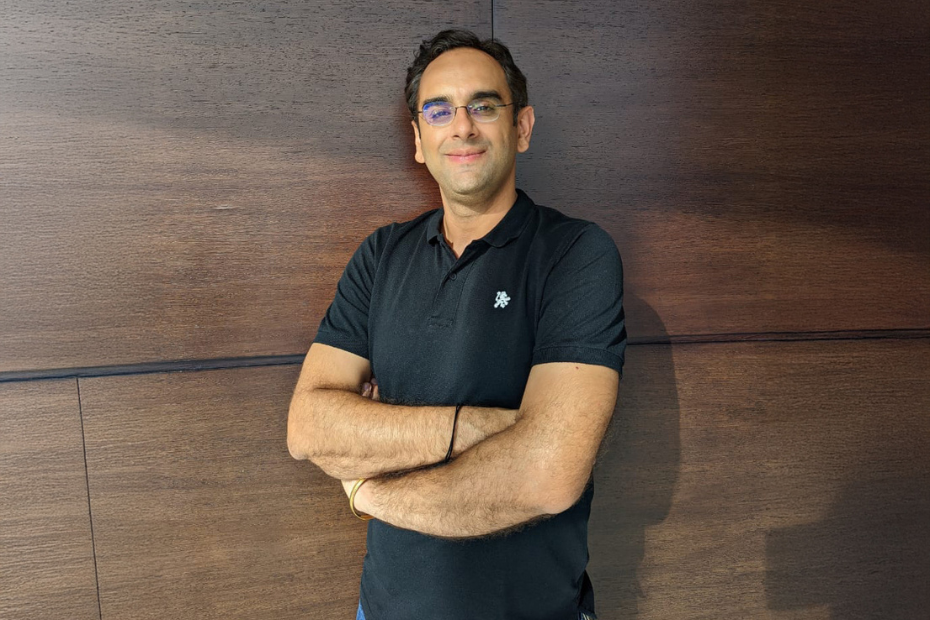

Abhimanyu Girotra, chief executive officer of Huru/Image: Supplied
Despite the UAE’s reputation for financial sophistication, a large share of its workforce remains on the margins of formal banking. For Abhimanyu Girotra, chief executive officer of Huru, this disconnect represents both a societal challenge and a massive untapped opportunity.
“The idea for Huru came from observing a very real gap in the market that affects millions of people across the UAE,” says Girotra. “While the country’s financial ecosystem is highly advanced, a large segment of the workforce remains excluded from everyday banking services.”
That segment—made up largely of expatriate workers—is significant. “The UAE is home to over eleven million residents, and the majority are expatriate workers with half of them falling into the unbanked or underbanked category,” he adds. “That’s millions of people managing their finances in ways that are inefficient, expensive, and insecure.”
Huru’s mission is to change that by offering a regulated, affordable, and transparent financial platform that enables users to manage, move, and save money with ease. In a market where digital wallets and salary cards are often associated with fees, limits, and restricted access, Girotra sees Huru as a leap forward in empowerment.
Read: Huru launches in UAE to drive financial inclusion for unbanked communities
Regulated for trust
Unlike many fintech startups that launch first and seek licences later, Huru took a more deliberate approach. The platform is licensed by the Central Bank of the UAE, a decision that Girotra says defines its very identity.
“Being licensed by the Central Bank of the UAE is fundamental to who we are as a company—it’s not just a regulatory formality, it’s the backbone of our business model,” he explains. “It means that every product we offer, from IBAN accounts to remittances, is built within a fully compliant framework that meets the UAE’s highest financial and consumer protection standards.”
The company delayed its launch to ensure that its technology stack, risk controls, and governance model aligned with central bank guidelines. Girotra believes this level of oversight will be key to long-term user confidence. “In a space where many have been exposed to informal or unregulated financial solutions, this level of oversight provides real reassurance. It gives users confidence that their money is secure, that fees are transparent, and that they are part of a system operating under the same regulatory lens as any established financial institution.”
Driving measurable financial inclusion
For Girotra, the true measure of inclusion lies in how much users can save, remit, and eventually access credit. “Our attempt with our platform and the individual features is to drive trial of each of the features and to make it simple and rewarding to drive repeat usage,” he says.
When it comes to remittances, Huru offers lower transaction fees than traditional channels, ensuring that “more money is sent home instead of paid in fees and charges.” Girotra believes this saving dynamic will promote habitual remittance use and encourage larger transaction values over time.
Another key differentiator is the company’s fee-free approach to everyday banking tasks. “On other platforms, customers have to pay charges for simple tasks such as receiving SMS notifications and for in-app account balance checks. These charges add up leading to customers thinking twice before performing such simple tasks. Huru does not charge customers for such services with the intention of increasing their savings and the creation of Saving Pots.”
The Saving Pots feature, in particular, represents Huru’s effort to instill a culture of goal-based savings among low-income users. “Saving Pots are a dedicated section in the app where savings are set aside to achieve a longer-term goal such as providing for a child’s education or buying your own home,” Girotra says. “We are excited to see this feature come to life and the role it plays in fulfilling customers’ dreams.”
To close the inclusion loop, Huru will also introduce a microfinance product aimed at extending credit to users with limited access to traditional loans. “We have high targets on the adoption of this product and are confident in its success,” he notes.
With players like Pyypl, NOW Money, and E20 already established, Girotra says Huru’s strength lies in depth and design rather than breadth. “Huru isn’t a WPS card but a platform for financial access and opportunity,” he says. “We provide a fully functional IBAN in minutes with just your Emirates ID. These are zero-balance accounts with no fees charged for not maintaining a balance.”
He adds that Huru users enjoy practical advantages such as one free ATM withdrawal per month and low-cost in-app remittances, underpinned by full transparency on all fees. “With these core features, we want our customers to save more of their hard-earned money for themselves and for their families back home.”
Huru’s employer-focused payroll feature could prove a major growth lever, especially as companies seek compliant, employee-friendly alternatives to legacy WPS systems. “One of the biggest barriers for employers has always been the perception that switching payroll systems is complex,” says Girotra. “Our platform integrates seamlessly with existing WPS workflows, allowing businesses to stay fully compliant while benefiting from a more modern, employee-centric system.”
The model also alleviates employers’ financial and administrative burden by embedding credit and wellness features directly into the platform. “Employees often approach HR or management with credit or short-term financial needs. With Huru, that burden is lifted—we are launching an embedded microfinance solution directly to employees, removing friction from the employer’s side while extending credit to an underserved segment.”
To address employee well-being more holistically, Huru has also partnered with healthcare providers to offer free medical checkups. “Employers care about the broader well-being of their teams,” Girotra adds. “We wanted to make that part of our value proposition.”
A particularly innovative feature is persistent IBANs—accounts that remain active even when an employee changes jobs or payroll processors. “Each employee is given a persistent IBAN that stays with them even if the employer switches payroll providers,” Girotra says. “This creates a cost-effective, stable, and future-proof infrastructure for everyone involved.”
Building a new kind of credit system
Extending financial inclusion inevitably involves extending credit—and doing so responsibly. Girotra says Huru’s approach combines prudence with innovation. “A customer is eligible for our loan offering only after he or she receives three salary payments in their Huru account,” he explains. “This allows us to monitor consistency in source of funds and in that time, we also monitor all the other transactions that take place in the app including remittance, bill payments, and card transactions.”
The company is building a predictive model that merges transactional behaviour with underwriting data to evaluate creditworthiness in real time. “All of this along with our underwriting data and a prediction model we are building will help us build a sustainable system of extending credit to our customers,” he says.
Given that Huru operates with a financially vulnerable demographic, data privacy and transparency are paramount. “Trust is the foundation of what we do, especially because we work with a segment of the population that has historically been underserved and, at times, exploited by informal systems,” Girotra stresses.
“All user data is protected through bank-grade encryption and stored in compliance with UAE data protection laws,” he says. The app also empowers users to control their accounts directly—whether it’s changing a card PIN or blocking a card—without third-party intervention. “Every transaction, charge, or service fee is visible to the user before confirmation, so they always know exactly what they’re paying for.”
Girotra sums it up succinctly: “Trust for us isn’t built through words; it’s built through consistency. The more our users experience security and clarity in every interaction with Huru, the stronger that trust becomes.”
For Girotra, Huru’s journey is just beginning. The company aims to evolve beyond transactions into a comprehensive financial ecosystem encompassing savings, credit, insurance, and even healthcare. “Our long-term vision has always been to build an ecosystem, not just an app,” he says. “The next phase is about expanding our offering through partnerships and services that can genuinely improve users’ financial wellbeing.”
Huru is now exploring collaborations in micro-savings, insurance access, and affordable healthcare, which Girotra says will “have a direct, tangible impact on everyday life.” The platform also aims to align with the UAE’s and GCC’s broader financial inclusion agendas, working alongside regulators, employers, and institutional partners.
“For us, this is just the beginning,” he reflects. “Huru’s mission has always been about empowerment, and our focus now is on deepening that impact at scale.”
