



Opinions expressed by Entrepreneur contributors are their own.
Where do good ideas come from?
After serving as CEO of the advertising agency BBDO Worldwide for 20 years, working closely with some of the largest brands in the world, I’ve come to an answer: Good ideas come from a willingness to have bad ideas — many, many bad ideas.
If you want the creative process to work, you must accept that it is messy. Instead of inching your way, step by step, from data to solution in a logical progression, it’s best to generate a chaotic array of possibilities and test them out on the problem until something clicks. Jump to conclusions without worrying about how you cross the intervening gap.
I know that sounds abstract. So here’s a specific example: Snickers.
The origins of an incredible campaign
My agency came up with the theme “You’re not you when you’re hungry” for a Snickers campaign, which went on to become one of the most successful campaigns in advertising history. It launched with a Super Bowl ad in 2010, featuring the legendary Betty White being “tackled” in a football game, and has been expanded and localized to 83 countries around the world.
To this day, clients ask how we got the idea. They want to know what market research led us to the insight, then the foundational idea, and finally the Betty White script and campaign that drove millions to eat more candy bars. People always assume it was an act of brand-purpose oriented, data-driven, logical deduction: When you’re hungry, of course you act irrationally.
But we did not arrive at that insight fully formed. Here’s the real story.
When Snickers was first manufactured in Chicago in 1930, it was meant to be a filling snack bar when you were hungry. Little about it has changed since. But a few years into the turn of the twenty-first century, that enduring truth had started to become humdrum, and Snickers had fallen to No. 7 in the chocolate category.
The challenge became: How do you make something new and fresh out of the same old thing? A line like “Hungry? Eat a Snickers” just isn’t going to cut it.
So here’s what we did. David Lubars, who was BBDO’s Chief Creative Officer at the time, gave the assignment to five teams of people, who got busy writing all kinds of (bad) Super Bowl scripts. Then David reviewed them all—and buried deep inside one of their scripts, barely calling attention to itself at all, was the line “You’re not you when you’re hungry.”
David recognized how powerful that idea could be. It was, he said, “so flexible and stretchy that it could go anywhere in the world it needed to go.” And that’s what happened. But to find an idea this powerful, he first needed to generate that huge volume of bad ideas—making it possible for David to identify a kernel of greatness, see its implications, share his insight with his colleagues, and get the support it needed.
How to reproduce this process
This may sound simple, but it is not, and it rarely happens organically. Instead, it requires something that I call The Creative Shift —a deliberate and strategic choice to design the conditions that will unleash creativity when an organization needs it the most.
Here’s how to be deliberate and strategic about producing bad ideas, so you can find the first one.
First, remember this: Most people don’t understand the creative process. Instead, they often tend to say things like: A good idea can come from anyone. Or they might say, there are no bad ideas. But those concepts squelch creativity, rather than unleash it—because they put pressure on everyone to perform. After all, who cares if there are “no bad ideas” if everyone can conceivably come up with a great one.
That’s why, to be truly creative in a group, you must flip these ideas around. You must tell your team:
1. Bad ideas can come from everyone.
2. I want as many bad ideas as possible in a short period of time.
Why? Let’s start with human nature. People are afraid of making a mistake, so when they’re challenged to come up with lots of ideas, they often shut down. They feel like they’re on a high wire, with no room to deviate. They start to wonder: What if I’m wrong? What if I look foolish in front of my boss and colleagues? Will I be blamed if the idea doesn’t work?
But when you specifically invite people to come up with bad ideas, and to do it in a short period of time, people start thinking in a more open-minded and imaginative ways—because they’re no longer constrained by the need to be right, or good, or brilliant.
It’s the fastest path to success
Maybe this process sounds inefficient. Why generate and consider lots of bad ideas, when you can instead focus your efforts on the right one?
Here’s why: Most of the time, we have found, nine out of ten ideas are simply not good.
So instead of trying to generate good ideas (which is inefficient and unrealistic), your initial goal is to simply generate a lot of ideas. Idea volume is a good thing, because the best ideas often begin as unrealized parts of otherwise bad ideas.
Remember the Snickers example: The winning idea was buried in an otherwise humdrum script. David was the one who stumbled upon it, and then caught it.
As a leader, it’s important to completely change the way your people look at the idea-generation process and create a space where they’re encouraged to have lots of bad ideas. If you must reward people for anything at this stage, reward them for having the most bad ideas.
From there, you’ll unleash creativity. And you’ll find the idea that matters.
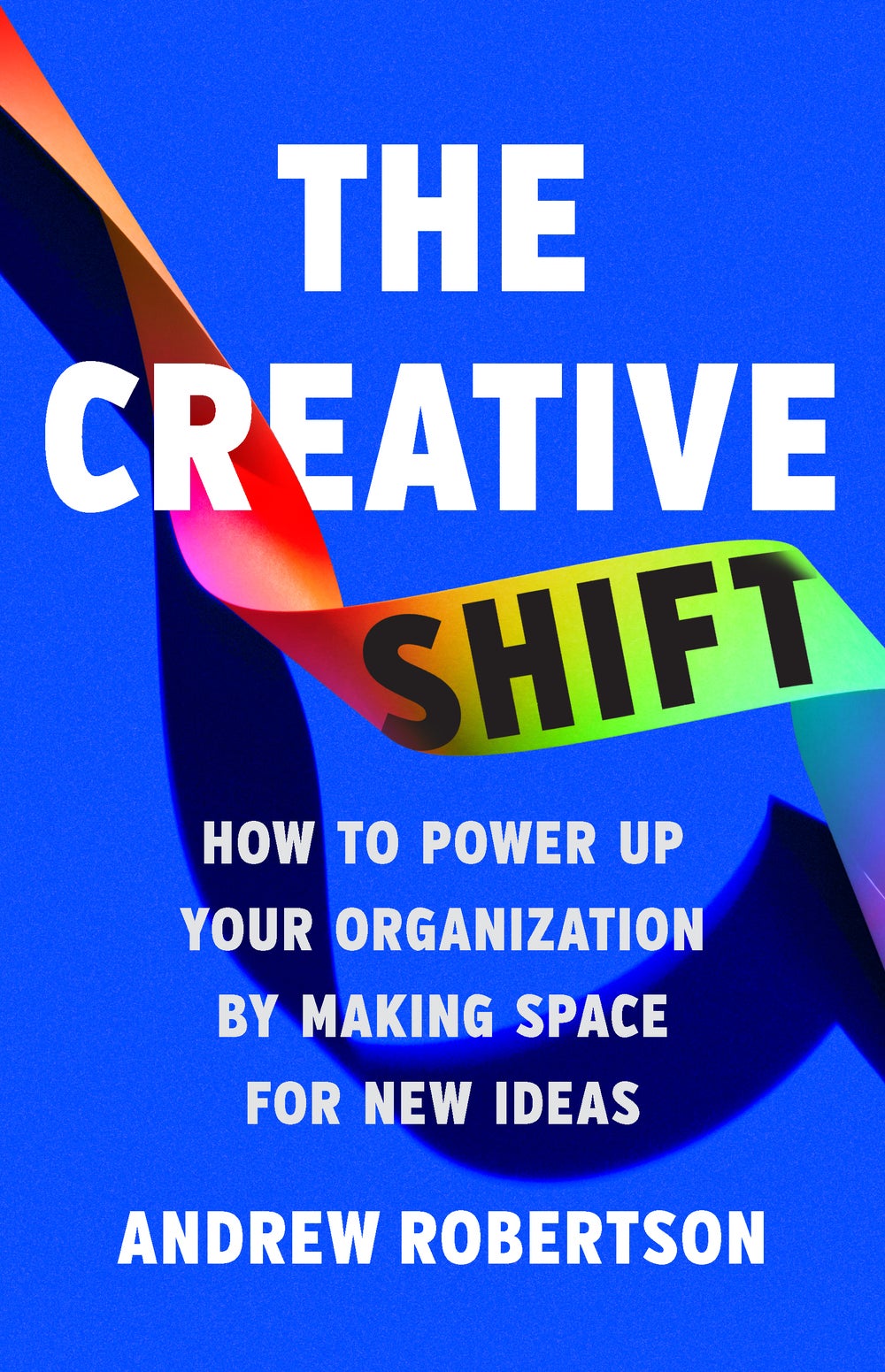
Adapted from The Creative Shift: How to Power Up Your Organization by Making Space for New Ideas Copyright © 2025 by Andrew Robertson. Available from Basic Venture, an imprint of Hachette Book Group, Inc.
Where do good ideas come from?
After serving as CEO of the advertising agency BBDO Worldwide for 20 years, working closely with some of the largest brands in the world, I’ve come to an answer: Good ideas come from a willingness to have bad ideas — many, many bad ideas.
If you want the creative process to work, you must accept that it is messy. Instead of inching your way, step by step, from data to solution in a logical progression, it’s best to generate a chaotic array of possibilities and test them out on the problem until something clicks. Jump to conclusions without worrying about how you cross the intervening gap.
The rest of this article is locked.
Join Entrepreneur+ today for access.
