



Image: Supplied
As part of the UAE’s ongoing efforts to strengthen local food production, MIRAK Group and Astoria are developing a mushroom production facility in Nahil, Al Ain, valued at $49.5m.
The project, supported by the Abu Dhabi Agriculture and Food Safety Authority (ADAFSA) and the Abu Dhabi Investment Office (ADIO), covers 24 hectares within a 128-hectare allocated site.
The facility will use AI-based production systems to manage fully enclosed, climate-controlled environments, allowing for year-round cultivation. When fully operational, it will produce up to 14,850 tonnes of mushrooms and 74,000 tonnes of compost annually. It will also include on-site units for canning, freezing, packaging, and other value-added processing, aimed at serving both the UAE and export markets including Saudi Arabia, Bahrain, Qatar, Africa, and Western Asia.
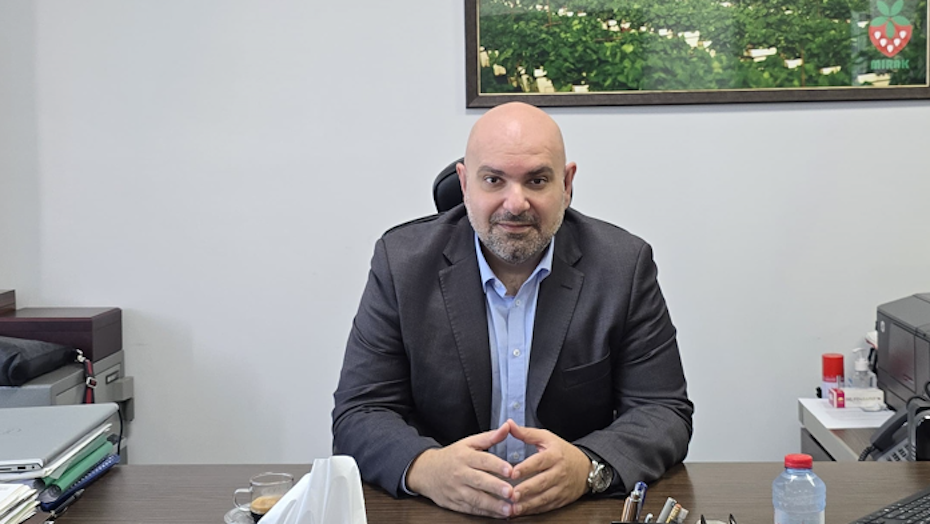
In this interciew, Nejdeh Ghadimi, CEO of MIRAK and SVP of Astoria, discusses how the joint venture supports the UAE’s food security goals, the technologies being implemented, and the company’s broader plans for agricultural innovation and trade in the region.
Tell us about the company and its offerings.
MIRAK is one of the oldest agricultural producers in the UAE, founded in 1983. We have built our reputation on innovation, resilience, and sustainable growth, producing over 60 different varieties of fruits and vegetables, including mushrooms, strawberries, celery, beans, asparagus, lettuce, tomatoes, and herbs.
We operate facilities in multiple countries and export to over 10 global markets. Our approach is rooted in technology adoption, particularly in hydroponics, aquaponics, and vertical farming, to minimse water use and maximise productivity in arid climates.
With over 100 years of combined experience on our senior team and 62 years of construction know how, we have the talent and infrastructure to lead complex agricultural ventures from concept to operation.
Our joint venture with Astoria reflects that ambition. Together, we are not only building infrastructure, we are creating a platform to support future innovation in Agri trade, food processing, and sustainable agriculture for the UAE and beyond.
How does MIRAK and its partnership with Astori align with the country’s vision and its food security strategy?
At MIRAK, food security has been central to our purpose since the company’s founding in 1983. Over the past four decades, we’ve continually innovated to ensure reliable, sustainable agricultural production within the UAE’s unique climatic conditions.
Our latest venture, a joint project between MIRAK and Astoria, is the most ambitious yet. This $49.5m mushroom production facility will be the largest of its kind in the GCC, and is a direct response to the UAE’s National Food Security Strategy 2051, which aims to reduce dependency on imports and localise critical food production.
Currently, 100 per cent of the UAE’s processed mushrooms are imported. With this facility, we are closing that gap. It will supply the majority of the UAE’s processed and fresh mushroom market, and also have the capability to serve surrounding countries like Saudi Arabia, Qatar, and Bahrain.
Moreover, this project localises compost production, which is a strategic move toward supply chain independence. We are producing 39,000 tonnes of compost annually in Phase 1, which not only supports our own operations but smaller regional mushroom producers as well, reinforcing a broader food security ecosystem. In Phase 2, compost capacity will rise to 74,000 tonnes.
Together with Abu Dhabi Agriculture and Food Safety Authority (ADAFSA) and the Abu Dhabi Investment Office (ADIO), we’ve aligned this project with the national vision and created a model that can scale across the region.
What are some of the innovative technologies you’re using at the new mushroom facility?
This facility integrates a full suite of advanced agricultural technologies that allow us to produce mushrooms in a fully enclosed, climate-controlled environment, all 365 days a year, despite the UAE’s external temperatures exceeding 55°C in summer.
Among the core technologies in place:
- AI and machine learning tools that control and optimize the temperature, humidity, and overall growing environment, these are essential for consistent yields in a desert climate.
- Advanced automation systems in the growing and processing areas, helping scale production efficiently and reduce labor intensive processes.
- A closed loop compost system, in which we collect wheat straw that has already been used by horse stables, repurpose it by blending it with manure, and transform it into high grade compost. This system supports sustainability while solving waste disposal challenges for local equestrian businesses.
- Onsite processing and packaging infrastructure, enabling us to deliver fresh and value added mushroom products (soups, sauces, IQF, and canned goods) directly to retail, HORECA, and export channels.
The project isn’t just about production scale; it’s about smart infrastructure and reducing dependency on volatile global supply chains.
Why is this mushroom facility important for the UAE, and what are your export ambitions?
The facility is important for several reasons:
- It meets a demand-supply gap: The UAE imports most of its mushrooms, primarily from Europe and Asia. We’re building a localized, premium quality supply that drastically shortens the value chain and ensures freshness.
- It creates export ready food products: Beyond fresh mushrooms, our processing line will produce canned, frozen, powdered, and ready to cook mushroom products. This includes soups and sauces that are attractive for both consumer markets and institutional buyers.
- It supports food sovereignty: Locally produced food means less exposure to global supply chain shocks, shipping volatility, or geopolitical restrictions.
From day one, we’ve had export in our DNA. Our broader operations already ship crops like strawberries and leafy greens across Europe, Asia, and the GCC. This new mushroom facility simply adds to that and with Astoria’s procurement and trading footprint, our reach is now amplified furthermore.
This facility is important on multiple fronts. At the national level, it contributes to food independence by replacing imported processed mushrooms and producing essential agricultural inputs (compost) locally.
From a commercial standpoint, it’s a pioneering facility that leverages smart tech and circular agriculture to generate both economic and sustainability returns. Few projects in the region produce both fresh agricultural goods and their base inputs at this scale.
In terms of exports, the project is designed from day one with export capability in mind. The UAE will always be our anchor market, but we are actively targeting neighboring GCC countries as well as MENA, Africa, and Western Asia, where demand for quality mushroom products is rising.
