


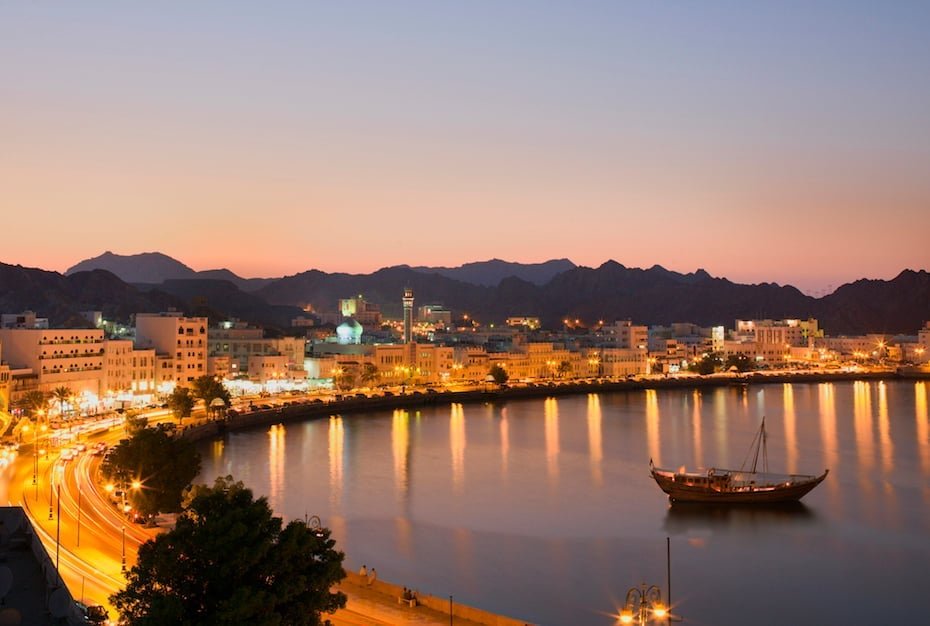

Image: Getty Images/ For illustrative purposes
Oman’s economy and social indicators have recorded steady improvement in recent years, supported by the country’s diversification agenda, the GCC Statistical Centre (GCC-Stat) said in a new report released to mark the Sultanate’s National Day.
Non-oil sectors accounted for 68.2 per cent of GDP at current prices in 2024, up from 66.7 per cent in 2023.
GDP reached $107.1bn in 2024, compared with $75.9bn in 2020, representing 41.1 per cent growth.
Manufacturing activities contributed 10.0 per cent to GDP in 2024.
The value of merchandise trade rose 81.3 per cent to $109.0bn in 2024 from $60.1bn in 2020.
Exports grew to $65.2bn in 2024, up from $31.8bn in 2020, an increase of 104.9 per cent. The trade balance surplus widened to $21.3bn in 2024 from $3.5bn in 2020.
Commercial bank assets climbed to $115.9bn in 2024, compared with $93.2bn in 2020, a rise of 24.4 per cent.
Foreign reserve assets increased to $18.4bn in 2024 from $15.0bn in 2020, up 22.5 per cent.
Tourism in Oman shows strong growth
Tourism posted strong gains, with the number of hotel establishments reaching 1,031 in 2024, compared with 548 in 2020, an 88.1 per cent increase.
Oman welcomed 2.7m tourists in 2024, with total spending estimated at $2.6bn.
Healthcare capacity continued to expand. The number of public and private hospitals reached 94 in 2024, while the physician ratio rose to 21.4 doctors per 10,000 people.
Education indicators improved as well. The number of students increased to 897,700 in the 2023/2024 academic year, up from 748,800 in 2019/2020, marking 19.9 per cent growth.
Youth literacy among those aged 15 to 24 reached 99.6 per cent.
GCC-Stat said Oman ranked fourth globally in the Quality of Life Index 2025 and also placed fourth worldwide among the safest nations, according to Gallup.
The sultanate topped the regional ranking of least-polluted countries for 2025.
Read: Why GCC investors are turning to Oman for property opportunities
