


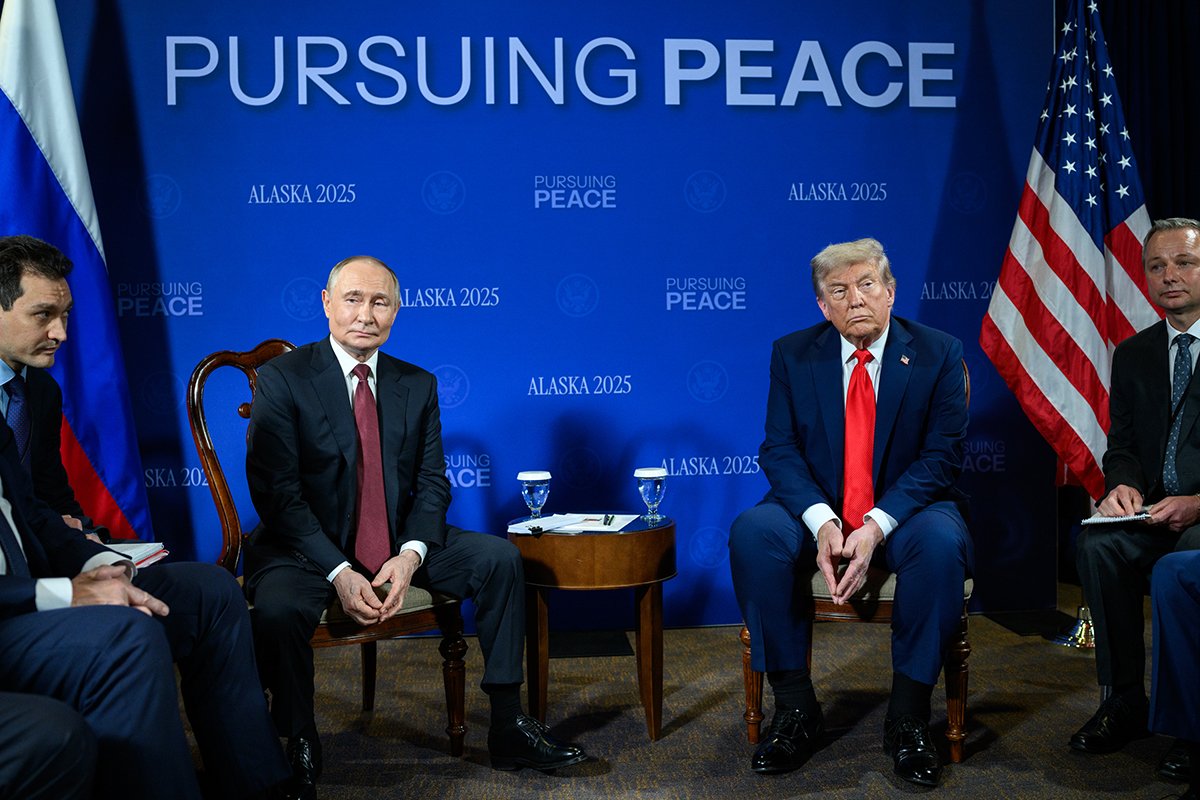
Russian President Vladimir Putin has for the first time accepted the prospect of the United States and European allies extending NATO-style security guarantees to Ukraine, according to a senior US official, marking what Washington described as a potential breakthrough in efforts to end the three-and-a-half-year war.
US special envoy Steve Witkoff said on Sunday that the concession was reached during talks between Putin and US President Donald Trump at a summit held at a military base in Alaska on Friday.
“We were able to win the following concession: that the United States could offer Article 5-like protection, which is one of the real reasons why Ukraine wants to be in NATO,” Witkoff told CNN’s State of the Union.
He called the shift “game-changing”, noting it was the first time Moscow had accepted such a framework. Article 5, the cornerstone of NATO’s collective defence pact, treats an attack on one alliance member as an attack on all.
Possible workaround to NATO membership
The proposal, if formalised, would create an alternative to Ukraine’s long-sought membership in NATO – a red line for Moscow. Putin has consistently opposed Kyiv’s entry into the alliance, while Ukraine has insisted its security can only be guaranteed through binding defence commitments from the West.
Witkoff offered no details on how the US and European Union might implement the arrangement. Secretary of State Marco Rubio, who also attended the Alaska summit, said discussions in the coming days would focus on the mechanics of the guarantees.
“How that’s constructed, what we call it, how it’s built, what guarantees are built into it that are enforceable, that’s what we’ll be talking about over the next few days with our partners,” Rubio told NBC’s Meet the Press.
Rubio described the shift as a “huge concession” but cautioned that Ukraine was not represented in Alaska, meaning no binding decisions were taken. “There’s not going to be a truce unless Ukraine is in the room,” he said.
Mixed signals from Trump
Trump, who has positioned himself as a dealmaker on Ukraine since returning to the White House, welcomed the progress. “BIG PROGRESS ON RUSSIA. STAY TUNED!” he wrote on social media.
But in later comments he suggested Kyiv should consider concessions. “President Zelenskyy of Ukraine can end the war with Russia almost immediately, if he wants to, or he can continue to fight,” Trump said. He reiterated opposition to Ukraine joining NATO and repeated past criticisms of former President Barack Obama’s handling of Russia’s annexation of Crimea in 2014.
Reactions in Europe and Kyiv
In Brussels, European Commission President Ursula von der Leyen welcomed what she described as Washington’s willingness to contribute to “Article 5-like security guarantees” for Ukraine. Standing alongside Ukrainian President Volodymyr Zelenskyy, she said the EU and a “coalition of the willing” were prepared to support such an initiative.
Zelenskyy expressed guarded optimism. “It is important that America agrees to work with Europe to provide security guarantees for Ukraine,” he said. “But there are no details on how it will work, and what America’s role will be, Europe’s role will be, and what the EU can do.”
French President Emmanuel Macron said substance mattered more than labels. He said European leaders would push at Monday’s White House meeting for commitments to strengthen Ukraine’s military with training and equipment, and to position allied forces as a deterrent away from front lines.
“The substance of the guarantee is what will matter, not whether we call it Article 5 or something else,” Macron said.
Russia signals further commitments
Witkoff also said Russia had agreed to pass legislation preventing it from violating the sovereignty of European neighbours, another step US officials portrayed as significant, though they provided no details on enforcement.
“The Russians agreed on enshrining legislatively language that would prevent them from – or that they would attest to not attempting to take any more land from Ukraine after a peace deal, where they would attest to not violating any European borders,” Witkoff said on Fox News.
Rubio and Witkoff defended Trump’s decision not to demand a ceasefire in Alaska, arguing that the broader framework offered a more sustainable path. “We covered almost all the other issues necessary for a peace deal,” Witkoff said. “Maybe not enough for a peace deal, but we are on the path for the first time.”
Land and territorial disputes
Territorial questions remain the largest unresolved issue. Putin has demanded recognition of Russian control over the Donetsk and Luhansk regions in eastern Ukraine, according to European officials briefed on the talks.
Witkoff said Moscow wanted future negotiations to focus on legal boundaries rather than battlefield front lines. Zelenskyy has ruled out ceding the Donbas region, insisting that talks must be based on current contact lines and constitutional prohibitions against surrendering territory.
“The constitution of Ukraine makes it impossible to give up territory or trade land,” Zelenskyy told reporters in Brussels. “The contact line is the best line for talking, and the Europeans support this.”
Next steps
Trump is scheduled to host Zelenskyy and European leaders at the White House on Monday, where the proposed security guarantees and territorial disputes are expected to dominate.
Rubio struck a cautious note, warning that despite signs of moderation from Moscow, “we’re still a long way off … we’re not at the precipice of a peace agreement.”
