


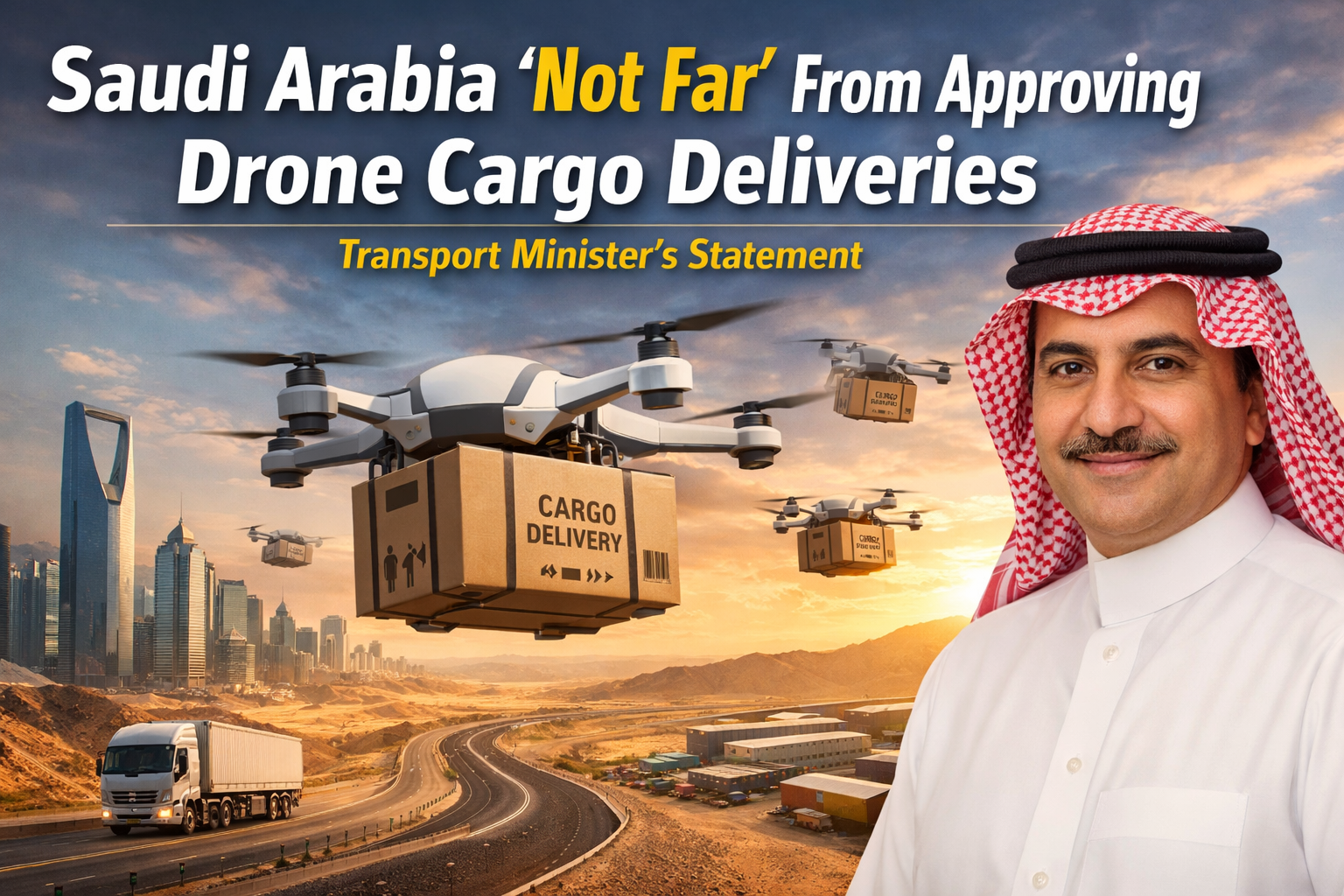
Saudi Arabia is moving fast toward the future of logistics. According to the country’s transport leadership, approval for drone-based cargo deliveries is not far away. This step could change how goods move across cities, deserts, and remote regions—making deliveries faster, safer, and more efficient.
As the Kingdom pushes ahead with innovation under its national development plans, drone cargo is becoming a serious and practical option rather than just an idea.
Why Drone Cargo Matters
Traditional cargo transport relies on trucks, planes, and ships. While these methods work well, they can be slow or expensive in hard-to-reach areas. Cargo drones solve many of these problems.
Drones can:
- Fly directly to destinations without roads
- Avoid traffic and long detours
- Reach remote or rural areas quickly
- Reduce delivery times from days to hours
For a large country like Saudi Arabia, with deserts, long highways, and growing cities, drone cargo is a smart solution.
What the Transport Minister Said
Saudi Arabia’s Transport Minister, Saleh Al-Jasser, has indicated that the Kingdom is very close to approving drone cargo operations. This suggests that testing, safety checks, and regulatory planning are already well advanced.
The government wants to ensure that:
- Drone flights are safe
- Airspace is well managed
- Technology meets international standards
- Public safety and privacy are protected
Once these conditions are fully met, official approvals are expected.
How Drone Cargo Will Work
Drone cargo deliveries are different from small food or parcel drones. These drones are larger, stronger, and designed to carry heavier loads.
They may be used for:
- Medical supplies
- E-commerce packages
- Industrial parts
- Emergency deliveries
- Inter-warehouse transport
Instead of replacing trucks and planes, drones will support and speed up the existing logistics network.
Supporting Vision 2030
Drone cargo fits perfectly with Saudi Arabia’s Vision 2030 goals. The country aims to become a global logistics hub, connecting Asia, Europe, and Africa.
By adopting drone technology, Saudi Arabia can:
- Improve supply chain efficiency
- Reduce transport costs
- Encourage tech innovation
- Attract global investors
- Create new jobs in aviation and logistics
Smart transport is a key part of building modern, sustainable cities.
Benefits for Businesses and Consumers
Once drone cargo deliveries are approved, both companies and customers will benefit.
For businesses:
- Faster delivery times
- Lower fuel and transport costs
- Easier access to remote markets
- Better inventory movement
For consumers:
- Quicker order fulfillment
- More reliable deliveries
- Improved access in rural areas
- Better service during emergencies
This can especially help online shopping, healthcare, and industrial sectors.
Safety and Regulation Come First
Saudi Arabia is taking a careful approach. Drone cargo approval is not just about technology—it’s about rules and safety.
Authorities are working on:
- Clear flight paths
- Air traffic integration
- Licensing for operators
- Technical standards for drones
- Emergency response systems
By doing this step by step, the government ensures that drone deliveries will be safe, controlled, and trusted by the public.
Environmental Impact
Drone cargo can also support sustainability goals.
Compared to traditional delivery vehicles, drones:
- Use less fuel or electricity
- Produce lower carbon emissions
- Reduce road congestion
- Cause less noise in some cases
This makes them a cleaner option, especially for short and medium-distance deliveries.
Challenges That Still Exist
Even with strong progress, some challenges remain:
- Weather conditions like heat and sand
- Battery life for long distances
- Airspace coordination with manned aircraft
- Public awareness and acceptance
Saudi Arabia is addressing these issues through testing, partnerships, and smart regulations.
What Happens Next?
If approvals move forward as expected, we may soon see:
- Pilot drone cargo routes
- Partnerships with logistics companies
- Special drone corridors
- Expansion to major cities and industrial zones
Over time, drone cargo could become a regular part of daily logistics in the Kingdom.
Final Thoughts
Saudi Arabia is clearly not far from approving drone cargo deliveries, and this marks an exciting step toward the future. With strong government support, advanced planning, and a focus on safety, drone logistics can transform how goods move across the country.
As innovation continues, Saudi Arabia is proving that it is ready to lead in smart transport, modern logistics, and advanced technology—setting an example for the region and beyond. 🚀
Frequently Asked Questions (FAQs)
1. What are drone cargo deliveries?
Drone cargo deliveries use unmanned aerial vehicles (drones) to transport goods such as packages, medical supplies, and industrial items from one place to another without a pilot on board.
2. Why is Saudi Arabia planning to approve drone cargo deliveries?
Saudi Arabia wants to improve logistics, reduce delivery time, support innovation, and become a global transport hub under Vision 2030. Drone cargo helps achieve these goals efficiently.
3. When will drone cargo deliveries be approved in Saudi Arabia?
According to the transport minister, approval is “not far.” This means regulations and testing are almost complete, and official approval may happen soon.
4. What types of goods will drones deliver first?
In the early stages, drones are likely to carry medical supplies, emergency items, e-commerce packages, and industrial parts, especially to remote or hard-to-reach areas.
5. Are drone cargo deliveries safe?
Yes, safety is a top priority. The Saudi government is developing strict rules, airspace management systems, and licensing requirements to ensure safe and secure drone operations.
