


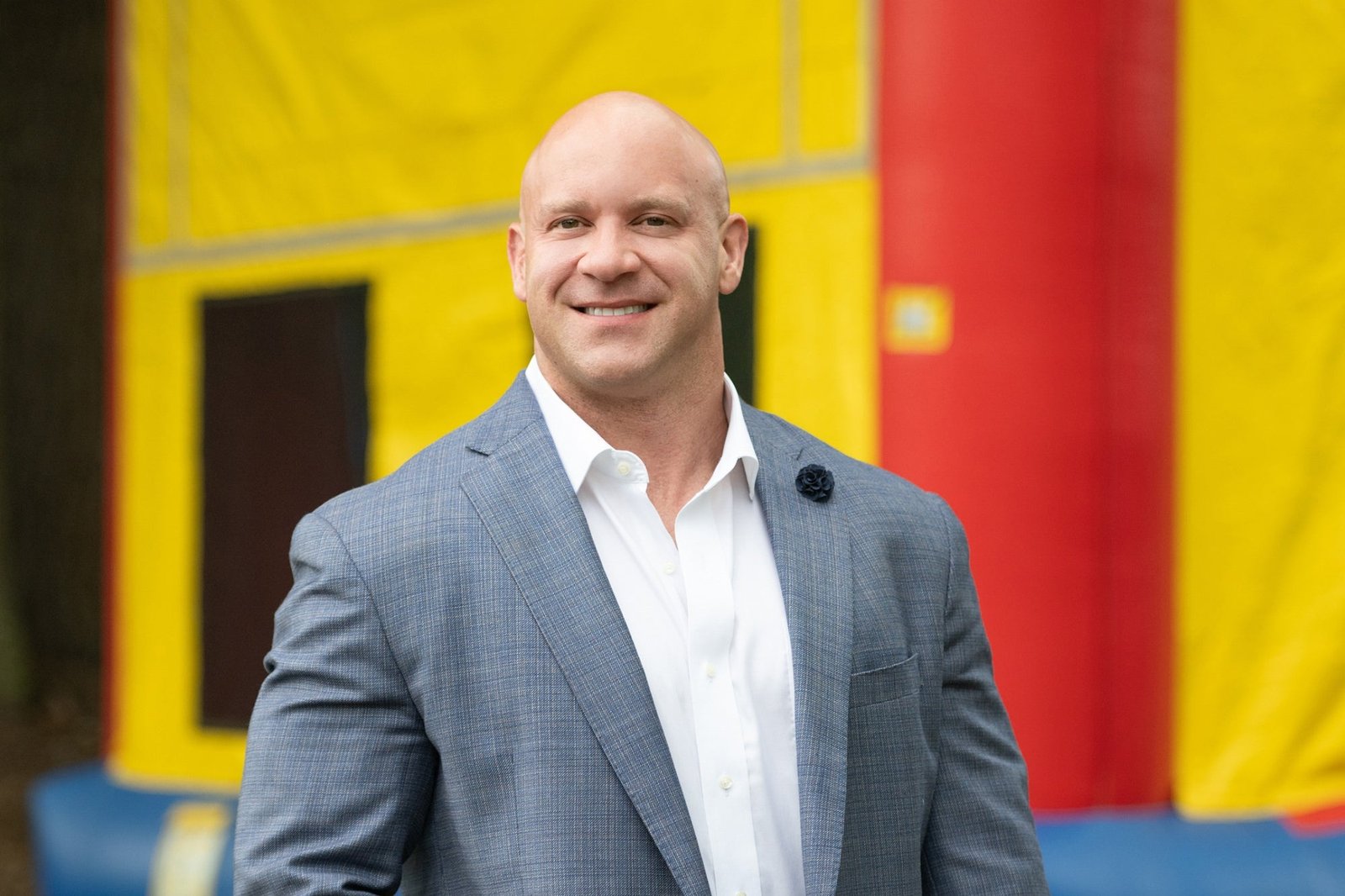
In the early 2000s, Sal Longo was an 18-year-old student working as a weekend delivery guy for a daycare’s lone bounce house, which he rented out as a side hustle. By his early 20s, he’d taken the reins and turned his small side hustle into a successful seasonal business. But after a hard pivot during the pandemic, Longo led his company, Busy Bee Jumpers, to become a thriving professional franchise operation focused on high-margin core rentals — bounce houses, water slides, obstacle courses and tents — delivered with a tech-tight, community-driven playbook.
In this Q&A, Longo walks through the college-to-ownership handoff, the “simplify the menu” pivot to core inventory and why franchising beats adding corporate units.
Responses have been edited for length and clarity.
How did Busy Bee first come about and what was your original vision when you were running it as a side hustle?
My business partners back then owned two daycares. They bought a bounce house for the daycare and all the parents started asking to rent it. Someone had to do deliveries; that’s where I came in at 18. It was a great secondary business for them for several years. When I graduated from college at 22, I asked, Can we put a main focus on this and go from a side hustle to something bigger? They said yes. At the time, this was 2006–2007, we were doing about $200,000 to $250,000 in revenue and we expanded the delivery area and put real focus on it.
Did you realize the potential that early?
I did. On my first delivery, there were three little kids jumping up and down with pure excitement and the parents were so happy they tipped me. I thought, This feels different — we’re creating memories for families. We expanded to schools, municipalities, churches and fire and police departments. There wasn’t much structure or technology in the industry then, so I built an e-commerce site for BusyBeeJumpers.com and the first year we made it a full focus, we grew to $750,000 — about a half-million increase — and learned a lot.
Your flagship location continues to grow rapidly. What decisions enabled you to scale like that?
COVID was a tragedy. In terms of business, it gave me a lot of clarity. At the time, I was doing about $3 million, but I was servicing a wide variety of clients: corporate events, ice cream trucks, mechanical rides, movie nights — flashy pieces of equipment that weren’t generating strong returns. They were raising my insurance premiums, exhausting my workforce and delivering low margins. The real money was in bounce houses, water slides, obstacle courses and tents. So I liquidated the extras. It was like simplifying the menu at a restaurant: once we focused, we scaled much faster. We did $5.5 million in 2024 and we’re on pace for $7 million in 2025 because we doubled down on the high-margin pieces people actually want.
So, it sounds like you went ‘back to basics.’ What was the hardest part of making that pivot?
I liquidated some expensive items for pennies on the dollar. But since that 2020 pivot, we’ve more than doubled our margins. We also implemented routing technology tied to product utilization in our operating platform. It’s made us wildly efficient.
Did you have any moments along the way where you had doubts?
Honestly, I believed in this business from day one. It’s my passion. I struggle to leave the office because I love being here — we’re creating memories. I’ve worked other jobs in high school and college; nothing grabbed me like this. And it’s not just about my family. I’ve built a team of 13 managers who’ve been with me over 10 years. I’ve watched them have kids and buy homes. Last month I rewarded seven of them with company vehicles, tied to this new franchising push, because our first three franchises have had a ton of success.
Related: A.I. Could Destroy the Power of Video Marketing — But Only If We Allow It
Why franchise? You certainly could have stayed corporate and opened more company locations.
Simplifying the inventory and the processes gave us a real blueprint to scale. My choice was to pour a lot of capital into a second, third, fourth corporate location — or sell the blueprint, coach franchisees and take a small royalty. Franchising is more cost-effective and less capital-intensive. Once I started talking about it, my first buyer was my CFO of 15 years — she owns her own accounting firm — and she bought Cape Cod. That was a huge compliment. The second was the CEO of the insurance company that handles our liability, vehicles and workers’ comp; he bought a franchise for his son. He’d seen our ‘no loss runs’ over 27 years — super safe, no workers’ comp claims — and after touring our facility, he saw the potential.
What makes the Busy Bee offer stand out for franchisees — is it tech, ops, margins?
It’s a blend. This is a fractured, fragmented market. Busy Bee can organize and legitimize it. Our operating platform tied to our product line is easy to scale. And our marketing programs target the end user, so customer acquisition isn’t an exorbitant pill to swallow. It really comes down to operations, training and marketing together — that’s what makes it unique.”
What’s been the biggest challenge in shifting from a dominant local operator to a franchise system?
Documenting everything. My in-house team has great intuition from years together; they can handle anything. Now the question is: how do we give franchisees that same toolkit so answers are at their fingertips? That’s what we’ve learned in the first six months — and why we won’t grow too fast. We want the first three to be hyper-successful and the next five to have quick wins out of the gate.
What’s your long-term vision — and what kind of franchisees do you want to attract?
We’re looking for people who fit the Busy Bee culture: gritty, hard-working operators who are truly invested in the brand. Yes, you need to be capitalized — but we want community partners who will work with fire and police departments and recreation teams; people who join the local Chamber, go to town meetings and become a resource. The ideal owner isn’t afraid to roll up their sleeves and run a delivery if needed. That mindset is what set our first three up for success and it’s what we’re looking for as we grow.

In the early 2000s, Sal Longo was an 18-year-old student working as a weekend delivery guy for a daycare’s lone bounce house, which he rented out as a side hustle. By his early 20s, he’d taken the reins and turned his small side hustle into a successful seasonal business. But after a hard pivot during the pandemic, Longo led his company, Busy Bee Jumpers, to become a thriving professional franchise operation focused on high-margin core rentals — bounce houses, water slides, obstacle courses and tents — delivered with a tech-tight, community-driven playbook.
In this Q&A, Longo walks through the college-to-ownership handoff, the “simplify the menu” pivot to core inventory and why franchising beats adding corporate units.
Responses have been edited for length and clarity.
The rest of this article is locked.
Join Entrepreneur+ today for access.
