


Antonio Forenza was working as head of research and development at Rakuten Symphony, a telecom subsidiary of the Japanese conglomerate, when he realized that he needed to find a better way to manage his stress levels.
A few years earlier, he had lost 40 pounds with the help of an Apple Watch, which counted steps and tracked his calorie burn, and he began wondering if there was a similar device to assess his stress.
“I wanted to lose 40 pounds of stress, and realized there’s no wearable for that today,” Forenza told TechCrunch.
That’s when Forenza realized he’d stumbled onto a gap in the consumer health market. Drawing on his engineering background, he decided to build the device himself, using a more than century-old technology: the electroencephalogram (EEG) to detect and measure electrical activity in the brain.
While EEG is used clinically to diagnose diseases such as epilepsy and sleep disorders, it can also detect psychological stress by measuring high-frequency brain waves called beta waves. When those rapid beta waves persist for extended periods, they can lead to exhaustion, insomnia, and mental distress.
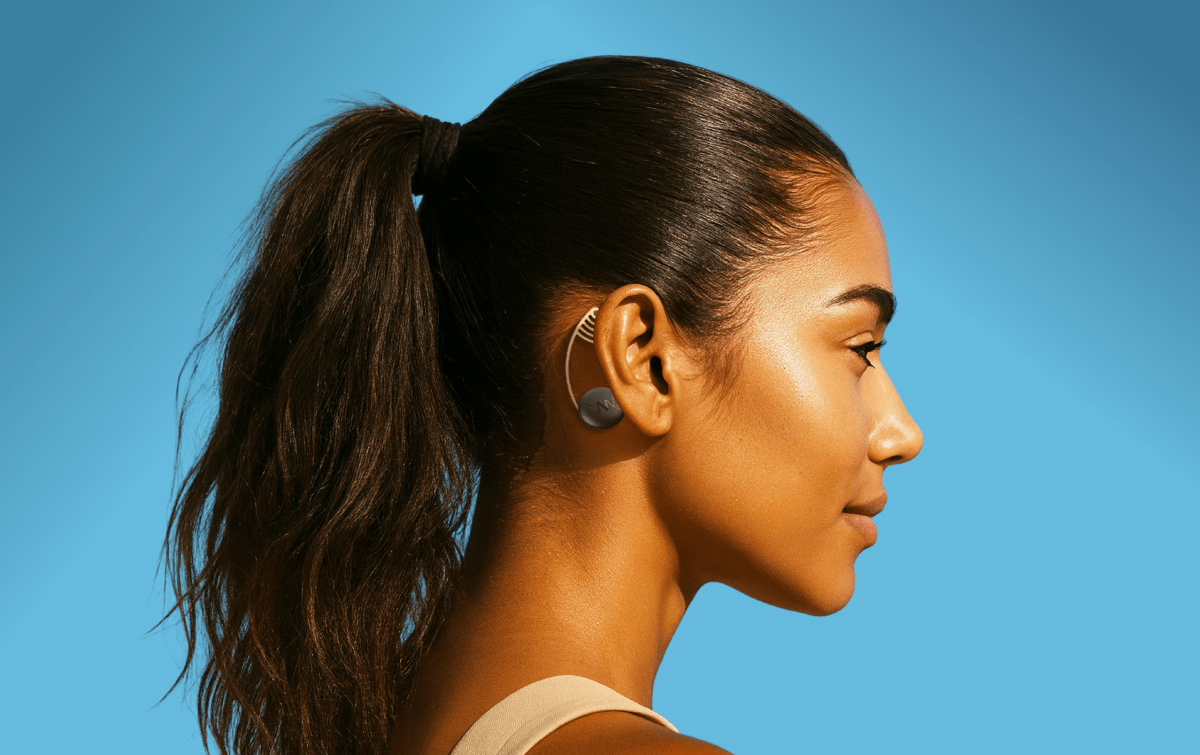
Forenza collaborated with data scientists and biomedical engineers to develop Awear, a small device worn behind the ear for continuous brainwave monitoring. The device transmits results to an app, which provides information about the wearer’s mood and offers AI-powered coaching advice for managing stress and improving emotional resilience.
“Our brain is phenomenal at self-adjusting and makes us believe we are not stressed,” Forenza said. “It’s fine to be in ‘fight or flight’ every once in a while. It’s part of our nature. But if you fall into the trap of constant ‘fight or flight’, then that leads to chronic stress, depression, anxiety.”
Techcrunch event
San Francisco
|
October 13-15, 2026
Forenza claims that Awear helps users proactively intercept excessive stress before it leads to negative health effects.
Awear is a Startup Battlefield 200 finalist at TechCrunch Disrupt 2025, where it won health category pitch competition.
While Stanford University’s psychiatry department is currently testing the device to detect confusion and disorientation in elderly patients after surgery, Forenza’s primary focus is on selling Awear to individual consumers, similar to the approach taken by the Oura ring and other consumer wearables.
Earlier this year, Awear closed a pre-seed funding round led by Hustle Fund, Niremia Collective, Techstars, and The Pitch Fund, and the company plans to raise a $5 million seed round in early 2026.
For now, Awear is available for purchase only through its early-access program. The device is available to early adopters — a group that already includes many other startup founders, a notoriously stressed-out group — for $195, which includes a complimentary lifetime app subscription.
After raising its seed round, the company will launch a Kickstarter campaign, following a strategy used by devices such as Peloton and Oura. “It is a path that worked for many other wearables. It gives you a lot of visibility, and it’s a good way to acquire customers,” Forenza said.
