


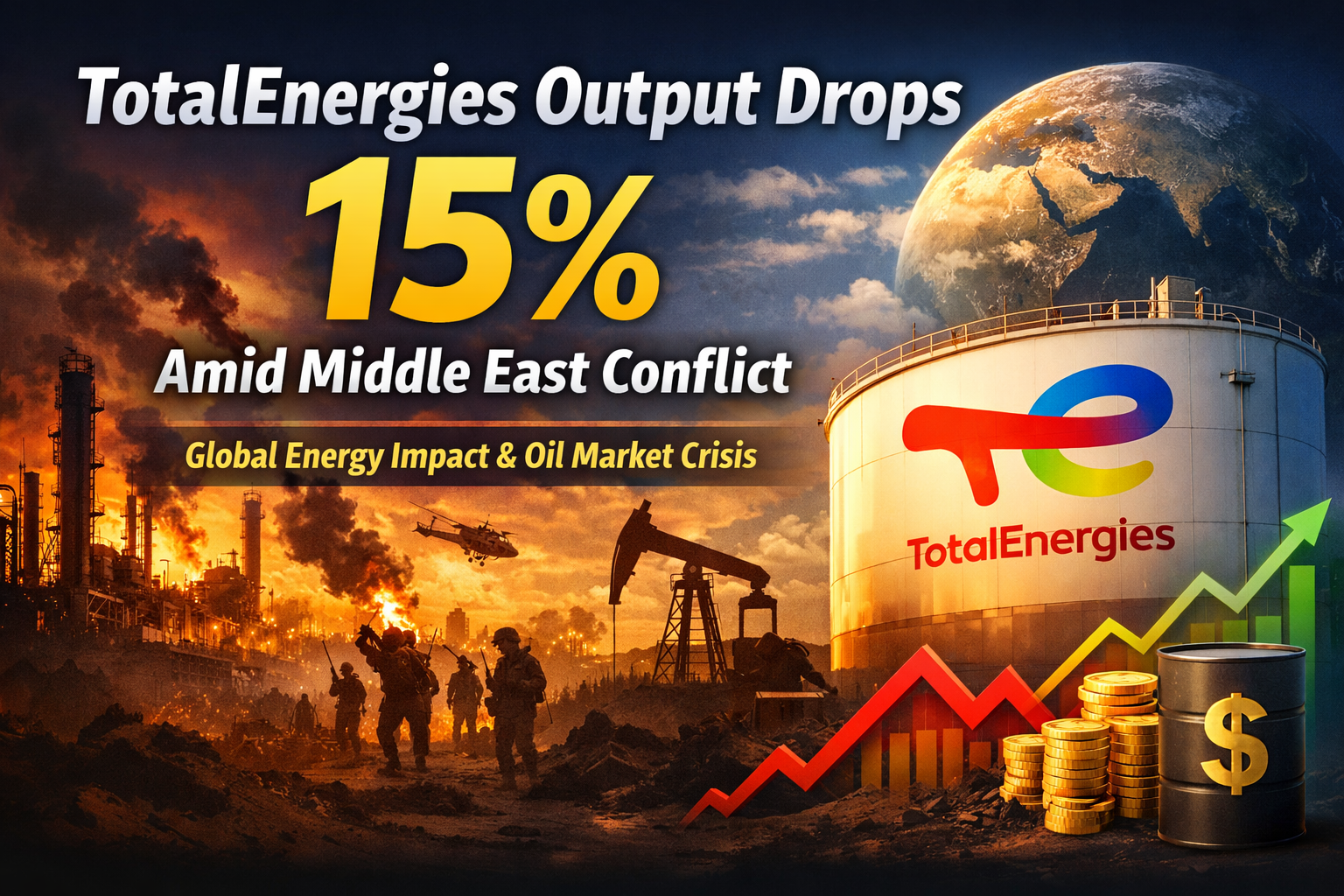
The global energy market is facing serious challenges, and one of the biggest impacts has been seen on TotalEnergies. The company’s global output has dropped by 15% due to the ongoing conflict in the Middle East. This situation is not only affecting the company but also creating ripple effects across the global oil and gas industry.
In this blog, we will explain the reasons behind this decline, its impact on the global market, and what it means for the future.
What Happened to TotalEnergies?
TotalEnergies is one of the world’s leading oil and gas companies. It operates in multiple countries, including many regions in the Middle East. However, due to rising tensions and conflicts in the region, production activities have been disrupted.
The company reported a 15% drop in global output, which is a significant decrease for such a large energy giant. This decline is mainly linked to operational issues and safety concerns in conflict-affected areas.
Why Did the Output Drop?
1. Disruption in Oil Production
The Middle East is one of the most important regions for oil production. Due to conflict, many oil fields have either slowed down or completely stopped operations. This directly impacts companies like TotalEnergies.
2. Safety Concerns
Employee safety is always a top priority. During conflicts, companies often reduce or halt operations to protect their workers. This leads to lower production levels.
3. Supply Chain Issues
War and conflict can damage infrastructure such as pipelines, transport routes, and ports. This makes it difficult to move oil and gas, reducing overall output.
4. Government Restrictions
Sometimes, governments impose restrictions during conflicts. These rules can limit production or exports, further affecting companies.
Impact on Global Oil Market
Rising Oil Prices
When production drops, supply becomes limited. This can lead to an increase in global oil prices. Consumers may notice higher fuel costs as a result.
Market Uncertainty
Investors and businesses face uncertainty during such times. Fluctuating oil prices can affect global markets and economic stability.
Increased Dependence on Other Regions
Countries may start relying more on oil from other regions like the United States or Africa. This can shift global energy dynamics.
How Is TotalEnergies Responding?
TotalEnergies is taking several steps to manage the situation:
- Diversifying production across different regions
- Investing in renewable energy sources
- Strengthening safety measures
- Adjusting supply chains
These strategies help the company reduce risk and maintain stability during uncertain times.
Long-Term Effects
Shift Towards Renewable Energy
This situation highlights the risks of depending heavily on one region. Many companies, including TotalEnergies, are investing more in renewable energy like solar and wind.
Changes in Energy Policies
Governments may introduce new policies to reduce dependence on conflict-prone areas.
Industry Adaptation
Energy companies will likely focus on diversification and risk management in the future.
What Does This Mean for Consumers?
For everyday people, this situation can lead to:
- Higher fuel prices
- Increased cost of goods and transportation
- More focus on alternative energy sources
In the long run, consumers may benefit from cleaner and more stable energy solutions.
Conclusion
The 15% drop in TotalEnergies’ global output shows how geopolitical conflicts can impact the energy sector. The Middle East conflict has disrupted production, increased uncertainty, and affected global oil prices.
However, it also presents an opportunity for the industry to adapt and move towards more sustainable and diversified energy sources. As the situation evolves, both companies and consumers must stay prepared for changes in the global energy landscape.
FAQs
1. Why did TotalEnergies’ output drop by 15%?
The drop is mainly due to disruptions caused by the Middle East conflict, including safety concerns, production halts, and supply chain issues.
2. How does this affect global oil prices?
Reduced production leads to lower supply, which can increase oil prices globally.
3. Is TotalEnergies shutting down operations completely?
No, the company is adjusting operations in affected areas while continuing production in other regions.
4. Will fuel prices increase because of this?
Yes, there is a possibility of higher fuel prices due to reduced supply and market uncertainty.
5. What is the future of the energy industry after this?
The industry is likely to focus more on renewable energy, diversification, and reducing dependency on conflict-prone regions.
